
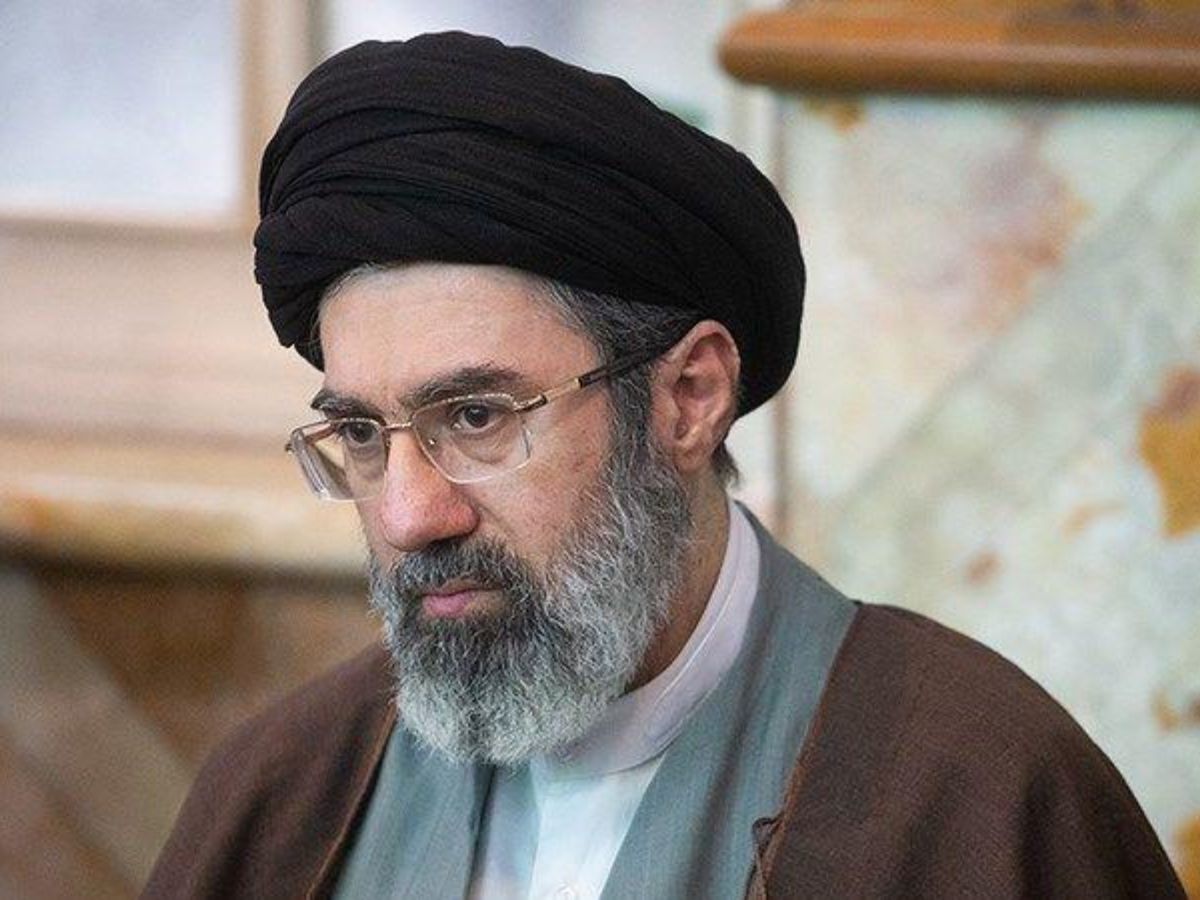
Iran has entered a new political phase after clerics appointed Mojtaba Khamenei as the country’s next Supreme Leader following the death of his father, Ayatollah Ali Khamenei. The powerful Assembly of Experts selected him as the third Supreme Leader of the Islamic Republic at a time when tensions in the Middle East remain high.
Mojtaba Khamenei, a relatively low-profile cleric for many years, has long stayed close to the centre of power in Tehran. Even before officially taking the top position, analysts widely believed he held a strong influence within Iran’s political and security establishment.
His appointment has also renewed global attention on the sanctions imposed on him by the United States in 2019 and the role he played inside his father’s leadership network.
Why the US Sanctioned Mojtaba Khamenei in 2019?
The United States sanctioned Mojtaba Khamenei in 2019 as part of a broader effort to pressure Iran’s leadership and weaken its influence in the region. The action came during the presidency of Donald Trump, when Washington introduced several measures against individuals connected to Iran’s Supreme Leader. Mojtaba Khamenei was in 2019 sanctioned by the US Treasury Department.
At the time, the US said that Mojtaba Khamenei had been designated for “representing the Supreme Leader in an official capacity despite never being elected or appointed to a government position aside from work in the office of his father.”
Officials in Washington argued that he played an important role in managing political affairs for his father despite not holding a formal government post. The sanctions were part of a broader list that targeted several individuals close to Iran’s leadership.
Who is Mojtaba Khamenei? Iran New Supreme Leader
Mojtaba Khamenei is a mid-ranking Iranian cleric who spent much of his career away from public political positions. However, he remained closely connected to the leadership circle of the Islamic Republic.
Mojtaba Khamenei, 56, is a low-profile cleric and spent most of his career outside public office. However, he stayed close to power and worked within the Office of the Supreme Leader.
He was often recognised as a “gatekeeper” to his father and “powerbroker” rather than a public political figure with a formal portfolio. Because of his close relationship with senior officials, many analysts believed he held influence in shaping political decisions long before becoming the country’s top leader.
Mojtaba Khamenei: What did the US Treasury Say?
The US Treasury Department imposed sanctions through its Office of Foreign Assets Control (OFAC). At the same time, the department targeted Iran’s Armed Forces General Staff and several other individuals connected to the Supreme Leader’s office.
The US Department of the Treasury’s Office of Foreign Assets Control (OFAC) also took action against the Armed Forces General Staff of Iran and nine individuals. These people were appointees of, or acted for, or on behalf of Ali Khamenei.
“These individuals are linked to a wide range of malign behaviours by the regime, including bombings of the US Marine Barracks in Beirut in 1983 and the Argentine Israelite Mutual Association in 1994, as well as torture, extrajudicial killings, and repression of civilians,” Treasury Secretary Steven T. Mnuchin said. The action was taken pursuant to Trump’s executive order signed on June 24, 2019.
Mojtaba Khamenei: Role in Iran Power Structure Before Becoming Leader
Even without an official political role, Mojtaba Khamenei played an important part in Iran’s leadership system. Analysts often described him as a key figure operating behind the scenes.
The US Treasury Department said Ali Khamenei delegated a part of his leadership responsibilities to his second son. It claimed that Mojataba Khamenei worked closely with the commander of the Islamic Revolutionary Guard Corps-Qods Force (IRGC-QF) and Basij Resistance Force (Basij) to “advance his father’s destabilising regional ambitions and oppressive domestic objectives.”
These connections made him one of the most influential figures in Iran’s political structure even before officially becoming the Supreme Leader.
What Mojtaba Khamenei Leadership Could Mean for Iran?
Mojtaba Khamenei’s appointment signals continuity within Iran’s political system. Many analysts believe his leadership will maintain the strong influence of conservative clerics and powerful security institutions.
At the same time, his past sanctions and controversial rise to power could further strain Iran’s relations with Western countries. Observers across the world are now closely watching how the new Supreme Leader will handle domestic challenges, international pressure, and the ongoing tensions in the Middle East.
His leadership begins at a time when Iran faces major geopolitical challenges, making his decisions crucial for the country’s future direction.




