Bangladesh’s outgoing chief adviser Muhammad Yunus outlines a bold economic vision connecting Nepal, Bhutan and India’s Seven Sisters through Bangladesh’s maritime gateway.
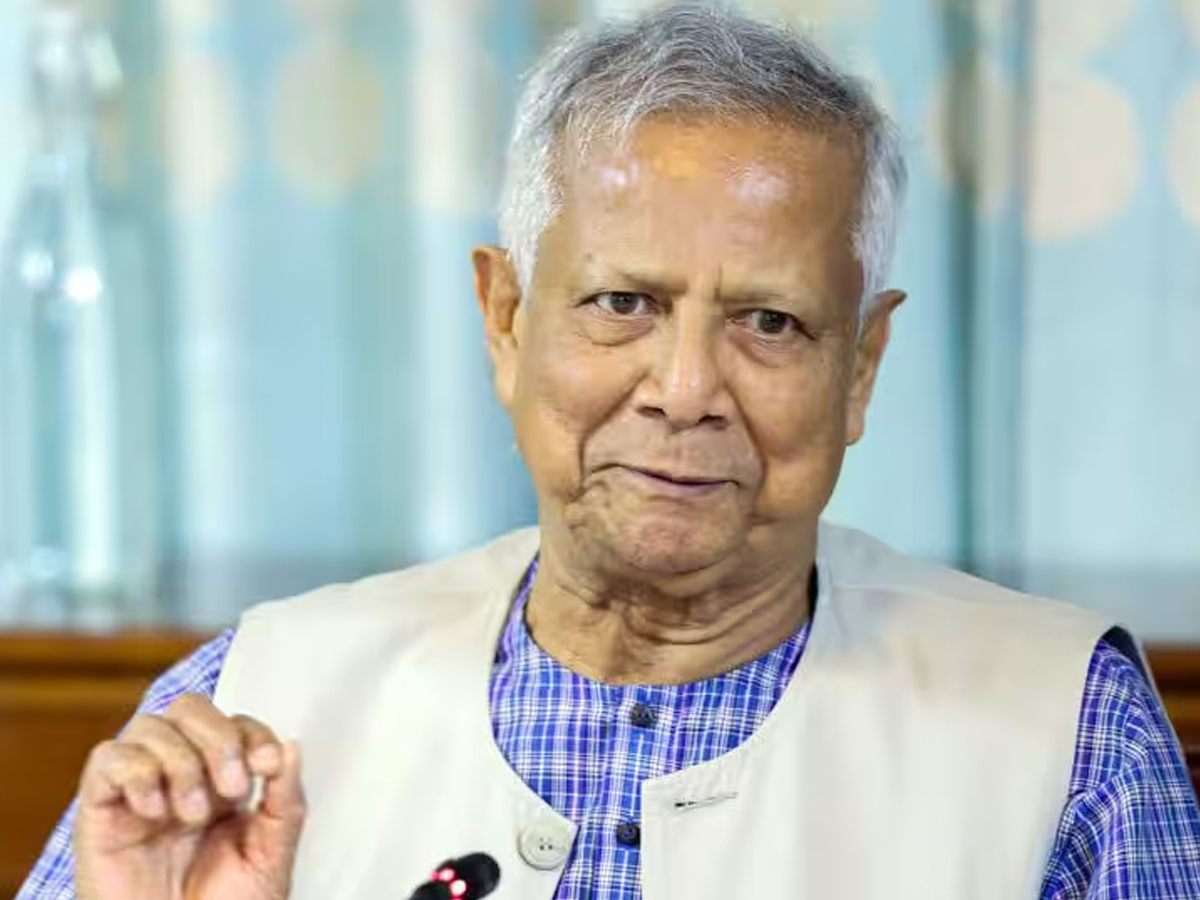
Yunus highlighted Bangladesh’s maritime access and connectivity as key drivers that could bind neighbouring states, including Nepal, Bhutan, and India’s Seven Sisters, into a broader economic network. (Photo: Social Media)
As Bangladesh prepares for a political transition, the outgoing interim government chief, Muhammad Yunus, delivered a major televised farewell address, laying out a new regional economic strategy that could reshape South Asian cooperation. Yunus highlighted Bangladesh’s maritime access and connectivity as key drivers that could bind neighbouring states, including Nepal, Bhutan, and India’s Seven Sisters, into a broader economic network.
His remarks come a day before power is handed over to the new government led by the Bangladesh Nationalist Party (BNP) after the February 12 elections.
In his address, Yunus described Bangladesh’s sea access as more than a border. He said, “Our open sea is not merely a geographical boundary; it is a gateway to the global economy.”
He then linked this gateway to opportunities for landlocked neighbours, pointing specifically to Nepal, Bhutan, and the Seven Sisters, a well-known term for the northeastern states of India.
Yunus didn’t just offer a vision on paper. He proposed practical frameworks for cooperation, including trade agreements, economic zones, enhanced infrastructure, and greater border connectivity.
Throughout his speech, Yunus stressed that Bangladesh’s diplomacy has shifted. He asserted that the country was no longer following orders from bigger powers and had restored its sovereignty, national interest, and dignity on the global stage.
He said, “Bangladesh is no longer a country with a submissive foreign policy or dependent on the instructions and advice of other countries.”
Whether this marks a long-term shift in Dhaka’s diplomatic stance remains to be seen as a newly elected government takes over.
Although Yunus stopped short of naming India directly when speaking about the Seven Sisters, Assam, Arunachal Pradesh, Manipur, Meghalaya, Mizoram, Tripura, and Nagaland, his choice of words has attracted attention. Analysts say grouping these states with sovereign neighbours like Nepal and Bhutan under a shared economic vision may signal an attempt to present Bangladesh as a central regional hub for trade and connectivity.
This perspective places Dhaka’s ports at the centre of a wider South Asian supply chain, helping landlocked regions access global markets.
Yunus’s speech went beyond geopolitics to emphasize economic development and global integration. He mentioned agreements with international port management firms aimed at raising Bangladesh’s port efficiency to world standards, a move he called essential for future growth.
He also pointed to legislative reforms under his interim leadership and defended efforts to modernize infrastructure.
