
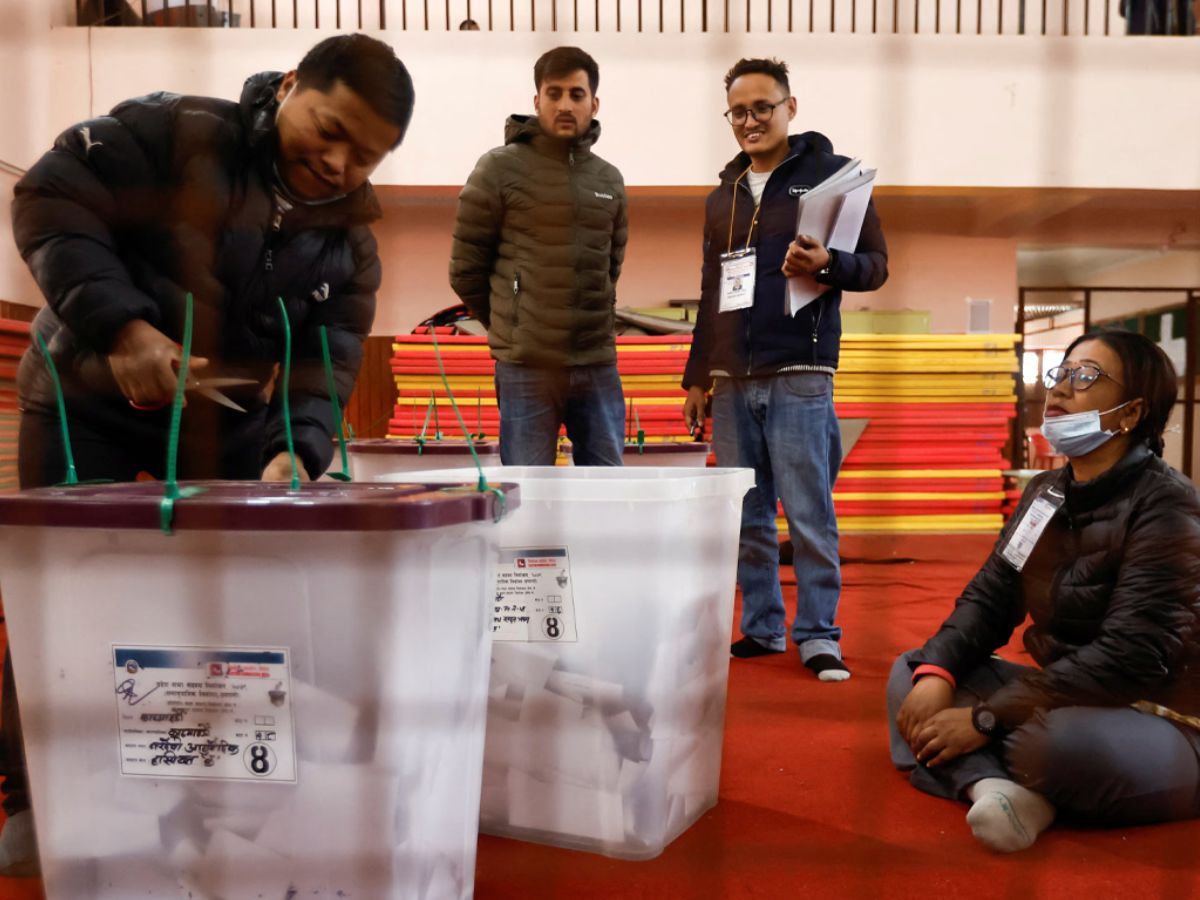
Nepal Election Results Latest Update: The counting of votes for Nepal’s parliamentary elections began late on Thursday night after the conclusion of voting in the country. The Election Commission of Nepal announced that the voting count began shortly after the voting concluded, and the results of the elections will be announced by Friday night.
The elections are being closely monitored as they are believed to decide the future course of the Himalayan country, which has been facing instability and protests for the past year. Millions of voters took part in the country’s national elections, making it one of the most important elections in recent years.
What Do the Early Trends Show in the Nepal Election 2026 Results?
The initial counting trends have already indicated that Rastriya Swatantra Party is going to be a major contender. Currently, they are leading with 41 seats.
At the same time, Nepali Congress has won three seats, whereas Nepal Communist Party has won two seats so far. Shram Sanskriti Party has been successful in winning one seat, whereas other political parties are still waiting to win their seats in the initial counting phase.
In another initial counting trend from the seats where counting is going on, Rastriya Swatantra Party has already won one seat and is leading in 36 seats. Similarly, Nepali Congress is leading in five seats, Communist Party of Nepal (Unified Marxist-Leninist) is leading in three seats, whereas Nepal Communist Party is leading in one seat.
How Many People Voted in Nepal’s Parliamentary Election 2026?
The voting for the country’s parliament, the House of Representatives, recorded a 60 percent turnout on Thursday. According to the voting officials, the voting process was peaceful throughout the country.
The acting Chief Election Commissioner, Ram Prasad Bhandari, said that the voting process was conducted smoothly, with only minor incidents occurring during the voting process.
Nepal Election Results: Why Is This Election Important for Nepal?
The recent election in Nepal is important for the country as it is the first general election after the protests led by the Gen Z activists last year, which led to the fall of the coalition government headed by the former Prime Minister, K P Sharma Oli.
The protests, which were led by the Gen Z activists, indicated that the people of Nepal were dissatisfied with the political leadership in the country, which led to the fall of the Oli government. Therefore, the recent election is important for Nepal.
Which Political Leaders and Parties Are Competing for Power in Nepal?
There are several major political figures and parties in the running to shape the future government.
Among the major parties in the running are the party led by former prime minister K P Sharma Oli, the Communist Party of Nepal (Unified Marxist-Leninist), and the Nepali Congress, led by former prime minister Sher Bahadur Deuba.
Another prominent political figure in the running is the Communist Party of Nepal (Maoist Centre)’s Pushpa Kamal Dahal.
Meanwhile, a new crop of political leaders is trying to shake the traditional political system. In fact, the new president of the Nepali Congress, the 49-year-old Gagan Thapa, has expressed his desire to bring an end to the “old age” club of veteran politicians in the country.
Nepal Election Results: Is the Rastriya Swatantra Party Emerging as a New Political Force?
One of the biggest surprises in the election process so far has been the strong showing of the Rastriya Swatantra Party.
The Rastriya Swatantra Party is headed by Balendra Shah, who is also a former rapper and the former mayor of the city of Kathmandu. The party was popularized by reaching out to the youth of Nepal, who had been calling for political change. However, the rising popularity of the Rastriya Swatantra Party has proved to be the biggest challenge to the already established political parties in Nepal.
Nepal Election 2026 Results: What Issues Dominated the Election Campaign?
The issues that dominated the election campaign in Nepal included corruption, political reforms, and generational change in political leadership.
The people of Nepal have been dissatisfied with the political parties that have dominated the country for years. Therefore, they have been demanding political reform, which would address the economic and political challenges facing the country.
As the counting of the votes continues, the final results will show if Nepal is heading towards a new political era or still under the political parties that have dominated the country for years.




