Nepal votes in its first parliamentary election since the Gen Z uprising, with key parties battling for power as India closely monitors the outcome.
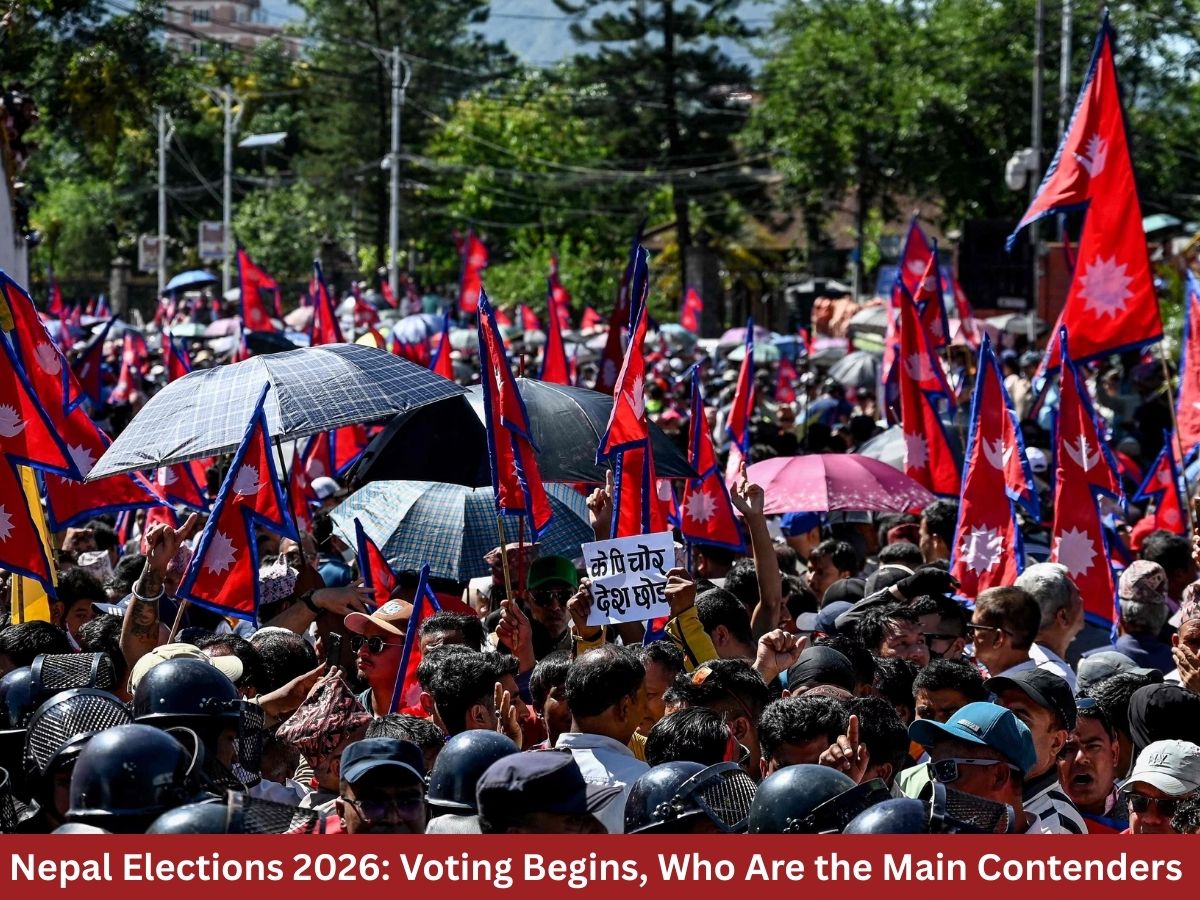
Nepal Elections 2026 (Source: Instagram)
Nepal Elections 2026: Nepal is voting today to choose a new government in its first parliamentary election since the violent Gen Z-led protest that removed the previous government headed by KP Sharma Oli last year. Voting began at 7 am and will continue until 5 pm. Once ballot boxes are collected, vote counting will begin immediately. On the eve of polling, Acting Election Commissioner Ram Prasad Bhandari said that all preparations had been completed and urged citizens to take part actively and enthusiastically in the democratic process.
This election is being seen as a crucial moment for the Himalayan nation as it decides its political future after months of unrest. Out of Nepal’s total population of around 30 million, nearly 19 million citizens are eligible to cast their votes. Voters will elect members to the 275-seat House of Representatives. Among these, 165 members will be chosen through direct voting, while 110 seats will be filled through a proportional representation system.
According to the Election Commission, 3,406 candidates are contesting for the 165 direct seats. Another 3,135 candidates are competing for the 110 proportional seats. In total, 65 political parties are participating in the election. To manage the process, authorities have set up 10,967 polling booths and 23,112 polling centres across the country.
Nepal’s political environment is currently divided between traditional parties and newer groups that have gained support following the youth-led protest movement.
The established forces include the Communist Party of Nepal (Unified Marxist–Leninist), led by KP Sharma Oli, and the Nepali Communist Party headed by Pushpa Kamal Dahal, also known as Prachanda. Although Prachanda’s party says it has addressed the concerns raised by Gen Z protesters, it has not handed leadership to younger members.
On the other side are newer and reform-oriented parties. The Rastriya Swotantra Party, led by Ravi Lamichhane with senior leader Balendra Shah, has openly supported the demands of the youth movement. Similarly, the Nepali Congress under Gagan Thapa has backed reform-focused policies.
Other emerging parties include the Ujyalo Nepal Party led by Kulman Ghising and the Shram Shakti Party headed by former Dharan Mayor Harka Sampang. However, their influence remains limited to specific regions.
Several major parties have already projected their prime ministerial candidates. The Rastriya Swotantra Party has nominated 35-year-old former Kathmandu Mayor Balen as its face for the top post. The Nepali Congress has named 49-year-old Gagan Thapa. Meanwhile, the CPN-UML has once again put forward 75-year-old KP Sharma Oli as its prime ministerial candidate.
India has strong reasons to follow developments in Nepal. As a neighbouring country sharing an open border, Nepal plays a key role in India’s regional security and strategic interests. After the September 2025 Gen Z uprising that removed KP Sharma Oli from power, India is observing whether the new election will bring a stable and India-friendly government.
The two countries share deep cultural, economic, and social ties, often described as a "Roti-Beti" relationship. Because of this close connection, political changes in Nepal directly affect India’s interests. Therefore, the outcome of this election is important not just for Nepal’s democracy but also for regional stability in South Asia.
