Nepal Elections 2026: From Gen-Z protests to new leadership, here’s why the vote matters for India-Nepal relations, territorial disputes, and regional politics.
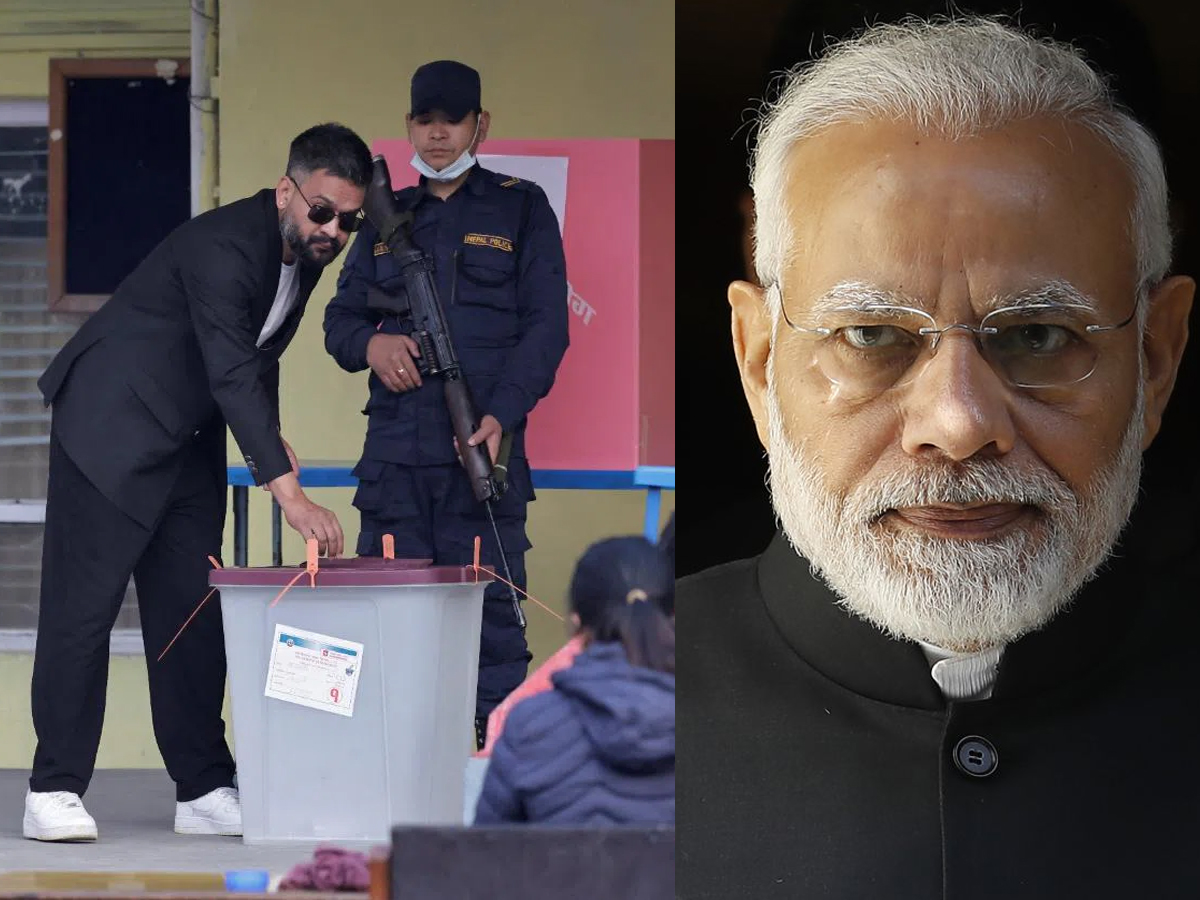
Nepal’s current election comes after months of political unrest that began in September 2025, when thousands of young people took to the streets in cities across the country. (Photo: Social Media)
Nepal Election 2026 Result: Nepal is holding its first general election since a wave of youth-led protests last year forced the resignation of Prime Minister KP Sharma Oli and triggered a major political shift in the country. The vote is widely seen as a turning point that could reshape Nepal’s political leadership and influence its foreign policy, especially its relationship with India.
Millions of voters across the Himalayan nation cast their ballots to choose representatives for the federal parliament. The election will decide the fate of thousands of candidates contesting seats through both direct and proportional voting systems.
The results could determine whether Nepal moves toward a new political direction led by younger leaders or returns to established political figures who have dominated the country’s politics for decades.
Vote counting is currently underway across Nepal, and early trends will decide who forms the next government in Kathmandu.
A total of 3,406 candidates are contesting for 165 seats through direct elections, while 3,135 candidates are competing for 110 seats under proportional representation.
Several high-profile leaders are in the race, including former prime ministers and emerging political figures. Among them is Balen Shah, a rapper-turned-politician and former mayor who has become a popular face among younger voters.
The election outcome could significantly alter Nepal’s political landscape, especially after last year’s dramatic protests that shook the government.
Nepal’s current election comes after months of political unrest that began in September 2025, when thousands of young people took to the streets in cities across the country.
The protests were largely driven by Generation Z activists who voiced anger over corruption, unemployment, and restrictions on social media platforms. Demonstrators demanded political reforms and accountability from the government.
The protests turned violent in several areas and resulted in dozens of deaths. Under mounting pressure, Prime Minister KP Sharma Oli resigned, leading to the formation of an interim government headed by Sushila Karki.
The uprising reflected growing frustration among young voters who felt that traditional political leaders had failed to address economic challenges and governance issues.
The election outcome carries significant importance for India because Nepal is one of its closest neighbours and shares deep economic, cultural, and geographic ties with the country.
India and Nepal maintain an open border and strong trade links. Millions of people move freely between the two countries for work, education, and tourism.
However, political instability in Nepal often affects diplomatic relations with New Delhi. Because of the uncertain political situation before the election, India has reportedly adopted a cautious approach and paused several major initiatives with Kathmandu until a stable government takes office.
The formation of a new government in Nepal could therefore play a key role in shaping future cooperation between the two countries.
One of the most sensitive issues affecting India-Nepal relations is the territorial dispute over Kalapani, Lipulekh, and Limpiyadhura along the border. In 2020, Nepal released a revised political map that included these territories within its borders. India, however, administers the region as part of the state of Uttarakhand.
The dispute resurfaced again in November 2025, when Nepal issued a new NPR 100 banknote featuring the disputed areas as part of its map. India strongly criticised the move. The Ministry of External Affairs described it as a “unilateral act” that “does not change the ground reality.”
The disagreement continues to be one of the key challenges in bilateral relations.
Another recurring issue in Nepal’s politics is the perception among some political groups that India interferes in the country’s domestic affairs.
Following the promulgation of Nepal’s constitution in 2015, some Nepali leaders accused India of imposing an economic blockade. India rejected these allegations and said disruptions occurred due to protests within Nepal itself.
The Indian government stated in Parliament at the time, “There is no blockade by India, which we have repeatedly clarified, of supplies going to Nepal. Obstructions are by the Nepalese population on the Nepalese side, in which the GoI cannot interfere. There were incidents of violence resulting in death and injury in regions of Nepal bordering India following the promulgation of this Constitution. Our freight companies and transporters also voiced complaints about difficulties of movement and security within Nepal.”
Such narratives continue to influence political debates in Nepal and often appear during election campaigns.
Trade routes and border infrastructure projects have also become contentious issues between India and Nepal.
In August 2025, India criticised Nepal’s remarks about trade activities involving China through the Lipulekh Pass. Nepal’s government had claimed that areas east of the Mahakali River—including Lipulekh and Kalapani—were integral parts of its territory.
India rejected these claims and reiterated its position, “As regards territorial claims, our position remains that such claims are neither justified nor based on historical facts and evidence. Any unilateral artificial enlargement of territorial claims is untenable.”
These tensions highlight how regional geopolitics continues to shape relations between the two neighbours.
The outcome of the 2026 elections will determine the political direction Nepal takes in the coming years.
A stable government in Kathmandu could provide an opportunity for both India and Nepal to rebuild trust and strengthen cooperation in trade, infrastructure, and security.
However, uncertainty remains because some emerging political leaders, including popular figures like Balen Shah, are often perceived by their supporters as taking a more assertive stance toward India.
As vote counting continues, the new government’s approach to diplomacy and regional politics will play a crucial role in shaping the future of India-Nepal relations.
