
LONDON:Thanks to Lord Callanan’s amendment put to the House of Lords, that requires the Government to consult with the UK Chagossian community before ratifying the Agreement to cede sovereignty of the Chagos Islands to Mauritius, Labour pulled the Bill from the Lords on Tuesday. The amendment required a 30 day consultation with the Chagossians. It seems Labour were panicking that Liberal Democrat Peers might vote with Tories against the Agreement, if defeated the Bill would be an embarrassment for the government.
After extensive consultations in 2024-25 the House of Lords International Relations and Defence Committee (IRDC) found the decision to proceed with the transfer of sovereignty of the Chagos Archipelago, was political. The IRDC members are from all sides of the House so it is likely a consensus was achieved after a variety of legal representations.
Outside of the IRDC some peers question if the government’s position is credible, how can an advisory judgement be turned into a binding one, given the former Commonwealth countries were specifically excepted when UK agreed to be subject to the International Court of Justice. The ITLOS judgement does not cut it as that judgement was applied to the Maldives, not the UK. It is constantly reiterated that the previous Conservative government opened discussions, but the Tories did not make this controversial deal. It appears this was a political decision made speedily on coming to office either, by a foreign secretary pushed into it by foreign office civil servants on a long-term decolonisation mission, or possibly a decision by the foreign secretary on a decolonisation mission of his own, David Lammy has form on this subject.
The IRDC was particularly concerned about the government’s reticence to engage with the Chagossian community in UK resulting in lesser legitimacy to the final arrangements. While the wrongs of the past have been acknowledged it remains that Chagossians were treated disgracefully when they were originally evicted by a Labour government in the 1960’s, and this Labour government has compounded the injustice, engagement with the Chagossian community was described as tokenistic and superficial, they lamented the absence of senior UK ministers in the discussions. The government could have made an effort to get them onside.
In the past the Mauritians have a woeful record of failing to distribute UK provided funds specifically earmarked for Chagossians, can they be trusted to get the £40 million trust fund into the right hands.
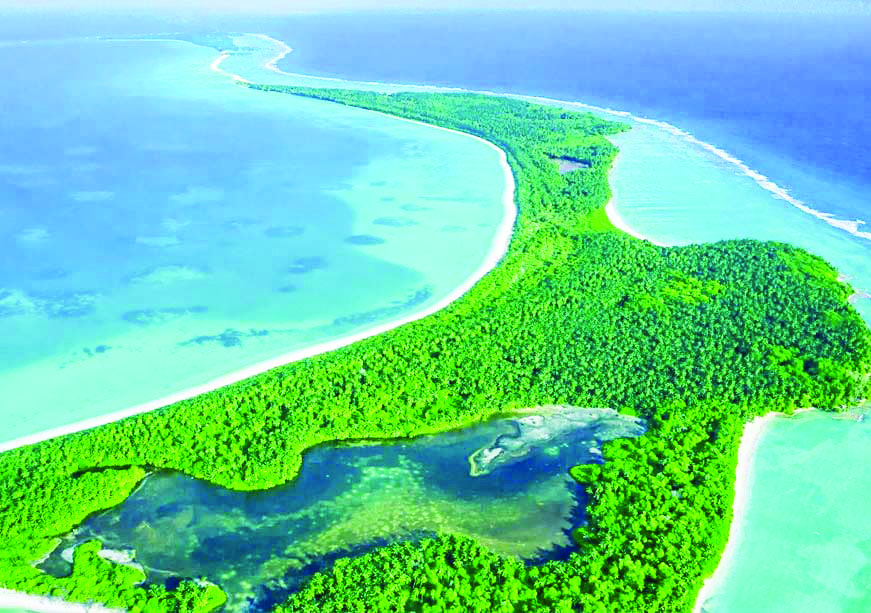
IRDC also considered future defence and security arrangements on Diego Garcia and the uncertainty of conservation around the outstanding ecological values of the “Marine Protection Area”, described as the “most important reef wilderness on the planet”. The IRDC called for robust legislation banning industrial-scale activities such as commercial fishing and seabed mining across the archipelago. The MPA declared in 2010 has not been recognised by the recent or current governments of Mauritius so its future is opaque.
IRDC witnesses were unanimous that Diego Garcia has a pivotal strategic role for the UK and US, that it is critical for Western security strategy in the Indo-Pacific, even described as the “pivot point” between the Middle East and the Indo-Pacific, underpinning critical US naval and air operations. As a key military hub it has unique features which are not easily replicated elsewhere. The UK Minister responsible, Stephen Doughty MP said “Diego Garcia is our most significant contribution to the transatlantic defence and security relationship”, beyond the IRDC folks question why UK are jeopardising this contribution?
Academics and experts discussed the plausibility of Chinese risks within the Agreement, denying the UK access to Diego Garcia would offer China a significant strategic advantage. As China has other bases around the Indo-Pacific rim it would not have to occupy Diego Garcia to get UK pushed out, which would be a dilemma for UK and US, there is considerable uncertainty about whether this could happen. Media reports speculate that China has an interest in leasing the island of Peros Banhos from Mauritius. One expert noted that Chinese influence in East Africa might support a regional military footprint and allow China to better monitor what happens around Diego Garcia.
The African Union regards UK’s presence in the Chagos Archipelago as a colonial remnant and a violation of international law, potentially causing diplomatic difficulties in the future. Additionally prior to the publication, Professor Peter Clegg raised the possibility that the African Nuclear Weapon Free Zone treaty, designed to keep the region free from nuclear weapons, could, through the transfer of sovereignty, apply to Diego Garcia with consequences for the deployment of nuclear powered submarines and nuclear tipped missiles at the base. The IRDC received assurances from the Minister responsible, Stephen Doughty MP, that the African Nuclear Weapon-Free Zone treaty would not apply to Diego Garcia, the basis for this assurance was not clear, IRDC requested further clarifying information.
The UK’s right of renewal came under scrutiny as geopolitics could change unpredictably over the 99 year term who knows who could be the hostile actors in even 30 years and if this Bill will benefit UK security in the long term. One witness warned that the UK’s obligation to make substantial financial payments to Mauritius created a potential vulnerability. The provisions for a 40 year extension appear to be a token which seemed to satisfy both parties. Extension (even for the first 40 years) requires the agreement of both parties thus there is no guarantee that UK would be able to extend. A right of first refusal is oftentimes problematic when it comes to enforcement, and should it be enforceable a richer major power may afford to offer an amount that would trump what the UK could afford.
Government estimates suggest that the average annual cost of the Agreement over the 99-year period will be around £101 million, with a total cost of 3-4 billion, but critics argue that the total cost could exceed £30 billion. If this had been a commercial negotiation there would have been no payment. The Mauritians get sovereignty, however the media reports that the price was substantially negotiated up after the change of government in Mauritius.
The Committee want further information on how the overall leasing costs for Diego Garcia were determined, and how these may affect the allocations in the defence budget for European defence.
On a positive note the Committee recommended The Government should also use the Agreement as a platform for reinforcing operational links with key Indo-Pacific partners such as India, Australia, and France, positioning itself as a credible contributor to regional stability grounded in the rule of law. India has made substantial investments and has diverse interests in Mauritius.
It was noted that new space based intelligence capabilities allow China and other actors to have real time surveillance of most activities at Diego Garcia, however many believe the US could find a way round this given its capacity to put communication satellites in orbit and communicate secretly with submarines undetected from anywhere in the world.
Baroness Hoey brought the Attorney General Lord Hermer’s controversial role to the attention of the House of Lords, as previously his legal representation allowed Chagos islanders asylum in the UK, this was announced just after the Government’s Chagos Sovereignty Bill. The Bill was not in Labour’s manifesto and the Tory opposition are demanding transparency over whether Lord Hermer recused himself from the decision as it benefited his former clients. The Bill is not confirmed as an Agreement, its future is in limbo and the cards are with PM Keir Starmer.




