Iran fires ballistic missiles at US Fifth Fleet base in Bahrain as part of wider retaliation, with dramatic footage showing impacts and smoke over the naval facility.
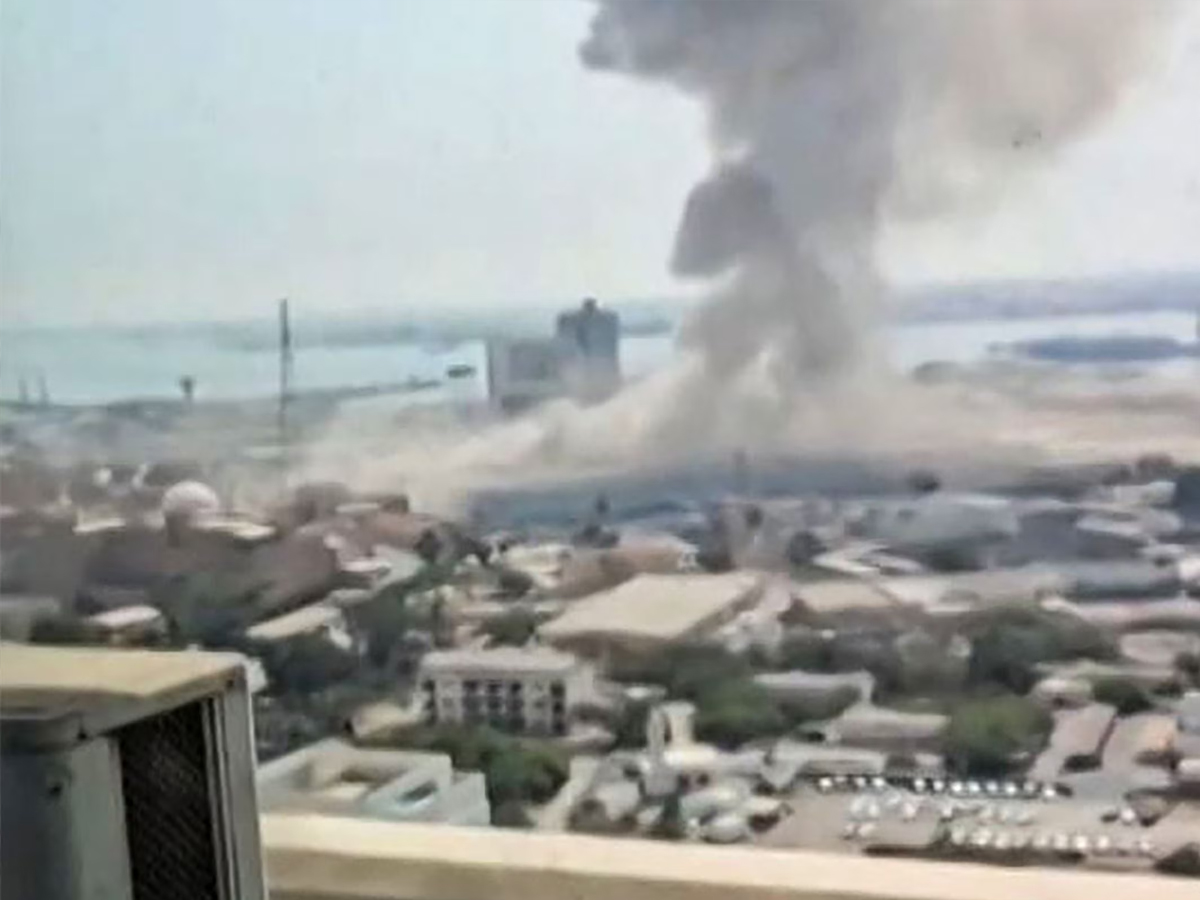
The video circulating online shows thick plumes of smoke rising from near Naval Support Activity Bahrain in the Juffair area of Manama, where the US Fifth Fleet command centre is located. (Screengrab)
A dramatic escalation in the Middle East unfolded on Saturday, February 28, 2026, when Iran launched a barrage of ballistic missiles targeting United States military facilities around the Gulf. One of the strikes hit the United States Navy’s Fifth Fleet headquarters in Bahrain, capturing intense footage that appears to show at least one missile impact at the base, deeply raising tensions across the region.
The video circulating online shows thick plumes of smoke rising from near Naval Support Activity Bahrain in the Juffair area of Manama, where the US Fifth Fleet command centre is located. Residents and service members witnessed loud explosions and rising black smoke, while local authorities activated air-raid sirens and ordered people to take shelter.
“Oh my God, there’s more coming—I have to get out,” the man says as a plume of smoke erupts behind him.
❗️An American reacts to Iranian attack on naval base in Bahrain
'Dude, f*ck me, a f*cking missile actually got through'
'Oh, there's more' pic.twitter.com/mXie1uWiGt— RT (@RT_com) February 28, 2026
The missile strikes were part of a broader Iranian response to earlier military actions against Iranian targets by the US and Israel. Iran’s Islamic Revolutionary Guard Corps claimed responsibility for the strikes, stating they were aimed at American military installations across the Gulf as retaliation for what Tehran called aggression against its territory. The Iranian offensive reportedly also targeted US-linked bases in Qatar, Kuwait, and the United Arab Emirates.
Bahrain’s state news agency confirmed that the Fifth Fleet service centre was among the sites struck and called the attack a “blatant violation” of the country’s sovereignty, condemning the missile assault. Sirens sounded across Bahrain as authorities urged residents to seek safety and avoid travel unless necessary.
The video from Bahrain shows smoke rising above the naval base shortly after one or more missile impacts. Although officials have not released verified casualty figures, eyewitness accounts and footage indicate significant explosions close to the military zone. The Pentagon has not yet provided a full assessment of damage or confirmed whether any American or allied personnel were harmed.
Similar scenes were reported across the Gulf, with explosions heard in capitals such as Abu Dhabi and Doha, and Iranian missiles reportedly intercepted over Qatari airspace. Gulf states hosting US military facilities activated defense measures and closed airspace to civilian flights amid the flare-up.
The strikes on Bahrain mark a significant escalation in a conflict that began when US and Israeli forces launched coordinated attacks on Iranian sites earlier that day. That campaign, described by Washington as aimed at degrading Iranian military capabilities, triggered Tehran’s retaliation and has rapidly drawn multiple countries into confrontations across the Gulf region.
World leaders and regional governments are scrambling to respond to the unfolding crisis, which has already affected air travel, energy markets, and diplomatic ties across the Middle East. As the situation continues to develop, the full consequences of the strikes on Bahrain and other bases remain unclear.
