
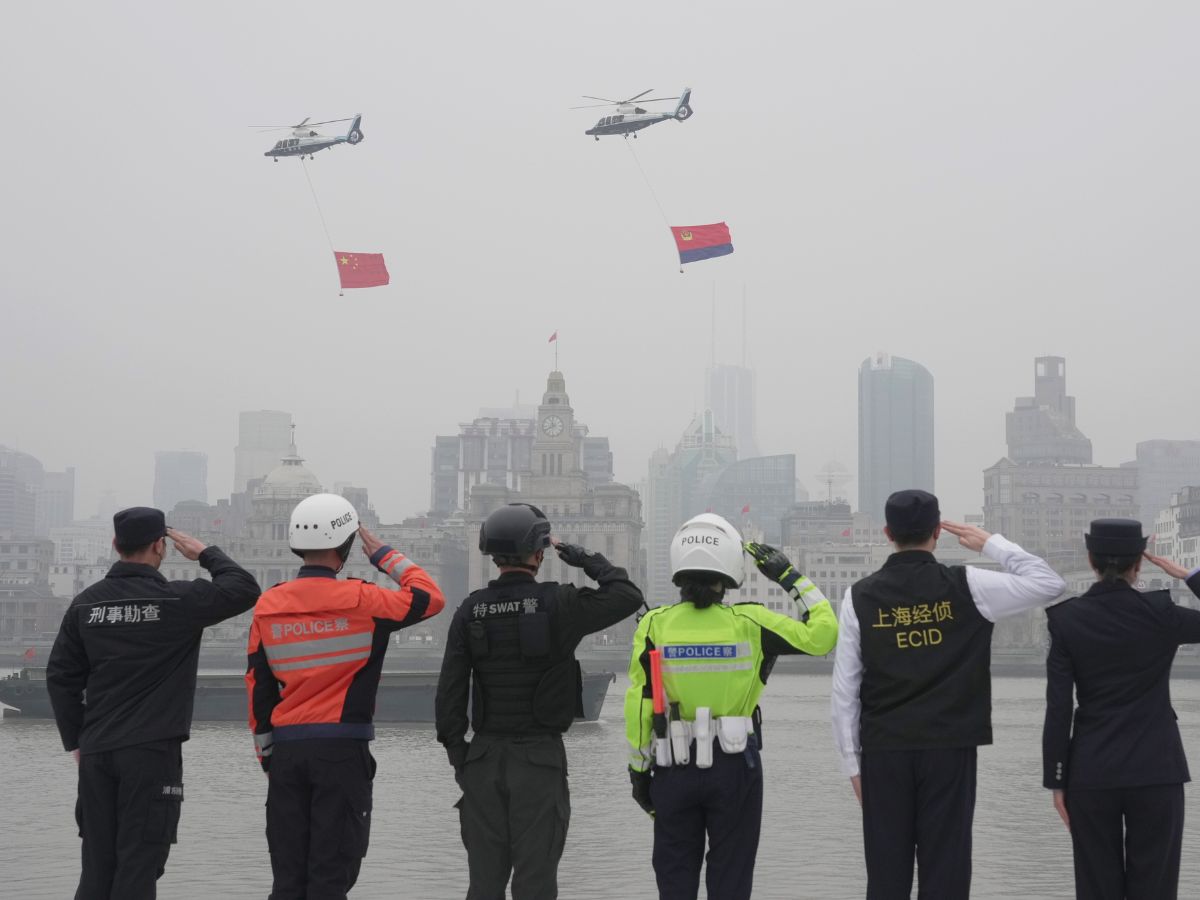
Every year, China celebrates Police Day with great fanfare, touting its advances in law enforcement and technology. On this day, the counry and its police get to show off the latest gadgets–from high-tech surveillance systems to the data-driven policing tools that claim to keep the society safe.
The Chinese government showcases these innovations as proof of an advanced and secure state. However, while the world focuses on the shiny and tech-heavy narrative, there’s something much darker lurking behind the scenes in Tibet and Xinjian. It is something the CCP is desperate to keep under covers.
Tibet and Xinjiang aren’t just regions in China. These are regions where millions live under a cloud of constant fear. The state subjects them to surveillance and oppression. These areas are where the government’s fancy technology is being put to its most disturbing use—not to fight crime, but to control people. To force them into submission. To erase their culture. And to punish anyone who dares to speak out.
In Tibet, the situation is dire. Religious practices, once the heart of Tibetan life, are now a target. Monks, nuns and ordinary Tibetans who protest or simply practice their faith are regularly beaten, imprisoned and tortured. This is about silencing voices and erasing an entire culture. It is rewriting its history while forcing people to forget who they are.
Temples, which were once a symbol of peace and hope, have become sites of repression. The Chinese government’s influence in Tibet is so strong that even the very act of being Tibetan feels like an act of defiance.
Meanwhile, in Xinjiang, the persecution of Uyghurs by China is nothing short of devastating and the Chinese government has detained over a million Uyghurs in what are known as “re-education camps.”
In addition, people are taken without warning, held for years without trial and are subjected to forced labour, torture and indoctrination. The camps are not the problem—it’s the surveillance state that’s watching over everything, everywhere.
Xinjiang is so strictly surveilled that there are cameras on every street corner. Every home is tracked abd every move and interaction is monitored. None of this is about protecting citizens. It’s about keeping them under control and watching every single step they take. Most importantly, it is about punishing them for their ethnicity and religion–something that they did not choose and something that doesn’t warrant hate.
The thing is, the rest of the world doesn’t seem to care. While there are occasional diplomatic statements, the soundbites condemning human rights abuses, but when it comes to real action? There’s a lot of silence. Major countries continue to do business with China, as if the abuses happening right under their noses don’t matter. Trade deals are signed, profits are made and the voices of the oppressed are drowned out by the noise of global economic priorities.
There is complicity when you’re profiting from the system that’s keeping people down.
But despite the constant repression and overwhelming odds, people in Tibet and Xinjiang are raising ther voices. Not only are they speaking out and sharing their stories, they are also making sure the world listens to them.
There are several examples of Tibetans who were arrested and detained by the Chinese authorities for peacefully protesting but didn’t stop their fight for a free and fair Tibet. He was in detention for years but despite that he did not stop speaking up once he walked out of the jail. He’s not alone. Across Tibet, people are resisting in their own quiet ways, whether it’s through small acts of defiance or through larger demonstrations, even though they know the risks are great. The CCP might think it’s broken Tibet’s spirit but Tibetans have shown time and again shown that they will not be silenced.
The same goes for the Uyghurs and the stories of survivors who have escaped the camps are harrowing. But they’re also a testament to resilience. These are not just victims. They are warriors in their own right. Every story they share and every piece of evidence they gather is an act of resistance. Their voices are a beacon of hope for the future and proof.
So, while the world continues to choose to look the other way, the one thing that deserved to be remembered is that hope doesn’t die easily. Even in the darkest of places they refuse to give up. They refuse to accept the world that’s been imposed on them.
It’s time the world stops pretending that everything is fine. China’s Police Day might be a celebration of control. But for millions in Tibet and Xinjiang, it’s a reminder of the nightmare they’re living through every single day.
The fight for human dignity is a global struggle.




