
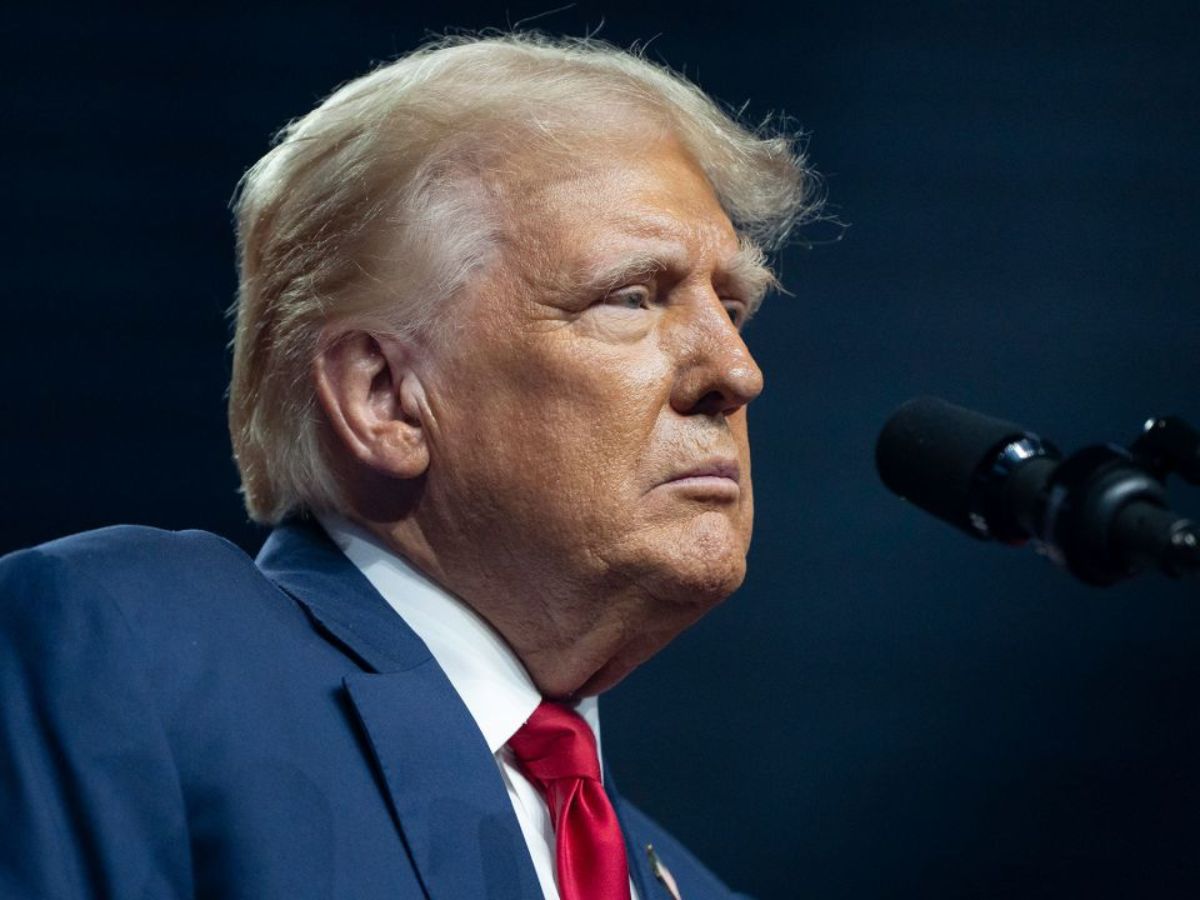
US President Donald Trump has announced that Venezuela will release between 30 and 50 million barrels of oil that have been stuck in storage because of US sanctions. He said this oil will be sold at market prices, and the money earned will be controlled by the US government to benefit both the people of Venezuela and the United States.
Trump also said he has told his energy secretary, Chris Wright, to carry out the plan “immediately”.
“It will be taken by storage ships, and brought directly to unloading docks in the United States,” Trump wrote on his social media platform Truth Social on Tuesday.
This move follows Trump’s earlier promise to “take back” Venezuela’s oil and revive its struggling energy sector after his administration’s abduction of Venezuelan President Nicolas Maduro.
US Oil Giants May Step In
Trump has said that American oil companies are ready to invest billions of dollars to rebuild Venezuela’s damaged oil industry.
Three major US firms Chevron, ExxonMobil and ConocoPhillips have not officially commented on the plan. However, US media reports say their representatives will meet Trump on Friday to discuss Venezuela.
How Big Is 30–50 Million Barrels?
In the global context, this amount of oil is not very large. The world uses more than 100 million barrels of oil every day, and the United States alone produces about 14 million barrels per day. Mark Finley, an energy expert at the Baker Institute in Houston, said it is hard to judge the impact of Trump’s plan without more details.
“Thirty to 50 million barrels over what time frame? That’ll be key to assessing the significance of this,” Finley told the sources.
“In a month, that’s essentially all Venezuelan output. In a year, it’s pretty small.”
Questions Over Who Will Control the Money
Trump said he would control the oil revenues, but experts are unsure how that would work. Scott Montgomery, an energy expert at the University of Washington, said the idea is unclear.
“I have no real idea about how Trump might distribute the cash. There’s not much of a precedent for this kind of thing, to say the least, at least not in the US,” Montgomery told the sources.
Reviving Venezuela’s Oil Industry Will Take Years
Experts say bringing Venezuela’s oil production anywhere near its 1990s peak of more than three million barrels per day would take massive investment and time.
According to Rystad Energy, a Norway-based consultancy, the country would need around $110 billion to reach about two million barrels per day.
“A significant amount of upfront scientific and engineering work has to be done to understand the condition of the productive reservoirs – these have changed over time, with key properties altered,” Montgomery said.
Why US Companies Are Cautious
Some analysts doubt US oil companies will rush back into Venezuela. In the past, many of their assets were seized under former president Hugo Chavez, before Nicolas Maduro took power.
In 2007, Chavez’s government nationalised the last privately run oil fields. Later, ExxonMobil and ConocoPhillips won international arbitration cases for $1.6 billion and $8.7 billion, but Venezuela never paid.
Today, Chevron is the only major US oil company still operating in Venezuela, producing about 150,000 barrels per day.
From Oil Giant to Weak Producer
Venezuela once ranked among the world’s top oil producers. But US sanctions, along with years of mismanagement, corruption, and underinvestment under Chavez and Maduro, have badly damaged the sector.
Even though Venezuela has the largest proven oil reserves in the world, its current production makes up less than 1 percent of global supply.
Trump’s latest announcement may bring some oil to the US in the short term, but rebuilding Venezuela’s oil industry will be a long and costly process.




