
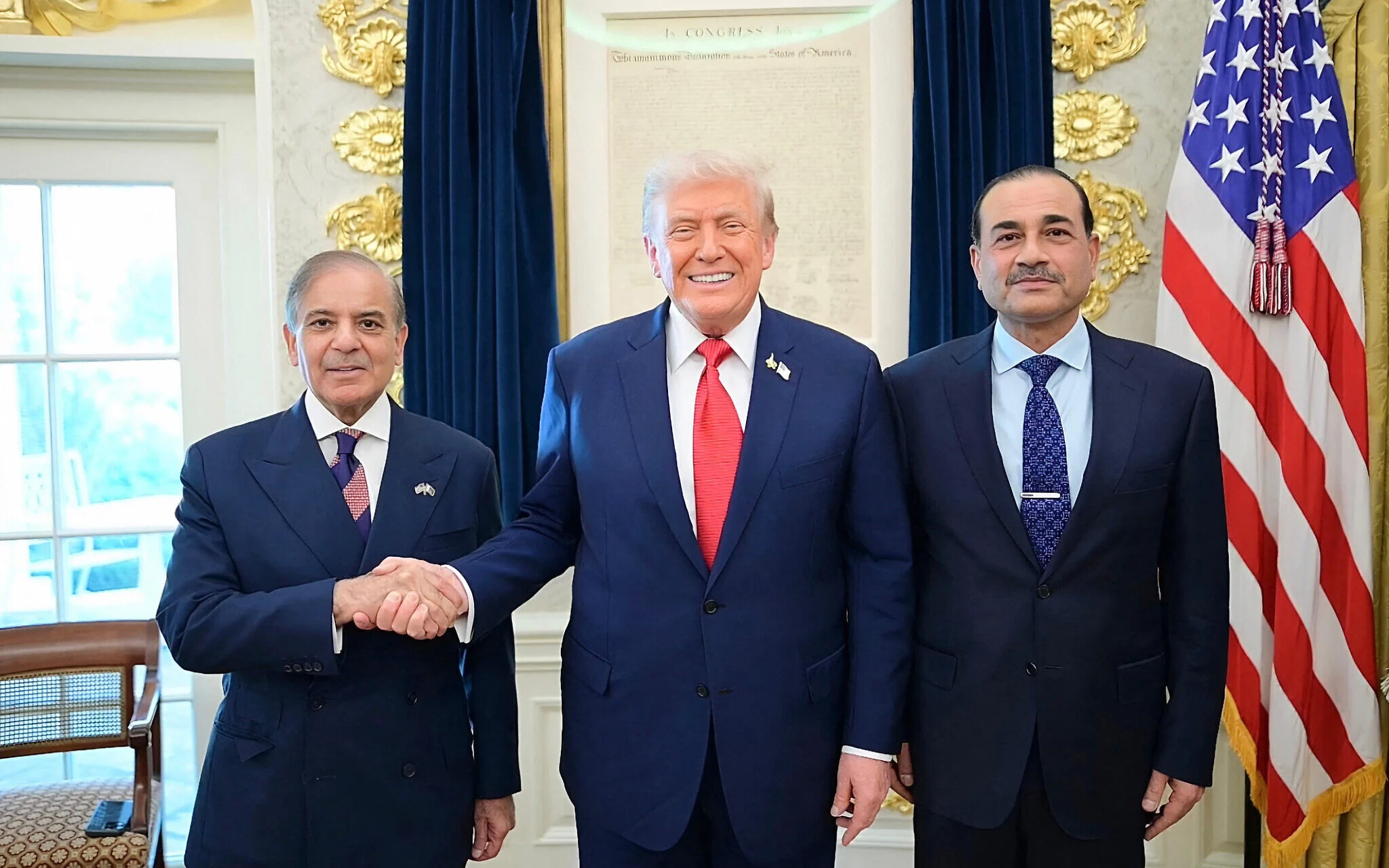
NEW DELHI: Pakistan Prime Minister Shehbaz Sharif and Chief of Army Staff Field Marshal Asim Munir have proffered a strategic overture to US President Donald Trump, signalling that Pakistan could contribute personnel to a proposed International Stabilisation Force in Gaza. By projecting itself as a uniquely suitable contributor capable of providing a “Muslim face” to a mission that might otherwise be viewed as a Western occupation, security officials familiar with high-level discussions say Munir has offered an attractive proposition to Trump, one that carries the potential to trigger a significant pivot in Pakistan’s Middle East policy.
The offer, however, is deliberately conditional. Pakistani officials have conveyed that any deployment would require a clearly defined political mandate, a transparent command structure, and an operational roadmap that excludes the politically toxic task of disarming Palestinian resistance groups. Crucially, Islamabad has also sought sufficient lead time to “prepare the domestic narrative” for a move that would otherwise be a lightning rod for protest at home.
It is likely that many of these conditions could be accommodated by the Trump administration, which in recent times has taken several controversial and unconventional policy decisions. Behind Islamabad’s signalling lies a layered strategic calculation aimed at bypassing the traditional U.S. foreign policy establishment. By positioning itself early as a willing partner in Trump’s “Board of Peace” framework, Pakistan is seeking to rebuild direct relevance with a president whose transactional approach is viewed by the military establishment as more flexible and outcome-driven than the bureaucratic scrutiny of the State Department.
Participation in a Trump-backed force would provide Field Marshal Asim Munir and the civilian government with valuable political access and diplomatic goodwill at a time when Pakistan is navigating a fragile economic recovery and seeking continued support from international lenders. This strategic logic is also shaped heavily by the “India factor”. Pakistani planners see significant value in accumulating diplomatic capital with Washington as a form of insurance against the risk of Indian military retaliation.
In the event of a major terror attack on Indian soil, Islamabad calculates that being perceived as operationally indispensable to a high-priority US-led peace initiative would substantially raise the political cost for Washington of endorsing any limited Indian strikes. It would also, in Pakistan’s assessment, compel New Delhi to act with greater restraint and calculation. By offering troops for Gaza, Pakistan aims to project itself as a security provider beyond its borders, while simultaneously undercutting India’s efforts to present itself in Western capitals as a country merely responding defensively to threats emanating from Pakistan. The broader objective is to reduce Western tolerance for Indian military retaliation.
A third strand of this policy relates to Pakistan’s deteriorating western frontier. Officials argue that sustained pressure from the Tehrik-i-Taliban Pakistan (TTP) has tied down a disproportionate share of troop strength that could otherwise be deployed elsewhere. By engaging Trump directly and amplifying claims of regional backing for the TTP, Islamabad hopes to push Washington to exert pressure on the group’s alleged sponsors. The ultimate objective is to create sufficient strategic breathing space along the Afghan border to allow Pakistan to redeploy battle-hardened units to Gaza—a move that would simultaneously serve Trump’s regional vision while easing Islamabad’s domestic security burden and financial overstretch.




