Reports claim Taliban Supreme Leader Hibatullah Akhundzada may have been killed in Pakistani airstrikes in Kabul, but officials have yet to confirm.
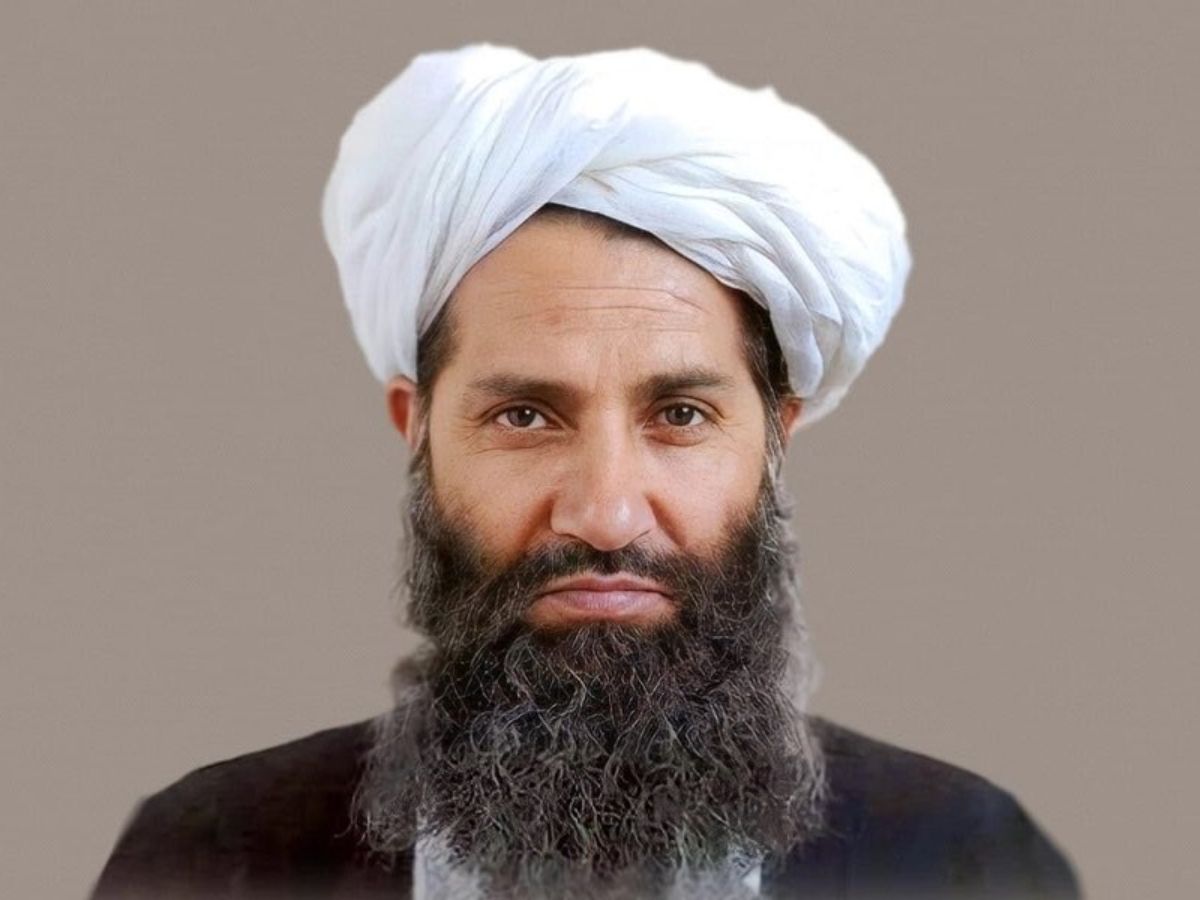
Reports claim Taliban Supreme Leader Hibatullah Akhundzada may have been killed in Pakistani airstrikes in Kabul [Photo: X]
Tensions between Pakistan and Afghanistan have escalated sharply, with reports claiming that Taliban Supreme Leader Hibatullah Akhundzada may have been killed in Pakistani airstrikes targeting Taliban positions in Kabul.
The alleged strike comes amid one of the most serious flare-ups along the Durand Line in recent years, involving air raids, cross-border attacks, and mounting casualties. While these reports have spread rapidly online, officials from both countries have yet to confirm Akhundzada’s fate, leaving the region on edge as speculation and uncertainty grow.
Reports claiming that Afghanistan’s Taliban Supreme Leader Hibatullah Akhundzada was killed in Pakistani airstrikes targeting Kabul and other cities have spread rapidly online, stirring anxiety across the region. An account shared by OSINT Europe on social media said Akhundzada and several senior Taliban commanders died when Pakistan’s air force struck what it described as Taliban headquarters.
BREAKING: The Supreme Leader of the Islamic Emirate of Afghanistan, Hibatullah Akhundzada, has reportedly been killed along with senior Taliban commanders after Pakistani airstrikes targeted headquarters in Kabul, Afghanistan. pic.twitter.com/lKRJbucvwQ
— OSINT Europe (@Osinteurope) February 27, 2026
However, no confirmation has come from official sources in Afghanistan or Pakistan, and both governments have remained silent on this specific claim as tensions between the neighbouring countries escalate.
The alleged strike comes as conflict between Islamabad and Kabul flared into one of the most serious military confrontations in years, with air operations, ground clashes, retaliatory attacks and international calls for de‑escalation all unfolding in rapid succession.
Hibatullah Akhundzada has served as the supreme leader of the Islamic Emirate of Afghanistan and the head of the Taliban since 2016. Known for his reclusive persona, Akhundzada rarely appears in public, issuing directives and guidance through communications and Taliban networks rather than media appearances.
Under his leadership, the Taliban consolidated control of Afghanistan in 2021, returning to power after the withdrawal of US and NATO forces. Akhundzada’s authority extends over both political and military wings of the Taliban. However, much of the day‑to‑day operations are often managed by deputies such as Yaqoob and Sirajuddin Haqqani.
Because of his low public profile and rare appearances, rumours about his health or possible death have surfaced multiple times historically, often without reliable verification. This pattern adds to the difficulty in assessing the latest claims.
The current wave of airstrikes by Pakistan began amid rising tensions marked by cross‑border attacks and deadly clashes along the Durand Line, the long‑contested border between Pakistan and Afghanistan. Pakistan says it conducted these air operations to strike militant hideouts believed to be launching attacks against its forces from Afghan territory.
According to Pakistani officials, these strikes, part of a larger offensive dubbed Operation Ghazab Lil Haq, targeted camps and bases of groups such as the Tehrik‑e‑Taliban Pakistan (TTP) and Islamic State – Khorasan Province (ISKP), which Islamabad accuses of using Afghanistan as a sanctuary for militants.
Afghan authorities condemn the strikes, calling them violations of Afghan sovereignty and asserting that civilian structures, including homes and religious schools, were hit. United Nations observers have reported that at least 13 civilians were killed in recent Pakistani air raids.
While the viral reports about Akhundzada’s death include a social media claim by OSINT Europe suggesting he was killed in the airstrikes, no independent or official confirmation has been issued by either the Afghan regime or Islamabad. Afghan government spokespeople have not corroborated the allegation, and Pakistan has not acknowledged targeting top Taliban leadership.
Given the lack of verified information and Akhundzada’s history as a reclusive figure, analysts caution that such claims must be treated with scepticism until credible sources confirm them. There are precedents of unverified rumours about Taliban leaders’ deaths in past conflicts that later proved unfounded.
While Akhundzada’s status remains unclear, some senior Taliban officials have been confirmed dead in the recent Pakistani attacks. One widely reported casualty was Mullah Neda Mohammad Nadeem, the Taliban’s acting Minister of Higher Education and a long‑serving party figure.
🚨 BREAKING: The Taliban's acting Minister of Higher Education Neda Mohammad Nadeem—son-in-law of Supreme Leader Hibatullah Akhundzada—was killed in Pakistani airstrikes amid the escalating Afghanistan–Pakistan border conflict.
— Bros Okos (@OkosOstan) February 27, 2026
“The Taliban’s acting Minister of Higher Education, Neda Mohammad Nadeem, son‑in‑law of Supreme Leader Hibatullah Akhundzada, was killed in Pakistani airstrikes amid the escalating Afghanistan–Pakistan border conflict.”
Nadeem held several key positions under the Taliban before his death on 26 February 2026, when Pakistan conducted intense air operations against multiple Taliban targets. His death underscores how deeply the border conflict is affecting high‑ranking officials on both sides.
The recent strikes reflect a broader and deteriorating security landscape along the Pakistan‑Afghanistan frontier. Pakistan claims militants are using Afghan territory to plan and launch deadly attacks inside Pakistan, including suicide bombings and assaults on security forces. Afghan officials reject this narrative, accusing Pakistan of violating international law and Afghan sovereignty.
The situation threatens to undo years of relative calm and ceasefire efforts. Diplomats and international observers warn that continued escalation could shatter fragile regional stability, disrupt civilian life, and fuel further conflict if left unchecked.
At this stage, while rumours about one of Afghanistan’s most powerful figures continue to circulate, the true fate of Hibatullah Akhundzada remains unverified and shrouded in the fog of war.
