
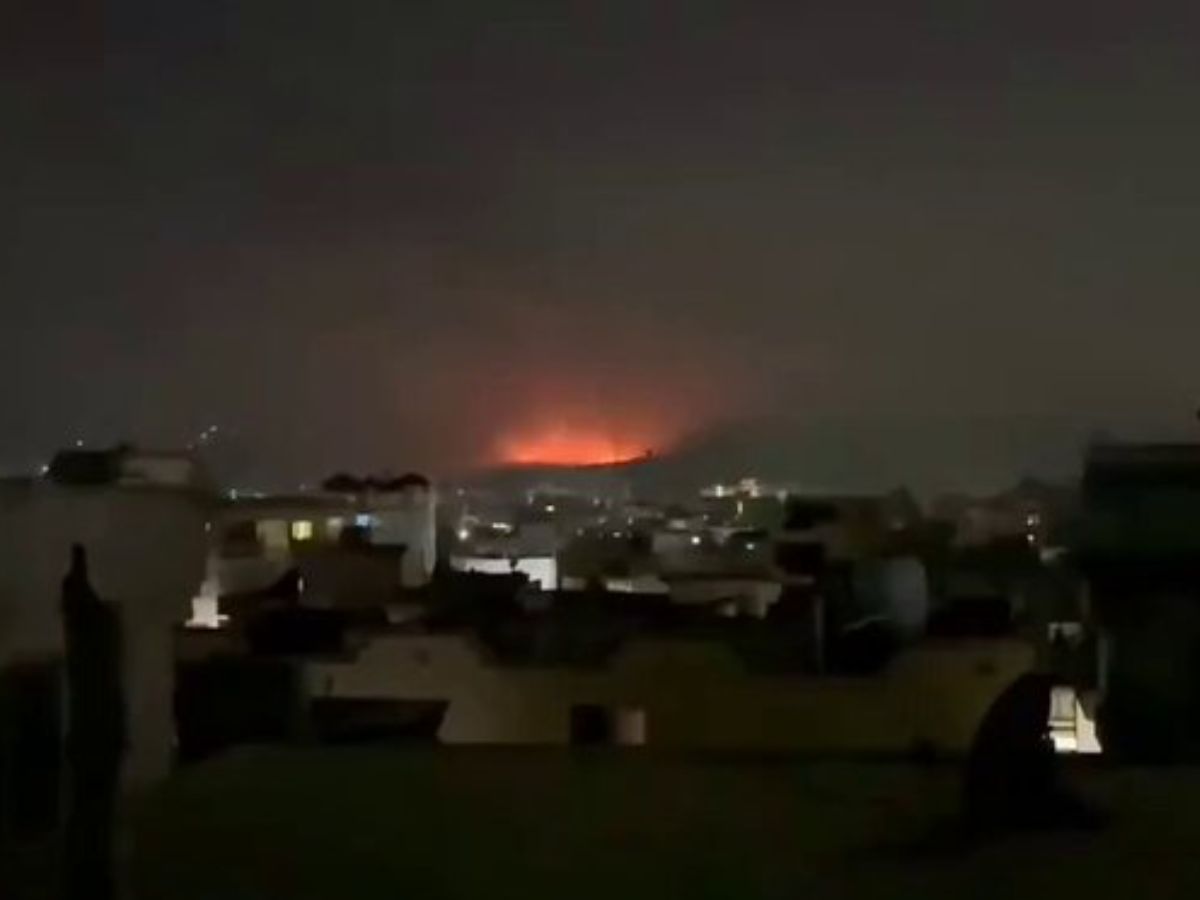
Pakistan-Afghanistan War: Tensions between Pakistan and Afghanistan have sharply increased after fresh fighting along the Durand Line. Both sides have shared different versions of what happened. While the Taliban say they carried out a strong retaliatory attack, Pakistan insists it only responded to “unprovoked fire.” Here is a detailed look at the claims and counterclaims.
What Sparked the Latest Pakistan-Afghanistan Border Clash?
The recent violence began after Pakistan carried out airstrikes over the weekend. Islamabad said it targeted hideouts of the Islamic State and Tehreek-e-Taliban Pakistan (TTP) in eastern Afghanistan’s Khorasan Province.
However, the Taliban government rejected these claims. It denied that TTP leaders use Afghan soil as a safe haven to launch attacks inside Pakistan. The Taliban warned that continued strikes would lead to retaliation. Soon after, heavy clashes erupted along the Durand Line.
Pakistan-Afghanistan War: Why Did the Taliban Claim It Launched Heavy Retaliatory Operations?
The Taliban described its action as a response to repeated Pakistani attacks. Hamdullah Fitrat, the Taliban government’s deputy spokesperson, said “Heavy retaliatory offensive operations” were conducted at several points along the border.
In a post on X, he wrote, “The Islamic Emirate of Afghanistan, through the 2023 Mansouri Corps and 201 Khalid bin Walid Corps, has launched heavy retaliatory offensive operations against the enemy along the so-called Durand Line at various points in the provinces of Paktia, Paktika, Nuristan, Kunar, Khost, Nangarhar, and at the Torkham Gate.” According to the Taliban, the operation was a direct response to what it called repeated aggression from Pakistan.
Pakistan-Afghanistan War: Did the Taliban Really Kill 55 Pakistani Soldiers and Capture 19 Posts?
The Taliban claimed major battlefield gains. Fitrat stated, “Nineteen outposts and one headquarters have been taken so far; four outposts were vacated and abandoned and the positions were totally destroyed by fire. There have been upto fifty-five Pakistani soldiers killed, 23 of them have been taken alive and placed in the Mujahideen’s hands. One tank has been destroyed, dozens of light and heavy weapons have been taken as loot, and one International Harvester truck has been taken prisoner. Operations for retaliatory offensives are still in progress.”
In another post, he added, “The major headquarters of the Pakistani regime located at Anzar Sar, under the Babrak post in the Alisher-Terezi district of Khost province has been captured.”
Taliban spokesperson Zabiullah Mujahid also claimed that “Extensive offensive operations have started against Pakistani army centres and military facilities along the Durand Line in response to the repeated instances of rebellion and assaults by Pakistani military circles.”
However, Pakistan has strongly denied these claims.
Pakistan-Afghanistan War: How Did Pakistan Respond to the Taliban’s Claims?
Pakistan rejected the Taliban’s version of events. Officials said Afghan forces started the fighting by opening fire on Pakistani positions in the northwest. According to reports, the exchange of fire lasted more than two hours before Pakistani troops responded.
Pakistan’s Information Ministry said its forces gave an “immediate and effective response” to “unprovoked fire” in several areas. It added that the country would take all necessary steps to protect its people and territorial integrity.
Mosharraf Zaidi, spokesperson for Pakistan’s prime minister, said Pakistani forces caused “heavy losses” across the border and that “not only were no Pakistani posts captured or damaged.”
Information Minister Attaullah Tarar admitted that there were some injuries but said the numbers were far lower than what the Taliban claimed. He accused Kabul of “spreading false and baseless propaganda.”
Pakistan-Afghanistan War: What Is Operation ‘Ghazab Lil Haq’ and Why Was It Launched?
Pakistan named its counter-action Operation ‘Ghazab Lil Haq.’ The operation was launched after the recent border clashes with the Afghan Taliban.
Under this mission, Pakistani forces carried out military operations in several border areas and targeted Taliban positions. Islamabad described it as a necessary step to respond to the escalation and to defend its territory.
The operation reflects Pakistan’s effort to show that it will respond firmly to cross-border attacks.
Pakistan-Afghanistan War: Who Fired First? Conflicting Narratives From Kabul and Islamabad
A major question remains unanswered — who started the fighting?
The Taliban say their actions were in response to repeated Pakistani strikes inside Afghan territory. On the other hand, Pakistan insists that Afghan forces opened fire first, forcing its troops to respond.
Both governments have accused each other of aggression, making it difficult to confirm the exact sequence of events.
Pakistan-Afghanistan War: Why Is the Durand Line a Persistent Flashpoint Between Pakistan and Afghanistan?
The Durand Line, which stretches over 2,600 km (1,615 miles), has long been a source of tension. It passes through difficult terrain and sensitive border districts. Over the years, it has witnessed frequent clashes, cross-border firing, and disputes over military posts.
Even during ceasefires, distrust remains high. Militant attacks, airstrikes, and allegations of cross-border infiltration often trigger fresh violence.
The latest escalation comes after days of tension and threatens a fragile ceasefire that followed deadly clashes last October. If both sides fail to control the situation, the region could see further instability in the coming days.




