Was Taliban chief Hibatullah Akhundzada targeted in Pakistan’s Afghanistan airstrikes? Here’s what is confirmed and what remains unverified.
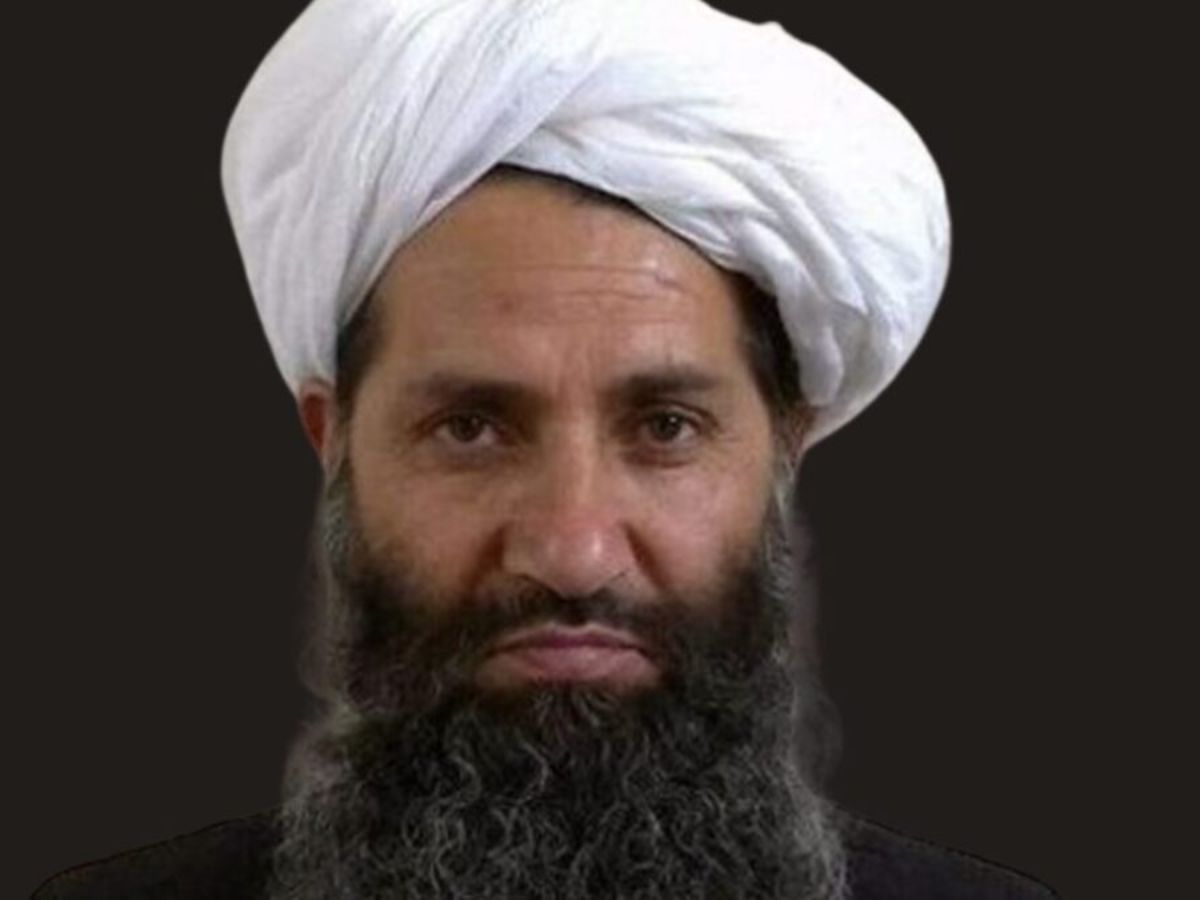
Was Taliban chief Hibatullah Akhundzada targeted in Pakistan’s Afghanistan airstrikes [Photo: X]
Tensions between Pakistan and Afghanistan have escalated sharply following cross-border airstrikes and military exchanges along the Durand Line. Amid the rising hostilities, social media platforms were flooded with claims that Pakistan may have attempted to target the Taliban’s supreme leader during the strikes.
The speculation has centred around reported jet activity over Kandahar, a city believed to be the operational base of the Taliban’s top leadership. But is there any credible evidence to support the claim?
The viral claim suggests that Pakistan’s recent air operations were aimed at eliminating the Taliban’s Supreme Leader. However, as of now, there is no official confirmation from either Islamabad or Kabul that such a targeted strike was carried out.
Pakistan has acknowledged conducting operations, but it has described them as counterterrorism actions focused on militant infrastructure — not Taliban leadership. Similarly, the Taliban administration has accused Pakistan of violating Afghan airspace but has not claimed that its supreme leader was attacked.
At this stage, the claim remains unverified.
Hibatullah Akhundzada has led the Taliban since 2016, following the death of Mullah Akhtar Mansour. He serves as the group’s highest religious and political authority and plays a decisive role in shaping its policies.
Unlike many Taliban officials who operate from Kabul, Akhundzada is widely believed to reside in Kandahar. He rarely appears in public and maintains an extremely low profile, which often fuels speculation during security crises.
His reported presence in Kandahar is one reason why air activity over the city triggered rumours of a possible assassination attempt.
Pakistan confirmed carrying out cross-border strikes targeting what it described as hideouts linked to the Tehreek-e-Taliban Pakistan (TTP). Islamabad framed the operations as defensive measures against militant threats operating from Afghan territory.
Reports from journalists in Afghanistan mentioned aircraft activity, loud explosions, and sporadic gunfire in certain areas during the period of heightened tensions. However, there was no independent confirmation of a strike targeting senior Taliban leadership.
The military exchanges appear to have focused on border security concerns rather than regime-level targets.
What is officially confirmed is limited to the following:
What has not been confirmed:
Both governments have stopped short of mentioning any leadership-targeted operation.
The latest tensions are part of a broader pattern of instability along the Durand Line, the disputed border between Pakistan and Afghanistan.
Pakistan has repeatedly accused Afghan soil of being used by TTP militants to launch attacks. The Taliban government, in turn, has rejected these allegations and accused Pakistan of aggression.
Border crossings such as Torkham and Spin Boldak have previously witnessed clashes, closures, and troop buildups. The recent air activity appears to be another chapter in this ongoing security friction.
The turning point for the viral claim appears to be reports of aircraft flying over Kandahar. Because Akhundzada is widely believed to operate from the city, online narratives quickly linked the two events.
However, speculation alone does not establish intent. Military aircraft activity in a region does not automatically indicate a leadership-targeted strike, especially without corroborating evidence.
No satellite imagery, official confirmation, or credible investigative reporting has supported the theory that the Taliban chief was the intended target.
Based on available evidence, there is no proof that Pakistan targeted Hibatullah Akhundzada during its recent air operations in Afghanistan.
While cross-border strikes and jet activity have been confirmed, there is no official statement, independent verification, or credible reporting indicating an assassination attempt on the Taliban leader.
