Pakistan’s latest security data shows conflict-level violence nationwide, with militant attacks and operations reaching wartime intensity across provinces.
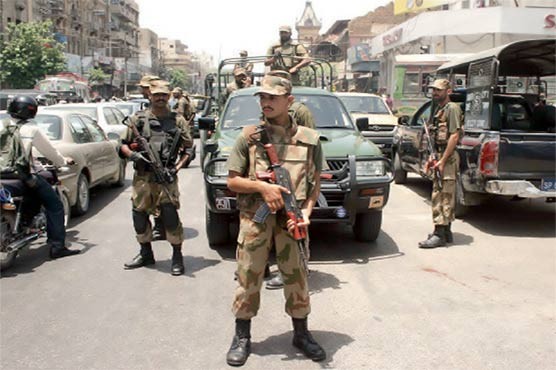
Pakistan’s 2025 security figures reveal conflict-scale violence and nonstop counter-terror operations across multiple regions (Photo: File)
NEW DELHI: Pakistan’s internal security statistics released this week by the Director General, Inter-Services Public Relations, the official spokesperson and media wing of the Pakistan Armed Forces, present one of the clearest indicators yet of a country facing conflict-level violence across multiple regions despite not being officially at war.
While the military likely released these figures to showcase the scale of its counter-terrorism operations and project an image of firm control to both domestic audiences and international partners evaluating security cooperation and investment prospects, the numbers have instead drawn attention to the extent of Pakistan’s instability. Analysts say the wide geographic spread of attacks and the sheer operational tempo point not to effective stabilisation but to a deeply disturbed internal-security environment.
According to data covering January to November 2025, Pakistan recorded 4,729 terrorist incidents and conduct-ed 67,023 intelligence-based operations, figures that mirror active conflict theatres rather than normal internal policing environments.
While Khyber Pakhtunkhwa (KP) accounted for the highest number of attacks with approximately 3,357 incidents, Balochistan report-ed 1,346 attacks and more than 53,000 counter-terror operations, underscoring the depth of insurgent net-works in the province.
The data also shows that Pakistan’s security crisis is not confined to its western belt.
The DG ISPR categorises Punjab, Sindh, Gilgit-Baltistan, Islamabad and Azad Kashmir together as “Rest of Pakistan,” and even this region recorded 857 operations and 26 terrorist incidents in the same period.
Analysts note that the presence of consistent militant activity across all provinces, including Pakistan’s political and economic heartland, indicates a nationwide security environ-ment rather than isolated geographic hotspots.
A separate briefing cover-ing the period since 4 November 2025 underscores the immediacy of the challenge.
Pakistan reported 356 terrorist attacks including 264 in KP, 88 in Balochistan, and 4 in the rest of the country and conducted 4,910 operations, averaging 233 per day.
Security forces killed 206 militants, including eight Afghan nationals, while 57 people were killed and 207 injured across military, law-enforcement and civilian categories.
The scale and distribution of these incidents confirms that all major provinces remain affected by militant activity.
Conflict researchers draw comparisons between Pakistan’s internal operational tempo and that of internationally recognised conflict zones.
During the height of the Iraq insurgency between 2006 and 2008, coalition forces conducted an estimated 200–300 operations per day, considered among the most intense periods of urban counter-insurgency. Pakistan’s figures now fall within that range, despite the absence of a formal war declaration or foreign troop deployment. Somalia’s security forces typically conduct between 70 and 100 operations per month, Nigeria conducts between 1,000 and 2,000 across multiple insurgent-hit states, and Yemen’s frontlines conduct several hundred operations depending on conflict dynamics.
Pakistan’s numbers thousands of operations every month are significantly higher than most of these.
Analysts note that Pakistan is contending with two distinct, long-standing insurgencies simultaneously.
KP faces a resurgent jihadist campaign connected to the Tehrik-e-Taliban Pakistan and Afghan-based armed networks, while Balochistan continues to see one of the world’s longest running separatist movements.
The persistence of these conflicts through multiple decades suggests structural challenges in governance, political integration, border management and security policy.
Although the Pakistan army frequently attributes unrest to external actors such as India or Afghanistan, experts say the pat-tern, frequency and spread of incidents shown in the DG ISPR data point primarily to internal drivers, including long-running grievances in Balochistan and the blow-back from historic policies involving non-state groups.
The nationwide spread of militant activity, from the tribal frontier to the re-source-rich southwest and into Pakistan’s urban and semi-urban centres, carries broader implications for the region.
Prolonged instability raises the risk of cross-border militant movement, arms flow, and disruptions to connectivity and energy projects that link South Asia, Central Asia and the Arabian Sea. For neighbouring countries, Pakistan’s internal-security trajectory represents a long-term strategic concern.
The data has also drawn attention in Washington, where some advisors close to former President Donald Trump have been advocating greater economic engagement with Pakistan.
Analysts caution that such advice may be overlook-ing the depth of Pakistan’s internal security deterioration. With operations now approaching wartime tempo and militant incidents affecting every province, they warn that any large-scale investment or strategic initiative must account for the internal risks documented by Pakistan’s own military.
Pakistan’s latest security figures indicates a country experiencing conflict-level violence across multiple fronts, a sustained operational load on its armed forces, and persistent militant activity across all provinces.
These conditions place Pakistan among the world’s most disturbed internal-security environments outside an active, formally declared war, with direct consequences for its stability and for the wider South Asian region.
