Agreement of 22 May sketches out joint exploration, mining, processing, offtake of minerals from Pak.
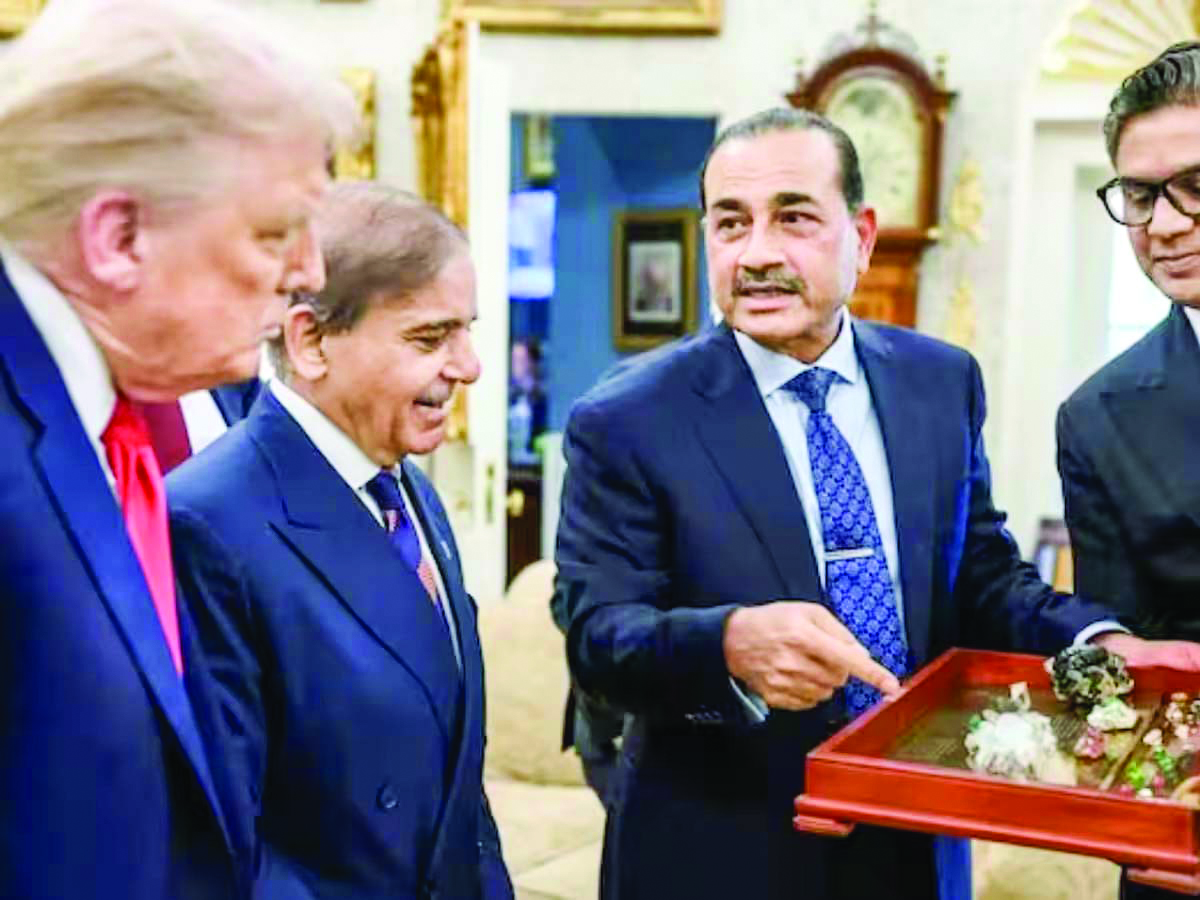
Pakistan’s military-linked FWO spearheads $1 trillion rare earth mineral framework with the US, targeting integration into global supply chains.
NEW DELHI: Pakistan has quietly hung a trillion-dollar minerals carrot in front of Trump's Washington, filing a rare earth framework that lays out a five-year, government-to-government plan to plug its mineral reserves directly into U.S. and allied supply chains. The agreement, dated 22 May 2025, sketches out joint exploration, mining, processing and offtake of critical minerals from Pakistan—anchored by an "indicative commercial value of up to USD 1 trillion". This cooperation between the two countries, which took concrete steps after U.S. President Donald Trump was sworn in, is being cited as one of the primary reasons for the 'love' that Washington has revived for Pakistan, ignoring long-term strategic implications that people who replace Trump in the coming times will face.
The Framework Agreement on Strategic Cooperation and Supply of Rare Earth Minerals and Metals establishes a five-year initial term, renewable by mutual consent, and creates a Joint Steering Committee to oversee implementation. It is explicitly framed as a government-to-government strategic understanding, not a commercial contract.
On Pakistan's side, the Frontier Works Organization (FWO)—a military-linked engineering and infrastructure body—is designated as the lead entity for geological exploration, mining, logistics and implementation. The United States is to nominate a public sector entity to lead investment, processing and technology deployment in Pakistan. It is pertinent to mention that FWO's selection is not incidental; it shows how deeply entrenched the Pakistan military is involved in what essentially is the responsibility of a civilian government.
Formed in 1966 as a specialised arm of the Pakistan Army, FWO has long operated as the military's engineering and infrastructure arm, tasked with building roads, tunnels, bridges and strategic infrastructure in remote and conflict-prone areas. Over the decades, it has expanded into commercial ventures in mining, logistics, energy and construction, often operating in places where civilian agencies or private firms lack capacity or security cover. It reports to the Quartermaster General branch of the Pakistan Army, and its leadership is drawn from serving military officers—the Director General is typically a Major General. FWO is also one of the few Pakistani entities with both the operational footprint and institutional backing to undertake large-scale extractive projects in Balochistan and Gilgit-Baltistan, regions that are central to Pakistan's untapped mineral wealth but politically sensitive and security-heavy. Serving and retired generals have personal financial stakes in this body.
By placing FWO at the heart of the rare earth framework, Islamabad has made it clear to Trump that this is not a peripheral economic initiative—it's a strategic, state-backed programme, tied directly to the military establishment's logistical and political muscle. It also ensures that the Pakistani side of the venture is controlled by an institution with both technical capacity and the ability to manage security in restive areas where many of these claimed deposits lie.
The text sets out a broad scope of cooperation. It includes joint geological exploration and resource assessment of rare earth metals, critical minerals, granite, marble, gemstones and precious metals. It calls for sustainable mining and beneficiation operations led by FWO, the establishment of midstream processing and industrial facilities within Pakistan, and the integration of Pakistan's production into "trusted U.S. and allied global supply chains". It also references technology transfer, workforce training, infrastructure development and logistics support as key pillars of the cooperation.
The agreement cites an "initial offtake arrangement with an indicative commercial value of up to USD 1 trillion," with the possibility of phased expansion or rollover. The figure appears aspirational with no concrete data, though no proof exists to indicate that this massive amount of rare earth minerals is available. Still, it signals the scale of ambition embedded in the framework, positioning Pakistan as a potential major future supplier of critical minerals to the U.S. and its partners.
The task to ensure that officials on Capitol Hill fall for these mind-boggling numbers has been entrusted to lobbying firm Javelin Advisors. It also reflects how lobbying and strategic advisory firms have moved from traditional political influence work into brokering large-scale strategic economic frameworks. Pakistan is seeking to anchor itself in the global critical minerals race by aligning with the U.S. at a government-to-government level. The involvement of FWO underscores how central the state—and particularly the military-linked infrastructure apparatus—is to this push. The agreement does not itself guarantee any financial flows or project execution, but it creates the legal and political scaffolding for Pakistan to channel investment, technology and supply chain integration through U.S. partnerships over the coming years.
