
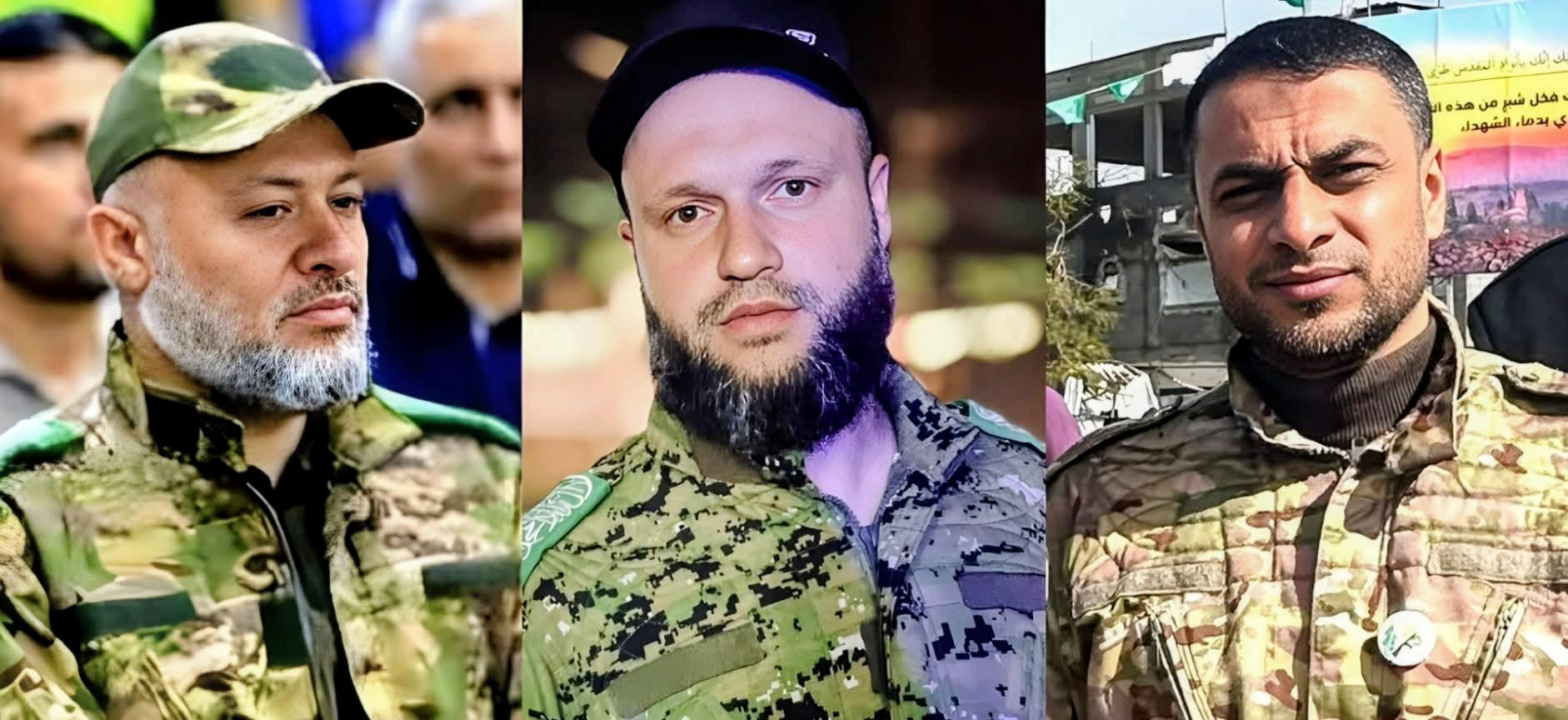
NEW DELHI: Despite nearly two years of sustained Israeli military pressure, Hamas military wing in Rafah appears to have retained enough structure to function, adapt and absorb losses. This has been revealed by recent reports quoting Hamas sources in regional media and by Israel’s killing of three senior commanders on Sunday.
The accounts point to a movement that prepared early for a long war through its subterranean network , maintained command cohesion underground even as Israeli forces pushed deeper into Rafah , and continues to operate within a system built to absorb tactical setbacks without strategic collapse. The Hamas cadre itself revealed these methods to prove how “resilient” they are.
Taken together, this picture also belies the narrative in some quarters that Israeli forces are carrying out unnecessary or arbitrary attacks ; instead, it suggests that senior Hamas operatives remain active and embedded within the very areas Israel continues to target.
According to these recent reports, Hamas fighters in Rafah spent much of the past two years operating almost entirely underground , surfacing only during ceasefires and withdrawing immediately when fighting resumed.
The pattern was repeated several times since late 2023, indicating deliberate operational discipline rather than reactive behaviour. The sources describe an underground environment that was stocked in advance with food, water, communications equipment and other essentials —an indication that Hamas had anticipated a drawn-out conflict and structured its tunnel network not just as a hiding place but as an operational hub.
The same accounts outline a degree of internal organisation inside the tunnels that runs counter to portrayals of a degraded or scattered force. Fighters were reportedly assigned defined roles , with some responsible for moving supplies, others for ambush positions, and others for transmitting messages between tunnel nodes.
For Israeli intelligence and military planners, these descriptions align with long-standing assessments that Hamas’ resilience rests on its subterranean infrastructure , which has allowed it to preserve command functions even as above-ground positions have been overrun or dismantled.
The killing of three senior operatives on Sunday further illustrates this dual reality. The IDF eliminated Muhammad al-Bawah (Abu Ahmed), commander of Hamas’ Eastern Rafah Battalion, his deputy, Ismail Abu Lebeda, and Tawfiq Salem, a company commander, after the men emerged from a tunnel shaft in eastern Rafah. Their presence together at the site indicates that key leadership figures were still using the tunnel network to move, coordinate and regroup, rather than having dispersed or been forced into isolated pockets by Israeli operations.
Israeli officials are likely to view the strike as evidence that continued pressure in Rafah is yielding high-value results , even if the tunnel system itself remains partly intact.
Sources said that at least 60 to 80 Hamas members are still trapped underneath Rafah. The combination of Hamas’ own descriptions and the targeted killing of its senior field commanders paints a clearer picture of the current phase of the conflict in Rafah. Israel has succeeded in locating and eliminating individuals but is still operating against a subterranean military system that was engineered to endure , allowing Hamas to regenerate its operational capacity despite the scale and duration of the war.




