Ahead of talks with Denmark, US officials won’t rule out force for Greenland. European allies plan a joint response. Read the latest on the NATO standoff.
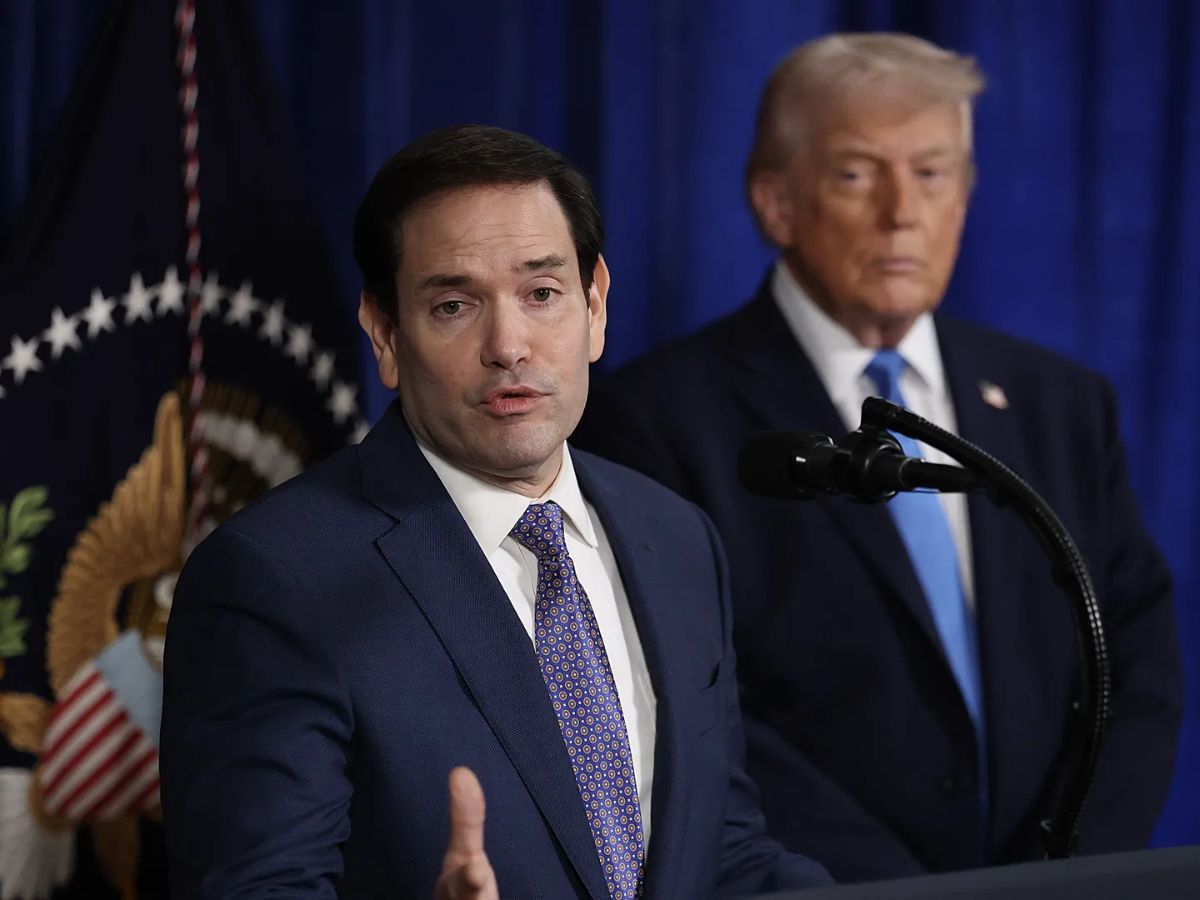
Rubio’s Denmark Visit Has One Big Question: Trump and Greenland (Image: X)
PARIS/BERLIN, January 8 — U.S. Secretary of State Marco Rubio will meet Danish leaders next week, but American officials signaled no retreat from President Donald Trump’s controversial goal to acquire Greenland. The prospect of a U.S. takeover of the Arctic island from a NATO ally has prompted urgent coordination among European powers.
Rubio confirmed the upcoming diplomatic talks but left all options open. He stated that Trump retains the option to address his objective “by military means,” referencing the recent U.S. operation in Venezuela as a comparative example. “As a diplomat… we always prefer to settle it in different ways,” Rubio told reporters. White House Press Secretary Karoline Leavitt echoed this, stating “All options are always on the table for President Trump,” while noting diplomacy is the first preference.
France, Germany, and other EU nations are actively formulating a joint plan. French Foreign Minister Jean-Noel Barrot said the issue would be raised at a meeting with German and Polish counterparts, emphasizing collective action. A German government source confirmed close cooperation with European partners and Denmark on “next steps.” A senior European official, speaking anonymously, said allies are waiting for Denmark to specify what concrete support it needs.
Danish and Greenlandic leaders have pushed back firmly. Danish Foreign Minister Lars Lokke Rasmussen called for a “more sensible dialogue” to replace the “shouting match.” Greenland’s representative in the Danish parliament, Aaja Chemnitz, was unequivocal: “Greenland has never been for sale and never will be for sale.” She called the U.S. refusal to rule out military intervention “completely appalling.”
A U.S. military move against Denmark, a founding NATO member, would cause a profound crisis within the alliance. It represents an extreme test of transatlantic solidarity. Analysts note the response is about both political solidarity and self-preservation of the principle of state sovereignty. Trump’s rationale—that Greenland is key to U.S. security and that Denmark has failed to protect it from Russian and Chinese influence—is disputed by Copenhagen, which says the threat picture is being misrepresented.
A: Senior U.S. officials, including Secretary Rubio, have stated that military means remain an option on the table, though diplomacy is preferred.
A: Greenland is a self-governing territory of the Kingdom of Denmark. It is covered by Denmark’s NATO membership but is not an independent member.
A: France and Germany are leading efforts to craft a unified European response in support of Denmark, emphasizing political solidarity.
A: Trump argues the island is strategically vital for U.S. military interests and claims Denmark has not adequately countered Russian and Chinese activity there—a claim Denmark disputes.
A: Secretary Rubio is scheduled to meet with Danish leaders next week, while European foreign ministers are discussing the issue imminently.
