
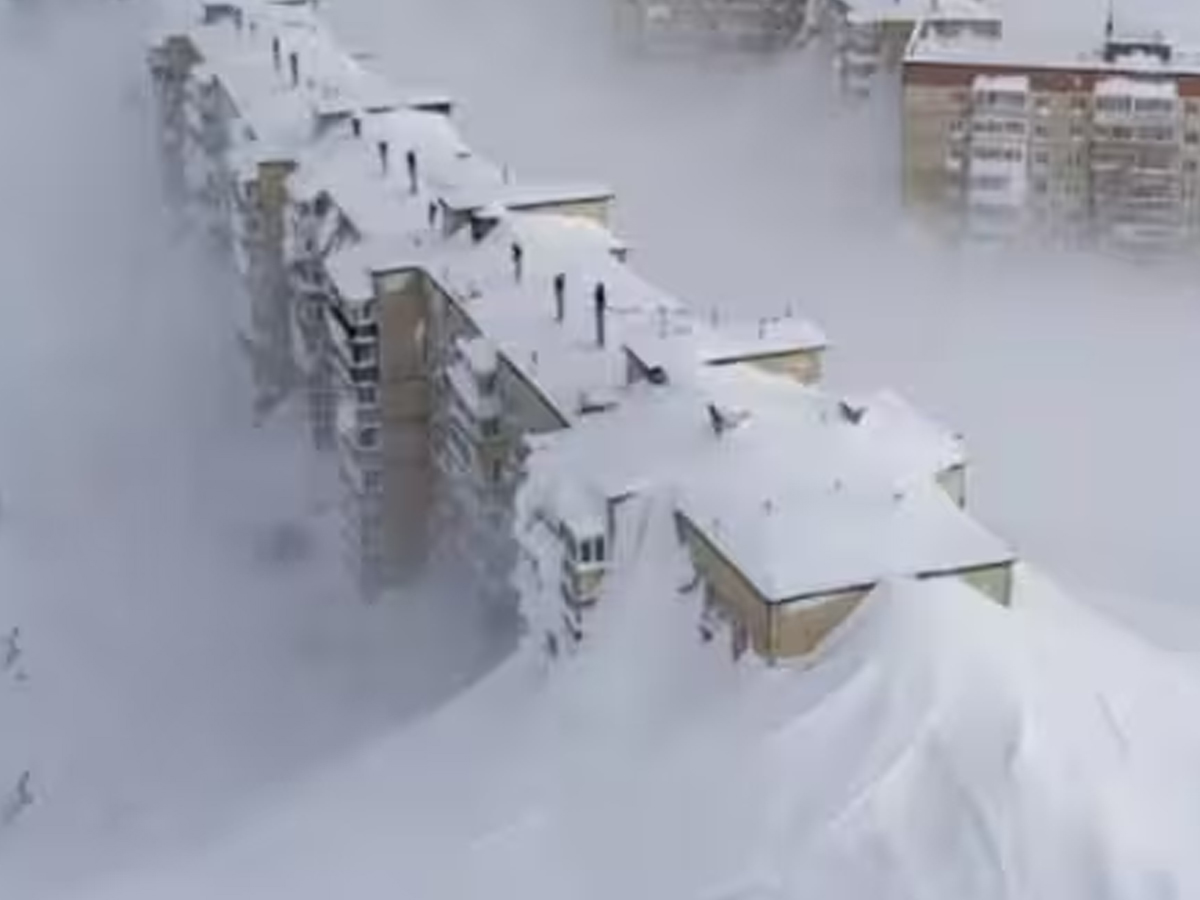
Russia’s remote Kamchatka Peninsula is facing its most extreme winter in decades after a massive snowstorm dumped record levels of snowfall unseen in nearly 60 years, paralysing cities, shutting down daily life, and forcing authorities to declare a state of emergency. Towering snowdrifts have swallowed cars, blocked entrances to multi-storey buildings, and turned entire neighbourhoods into surreal white landscapes.
Weather monitoring stations reported that more than two metres of snow fell in parts of the region during the first half of January alone, overwhelming infrastructure and emergency services. Residents have described the situation as nothing short of a “snow apocalypse”, a term that has quickly spread across social media.
Cities Buried as Videos go Viral
Striking images and videos from Petropavlovsk-Kamchatsky, the region’s main city, show vehicles completely submerged and roads carved into deep corridors flanked by towering snow walls. In some areas, snowdrifts have reached the height of two to four-storey buildings, forcing residents to dig tunnels just to exit their homes.
Kamchatka, Russia is so buried in snow right now that people are casually hopping out of windows and landing in snowbanks
— Clown World ™ 🤡 (@ClownWorld) January 20, 2026
Some viral clips even show locals jumping directly from apartment windows into thick snowbanks, landing safely or sliding down packed drifts, a dramatic illustration of the storm’s intensity.
Although Kamchatka is known for heavy winter snowfall, residents say this storm far exceeded anything they had experienced in decades, bringing daily life to a standstill.
Emergency declared after deadly rooftop avalanches
Authorities moved quickly after the storm led to fatal incidents. Officials confirmed that two people died after snow fell from building rooftops, prompting emergency measures across the region.
“I was recommended to declare the situation, which has led to rooftop avalanches that resulted in two deaths, a local emergency. I took that decision,” Yevgeny Belyaev, the mayor of Petropavlovsk-Kamchatsky, said on Telegram.
Exoplanet…
Kamchatka. After a snow storm, people are sliding down from the fourth floor. pic.twitter.com/BMGqsNj5wn— Black Hole (@konstructivizm) January 19, 2026
Emergency crews have since worked around the clock to clear rooftops, roads and access points, while officials warned residents to avoid areas beneath buildings where snow and ice remain unstable.
Schools shut, supplies disrupted
The relentless snowfall has forced schools, offices and many businesses to close, with authorities advising residents to switch to remote work where possible. Snow-choked roads and poor visibility severely disrupted transport, affecting supply chains across the city.
Local reports said several neighbourhood stores briefly ran out of basic food items, including bread, milk and eggs, adding to residents’ anxiety during the extreme weather.
Biggest blizzard in Russia in 146 years. Over 5m of snow. pic.twitter.com/pQOaw5MrNq
— Nature is Amazing ☘️ (@AMAZlNGNATURE) January 19, 2026
“The difficulties arising are purely logistical in nature and stem from travel restrictions. The deliveries are gradually resuming as roads are cleared,” said Yulia Morozova, the head of the regional government.
Officials said road-clearing operations remain a top priority to restore access to essential services.
Blame Placed on Building Managers
Russian authorities have pointed fingers at housing management companies, accusing them of failing to remove heavy snow and ice from rooftops in time. Officials said delayed action directly contributed to the deadly rooftop avalanches that claimed lives.
Residents have echoed these concerns online, sharing photos of dangerously overloaded roofs and calling for stricter enforcement of maintenance rules during extreme winter conditions.
Why Kamchatka snowfall is raising alarm
The Kamchatka Peninsula, which stretches south toward Japan, often experiences harsh winters, but meteorologists and local officials say the scale and persistence of this storm are exceptional. The snowfall has raised broader concerns about extreme weather events and preparedness in remote regions.
For now, emergency services remain on high alert as forecasts warn of continued snowfall and freezing temperatures, prolonging the struggle for residents already digging out from one of the most severe winters in living memory.




