Solar eclipse on February 17, 2026 will create a ‘ring of fire’ over Antarctica. Find out if India can see it, timings, visibility map and full details.
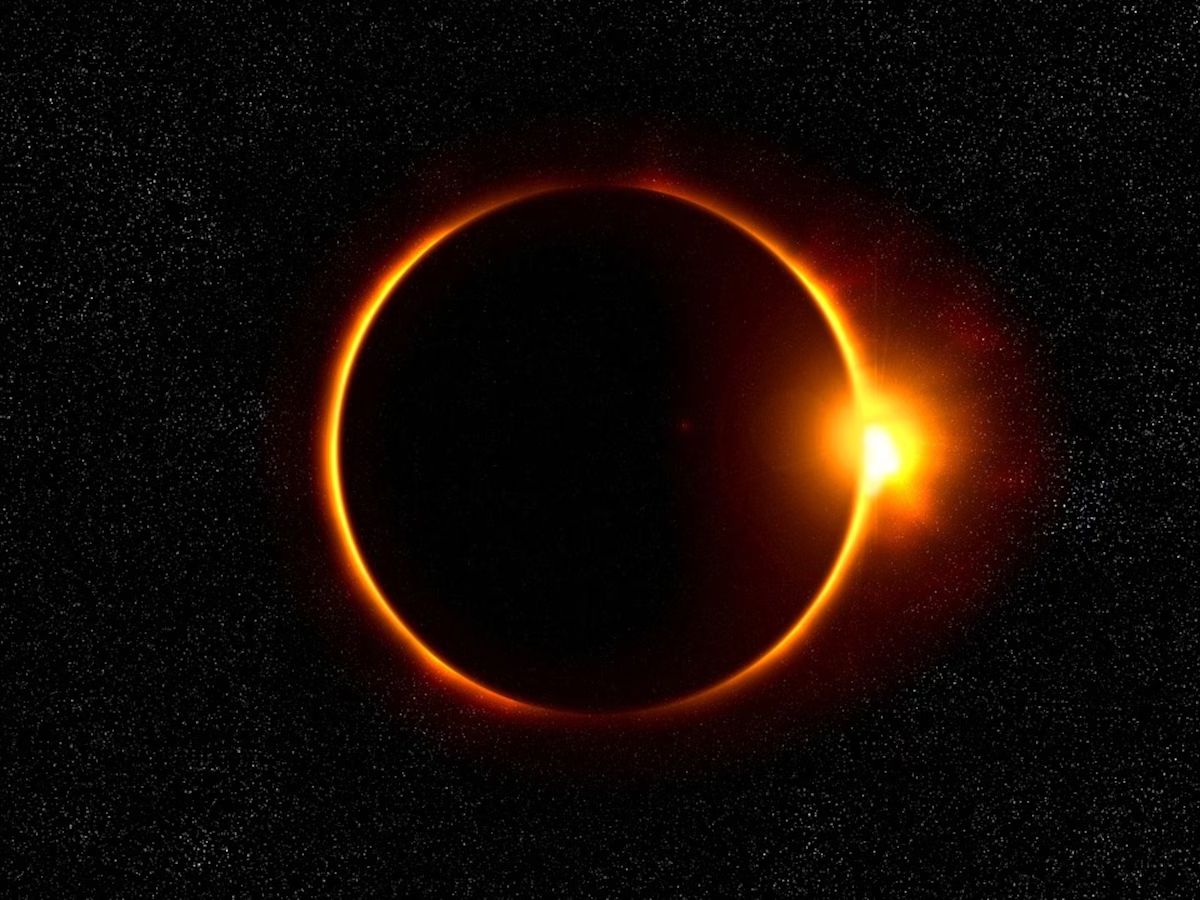
Solar eclipse on February 17, 2026, will create a ‘ring of fire’ over Antarctica [Photo: X]
The first solar eclipse of 2026 will take place on February 17, but skywatchers in India may have to sit this one out. Unlike many eclipses that sweep across populated regions, this celestial event will unfold largely over the icy expanse of Antarctica.
While it promises a dramatic “ring of fire” effect for those in its path, much of the world, including India, will not witness it directly.
The eclipse will begin at 09:56 UTC (Coordinated Universal Time), with maximum eclipse happening at 12:12 UTC. The event will last several hours from start to finish, though the exact duration will vary depending on the observer’s location within the visibility path.
Since the eclipse occurs over Antarctica, the most complete annular phase will be visible there.
No, the February 17, 2026, solar eclipse will not be visible from India. The eclipse will occur primarily in the Southern Hemisphere, with its central path passing over Antarctica. India lies completely outside the Moon’s shadow path, which means no partial or full phase of the eclipse will be seen anywhere in the country.
Visibility of a solar eclipse depends entirely on geography. If your location does not fall under the Moon’s shadow, whether partial or central, you cannot observe the event directly.
However, people in India can still watch the eclipse through live streams hosted by space agencies and observatories.
According to NASA, the February 17 event will be an annual solar eclipse. Solar eclipses are magnificient visual spectacle as when the Moon passes between the Sun and Earth, blocking the Sun's light and casting a shadow on the planet.
This temporarily darkens the sky, and in the case of an annular eclipse, which is set to happen in 3 days, when the Moon covers the Sun's centre, leaving the Sun's visible outer edges to form a ‘ring of fire.’
During an annular eclipse, the Moon appears slightly smaller than the Sun because it is farther from Earth in its orbit. As a result, it does not completely cover the Sun. Instead, a bright ring of sunlight remains visible around the Moon’s silhouette — creating the dramatic “ring of fire” effect.
The best view of the annular eclipse will be from Antarctica, where observers will experience the central “ring of fire” phase. Apart from Antarctica, some parts of the Southern Hemisphere will witness a partial eclipse. These regions include:
In these locations, the Moon will cover only part of the Sun, resulting in a partial solar eclipse rather than the full annular ring effect. Most of Asia, Europe, and North America will not see this eclipse at all.
Solar eclipses do not appear everywhere because the Moon’s shadow covers only a limited area of Earth. The central shadow — called the umbra — creates the annular or total effect, while the outer shadow, called the penumbra, produces a partial eclipse.
For the February 17, 2026, eclipse, this shadow track remains confined to Antarctica and nearby southern regions. That is why India and most Northern Hemisphere countries will not experience any phase of the event.
Astronomers note that the narrow path of annular eclipses often limits visibility to specific geographic zones.
Although direct viewing will not be possible in India, space agencies and astronomical institutions are expected to provide live online coverage. These live streams allow viewers worldwide to experience the eclipse virtually.
If you plan to watch solar eclipses in the future, always use proper eclipse glasses or certified solar filters. Looking at the Sun without protection can cause permanent eye damage.
India frequently experiences partial solar eclipses and occasionally total or annular eclipses, depending on the shadow path. Astronomy enthusiasts should track upcoming celestial calendars to find the next visible event over the Indian subcontinent.
For now, the February 17 eclipse remains a rare Antarctic spectacle, one that penguins might enjoy more than people.
