Solar Eclipse 2026 on Feb 17 will create a rare Ring of Fire. Check where it will be visible in America, Africa, India, Antarctica and China.
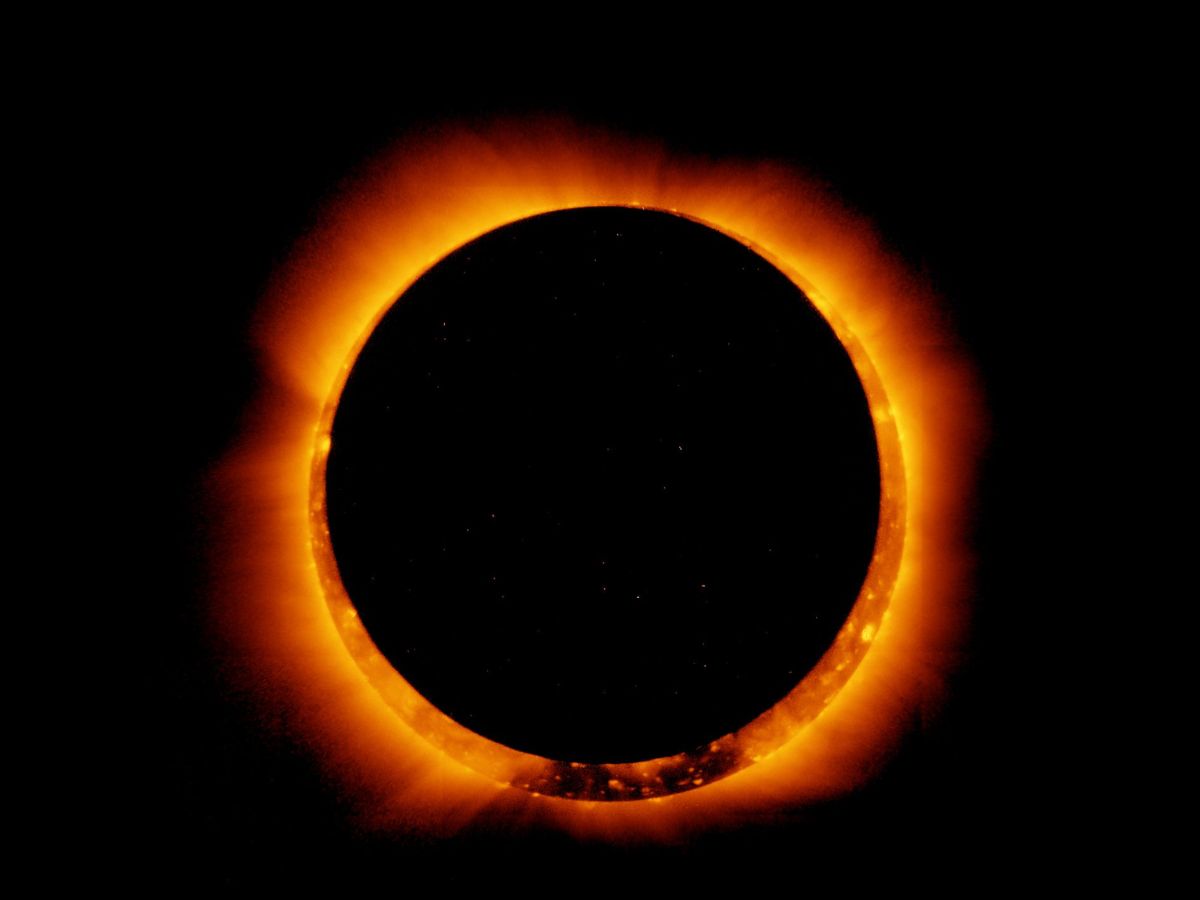
Solar Eclipse 2026 on Feb 17 will create a rare Ring of Fire [Photo: X]
The first solar eclipse of 2026 will arrive with a dramatic celestial display. On Tuesday, February 17, 2026, the Moon will align between the Earth and the Sun to create a spectacular annular solar eclipse, popularly known as the “Ring of Fire.”
While this rare event will draw global attention, the fiery halo will appear mainly over Antarctica and the surrounding southern regions. Countries such as the United States, the United Kingdom and the United Arab Emirates will not see the eclipse directly.
Despite limited visibility, the event remains one of the most significant astronomical highlights of the year.
A Ring of Fire eclipse, technically called an annular solar eclipse, occurs when the Moon passes directly between the Earth and the Sun but sits farther away in its elliptical orbit. Because the Moon appears slightly smaller from Earth at that distance, it does not fully block the Sun’s disk.
Instead of total darkness, a bright ring of sunlight surrounds the Moon’s silhouette, producing the glowing “ring of fire” effect. Unlike a total solar eclipse, daylight does not completely disappear, but the sky noticeably dims for a short time. The maximum annular phase on February 17 will last approximately two minutes and twenty seconds at the best viewing locations.
According to astronomical data, the eclipse will follow this schedule:
The exact timing will vary depending on geographic location. The annular shadow will carve a 616-kilometre-wide track across Antarctica before moving over surrounding oceans.
The dramatic annular “Ring of Fire” will be visible mainly from:
Partial Eclipse Visibility
A partial solar eclipse will be visible in:
No, the February 2026 solar eclipse will not be visible from the United States. The path of the eclipse lies far south of North America, and neither the annular nor partial phase will be seen across the US.
No, the United Kingdom will not witness the February 17, 2026, solar eclipse. The event will remain confined to the Southern Hemisphere.
Residents of the UAE will also not be able to see the February 2026 annular solar eclipse, as the eclipse path does not extend into the Middle East.
The eclipse will be visible in different forms across selected regions:
Experts strongly warn against looking directly at the Sun without proper protection. Follow these safety tips:
After the February 17 annular eclipse, several major eclipses will follow:
North America (USA & Canada): Not visible
South America: Partial eclipse visible in southern Chile and southern Argentina, mainly around sunrise
Southern Africa: Partial eclipse visible in countries such as South Africa, Namibia, and nearby regions
Timing will occur during daylight hours, depending on the location
Not visible anywhere in India
No partial or annular phase will be observed
Full annular “Ring of Fire” visible along the central path
Peak visibility around midday (local time depending on station location)
Research stations in Antarctica will have the best view
Not visible from China
No annular or partial eclipse will be seen
The February 17, 2026, Solar Eclipse may unfold over some of the most remote parts of Earth, but it remains one of the year’s most fascinating astronomical events. Even if your country is not in the visibility zone, live streams and scientific coverage will allow millions to witness this rare Ring of Fire phenomenon from anywhere in the world.
