
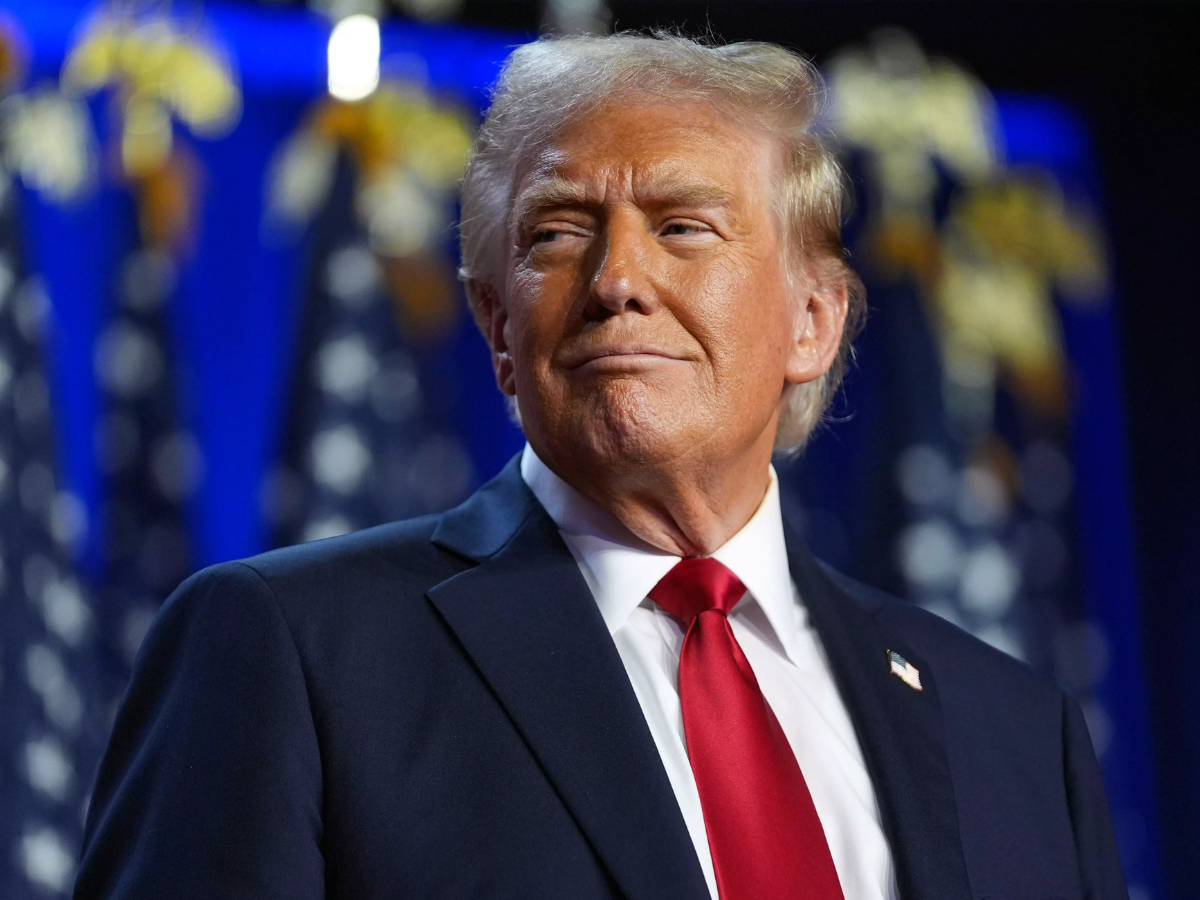
LONDON: In a chamber traditionally reserved for sober constitutional ritual, Donald Trump turned the State of the Union on Tuesday into a marathon display of ego, grievance and stage-managed spectacle, delivering the longest address in American history and blurring the boundary between governance and performance. By the time he finished, the speech had stretched to one hour and 47 minutes, a record-breaking endurance test that seemed designed less to inform Congress than to dominate the news cycle. What is meant to be a report on the nation’s condition became instead a rally transplanted into the House chamber, complete with chants of “USA” from Republicans and visible exasperation from Democrats.
At the outset, Trump appeared momentarily restrained, gripping the lectern as if steadying himself. The restraint did not last, as within minutes he was improvising, embellishing and taunting, reverting to the campaign-trail persona that thrives on applause lines and partisan provocation. The speech was full of self-congratulation and repeated standing ovations from his own party. “Our country is winning again,” he declared in his high-pitched, strained voice, before turning to characteristic Trump hyperbole: “In fact, we’re winning so much that we really don’t know what to do about it. People are asking me, ‘please, please, please Mr President, we’re winning too much. We can’t take it anymore. We’re not used to winning in our country. Until you came along, we were just always losing, but now we’re winning too much.’” The line drew cheers from Republican lawmakers and jeers from Democrats. It also encapsulated a defining feature of the event: that of a president narrating triumph at a moment when much of the country remains anxious, dangerously divided, and uncertain.
Trump inevitably credited himself with sweeping achievements, such as ending diversity, equity and inclusion initiatives nationwide, lifting 2.4 million Americans off food stamps, and cutting a record number of regulations. True to form, Trump failed to put the claims in context. For example, the reduction in food stamp rolls coincided with tightened eligibility requirements and administrative disruptions during a government shutdown. It requires little brainpower to realise that removing people from assistance is not synonymous with lifting them out of hardship, a distinction left unexplored in a speech more interested in applause than truth.
The address was triumphantly delivered during a period of deep political strain in America. Washington has lurched from shutdown threats to constitutional clashes over executive authority. Most observers agree that the country is in a mess, amid combative rhetoric and abrupt policy shifts. Meanwhile, unresolved questions surrounding Trump’s past association with the late financier Jeffrey Epstein continue to linger in the background of American political life. Several Democrats wore badges demanding transparency over those named in the so-called “Epstein Files,” a silent rebuke to a president who has repeatedly dismissed any form of scrutiny, which only creates suspicion of his involvement. Many opposition lawmakers stayed away entirely, and those who attended mostly withheld applause. Their refusal to rise and applaud the president appeared to irritate Trump, who scolded them for not doing so: “You should be ashamed of yourselves.” The remark underscored a recurring feature of his presidency: the conflation of personal self-satisfaction with patriotic duty.
If Democrats aimed for quiet dissent, the session frequently tipped into confrontation. Representative Al Green held up a placard reading, “Black people are not apes,” referencing a video shared on Trump’s Truth Social platform that depicted former president Barack Obama and former first lady Michelle Obama as monkeys. Although Trump claims to have full control over entries on Truth Social, he denies any knowledge of the outrageous racial slur. The episode served as a jarring reminder of the racially charged undertones that have periodically surfaced during Trump’s time in the White House. Minnesota congresswoman Ilhan Omar heckled during a passage on immigration, accusing the president of deadly consequences. Nearby, Michigan representative Rashida Tlaib reminded Congress of the death of a protester in Minneapolis, charging federal agents with excessive brutality. The chamber hardened into a split-screen tabloid, jubilation from Republicans and fury from those Democrats who chose to attend. Rather than seeking to lower the temperature, a visibly excited Donald Trump appeared energised by it.
Yet the speech was not all confrontation. It was also meticulously choreographed theatre. To illustrate what he termed a new era of American dominance, Trump invited the US men’s Olympic ice hockey team to the floor after their first gold medal in 46 years. The athletes entered to raucous applause, clutching medals as cameras flashed. The president lauded them as embodiments of national resurgence. He mentioned the women’s team only briefly, a pointed aside after they had declined his invitation to the event because of his alleged misogyny. A leaked video had shown members of the men’s team laughing at his quip that he would have to invite the women “or I’d probably be impeached,” a joke that underscored his instinct to frame even sport in partisan terms.
Religion and martyrdom formed another emotional interlude. Trump spoke at length about what he described as a revival of Christianity among young Americans, attributing it partly to the influence of conservative activist Charlie Kirk, who was shot and killed last September while speaking at a university event. Trump described him as “martyred for his beliefs.” In the gallery, Kirk’s widow, Erika, now leading his Turning Point organisation, mouthed thanks as chants of “Charlie” echoed. “In Charlie’s memory,” Trump added, “we must totally reject political violence of any kind,” an appeal that carried a heavy and unmistakable irony. The very chamber in which Trump was standing had been violently breached on 6 January 2021 by his supporters, animated by Donald’s false claims of electoral fraud, unmentioned during his artificial and unpersuasive call for unity.
Midway through the address came perhaps the most theatrical moment. Trump announced the release of Venezuelan opposition politician Enrique Márquez, framing it as a triumph of American leverage following the removal of former leader Nicolás Maduro. “Come on down, Enrique,” the president called, with the timing of a game-show host. Márquez descended to embrace his tearful niece in the gallery; Trump cast the episode as proof that his administration could reorder the Western Hemisphere and secure oil shipments in the process. The choreography was flawless; the geopolitics far more complex than the picture suggested. As the speech wound toward its close, Trump pivoted to military valour, awarding the Congressional Medal of Honour to 100-year-old veteran Royce Williams. The tribute was solemn and deservedly applauded. But even here, the president could not resist centring himself. “I always wanted the Congressional Medal of Honour,” he joked. “But I was informed I’m not allowed to give it to myself.” Republicans laughed; Democrats forced smiles. The jest reflected a pattern that has defined much of his public life: an instinct to place himself at the narrative’s centre even in moments meant to honour others.
As Trump exited, supporters in red “MAGA” caps and star-spangled attire clamoured for selfies. “America loves you,” one called out; another proclaimed it “the best speech ever.” The scene emphasised the reality that for his base, Trump’s defiance and theatricality are features, not flaws. He offers affirmation and combat in equal measure. But for critics, the evening underscored a different truth: a presidency that thrives on division and spectacle rather than persuasion or consensus. Democratic leader Hakeem Jeffries had urged “silent defiance,” yet the event was anything but silent; it crackled with antagonism. Trump did not seek to bridge the divide; he widened it, chastising opponents and leaning into partisan applause. The sheer length of the address and its relentless theatre suggested an audience beyond the chamber that of social media. The House Floor became a set, and lawmakers the supporting cast. In Trump’s world, governance always merges with entertainment, and policy with personality.
State of the Union addresses by the president traditionally inspire a measure of shared purpose, but this one was intent on achieving the exact opposite. Trump’s assertion that America is “winning too much” may resonate with supporters who view him as a disruptive dismantling institutions they distrust. But to others it sounded like self-mythology at a time when inflation, international instability and political fatigue weigh heavily on the electorate. If the goal was dominance of airtime, of attention and of narrative, Trump unquestionably achieved it. He commanded the chamber for nearly two hours and left no one in any doubt about whose story was being told. Whether that story bears close resemblance to the lived experience of a deeply divided and fractured nation is a more complicated matter.
The spectacle ended and the applause faded. What remained was an image of a president who sees confrontation as fuel, applause as validation, and the State of the Union not as a shared civic moment, but as Hollywood, in which he remains, as ever, the star.
John Dobson is a former British diplomat, who also worked in UK Prime Minister John Major’s office between 1995 and 1998. He is currently a visiting fellow at the University of Plymouth.




