Strait of Hormuz closure amid US-Iran war threatens Asian economies. Oil prices may surge as India, China, Japan and others face energy risks.
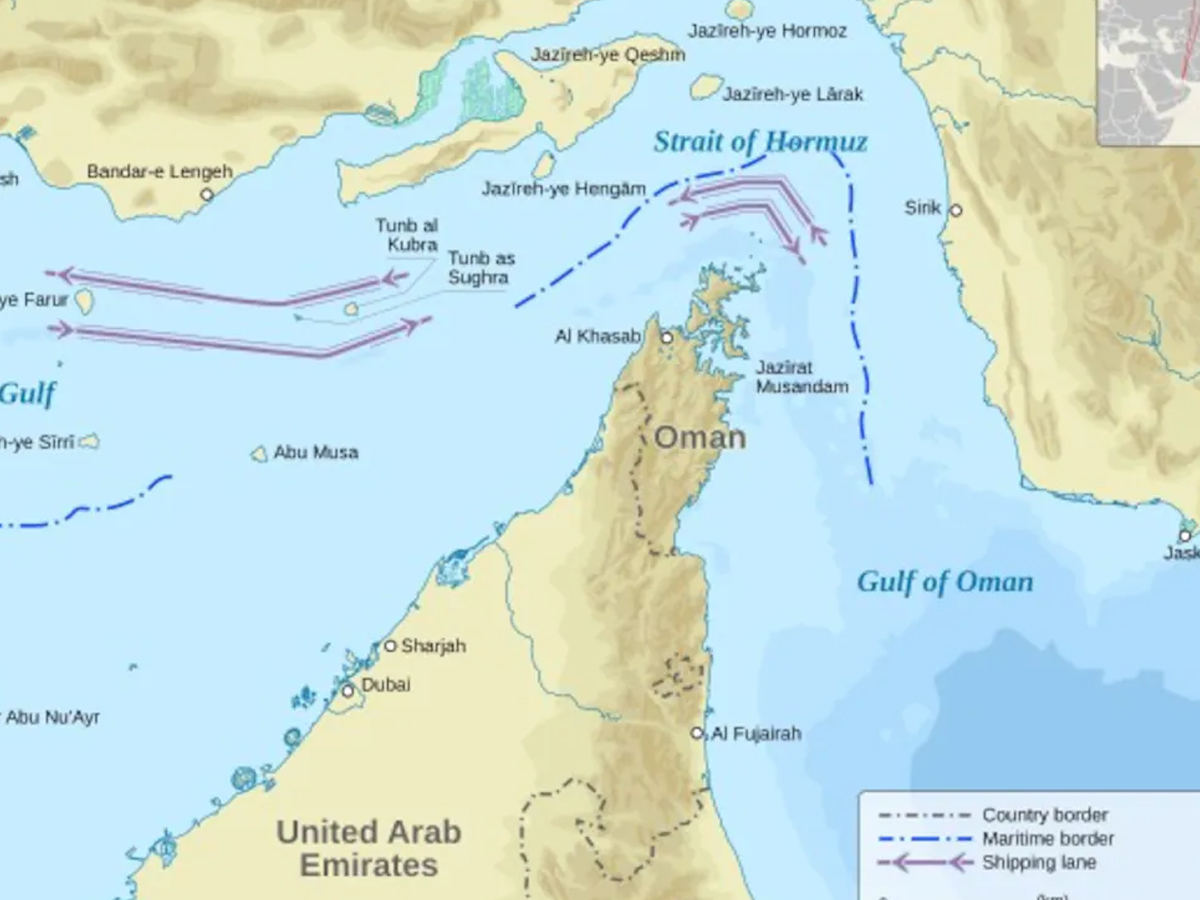
The narrow waterway, located between Iran and Oman, serves as a lifeline for global oil and liquefied natural gas (LNG) shipments. (Photo: Social Media)
The escalating conflict between the United States and Iran has moved beyond military strikes and into the heart of the global economy. As the war entered its fourth day, energy markets reacted sharply to Iran’s announcement that it would close the Strait of Hormuz, one of the world’s most critical oil transit routes.
The narrow waterway, located between Iran and Oman, serves as a lifeline for global oil and liquefied natural gas (LNG) shipments. Any prolonged disruption threatens to send oil prices soaring and strain energy-importing nations, especially in Asia.
A senior official from the Islamic Revolutionary Guard Corps declared that vessels attempting to cross the strait would be targeted. The announcement came after US and Israeli forces carried out strikes on Iranian military and naval facilities, killing several top officials, including Supreme Leader Ayatollah Ali Khamenei.
The Strait of Hormuz handles a massive share of global energy trade. In 2025, nearly 13 million barrels of oil per day passed through the route, accounting for around 31% of global seaborne crude flows, according to data cited by CNBC from Kpler.
About 20% of the world’s LNG exports also move through the strait, particularly shipments from Qatar. With this key route under threat, energy markets have reacted quickly.
Brent crude prices have climbed nearly 10% since the conflict began and recently traded near $80 per barrel. Some analysts warn that if the closure continues, oil could surge beyond $100 per barrel.
A report by Nomura highlights that Asian economies heavily dependent on energy imports face the greatest vulnerability.
Nomura said, "In Asia, Thailand, India, Korea, and the Philippines are the most vulnerable to higher oil prices, due to their high import dependence, while Malaysia would be a relative beneficiary since it is an energy exporter."
South Asia stands out as one of the most exposed regions. Qatar and the United Arab Emirates account for nearly all LNG imports into Pakistan and Bangladesh. According to Kpler data, they supply 99% of Pakistan’s LNG, 72% of Bangladesh’s, and 53% of India’s.
Pakistan and Bangladesh face additional risk because they have limited storage capacity and fewer alternative procurement options. Bangladesh already struggles with a structural gas deficit of more than 1,300 million cubic feet per day, according to energy analysts.
India imports nearly 60% of its crude oil from the Middle East, and more than half of its LNG supplies are linked to the Gulf. A prolonged closure of Hormuz would not only increase physical supply risks but also push up import costs, widening India’s current account deficit.
China, the world’s largest crude importer, buys over 80% of Iran’s oil exports. Around 40% of China’s oil imports pass through the Strait of Hormuz.
However, China maintains large strategic stockpiles and diversified supply routes. Analysts believe these buffers may soften the immediate shock, though prolonged disruption would still test the country’s energy security.
Japan and South Korea rely heavily on Gulf oil. The region supplies about 75% of Japan’s oil imports and more than 70% of South Korea’s.
In LNG terms, their exposure is smaller compared to South Asia. South Korea sources around 14% of its LNG from Qatar and the UAE, while Japan sources about 6%.
However, both countries hold limited LNG inventories. South Korea has about 3.5 million tonnes in reserve, and Japan holds roughly 4.4 million tonnes — enough to cover only two to four weeks of stable demand.
Across Southeast Asia, experts expect higher energy costs rather than immediate supply shortages. Countries like Thailand face significant exposure because they rely on imported oil.
Thailand’s net oil imports account for 4.7% of its GDP. Analysts estimate that every 10% increase in oil prices could widen Thailand’s current account deficit by about 0.5 percentage points.
If the Strait of Hormuz remains closed or partially disrupted, energy markets could see prolonged volatility. Higher oil and gas prices would impact inflation, trade balances, and economic growth across Asia.
While some countries hold strategic reserves, few can withstand a sustained blockade without economic consequences. For now, global markets remain on edge as diplomatic and military developments continue to unfold.
