The ongoing crisis in Sudan has forced one million people to flee eastwards into Chad, ethnic cleansing and unprecedented violence.
Displaced families flee violence in Darfur, Sudan, where conflict between SAF and RSF intensifies amid control over gold and mineral resources (Photo: File)
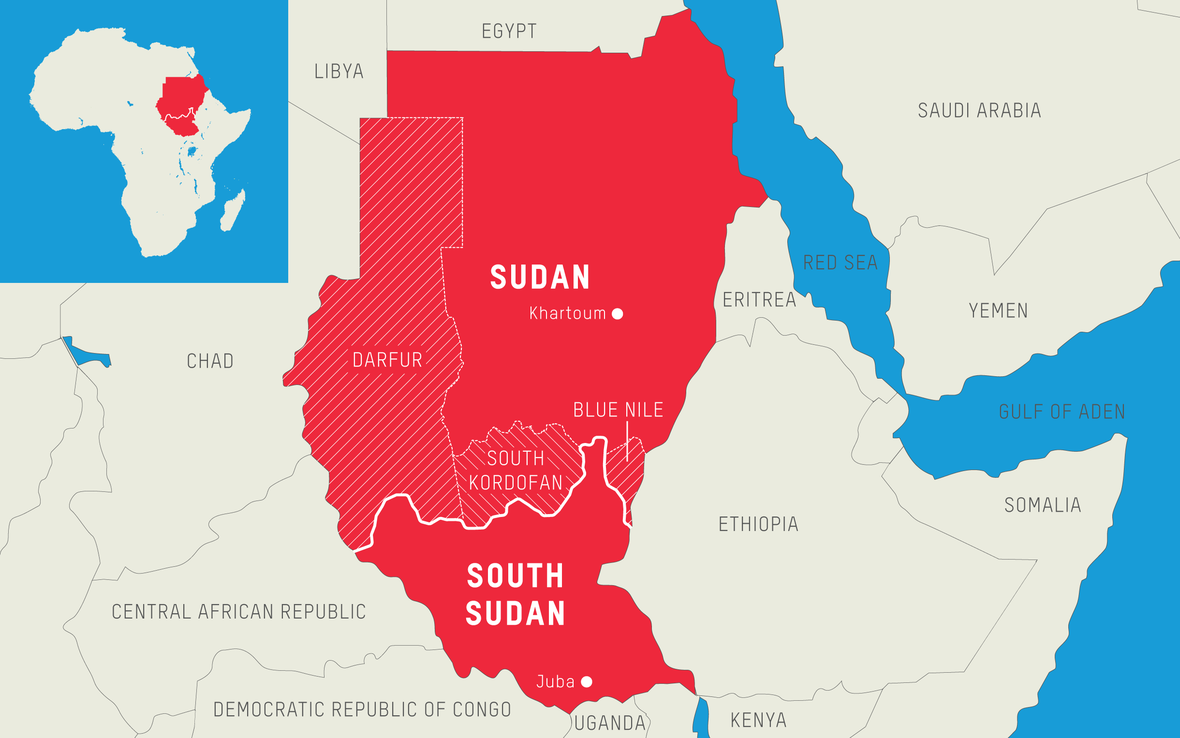
NEW DELHI: Sudan—the name originates from the Sahel region and was earlier known as Nubia by the ancient Egyptians. Post the 16th century, the country, which is home to the confluence of both the White Nile originating from Uganda and Blue Nile originating from Eritrea, had distinct demographics. The northern part has been following the Islamic faith, and the southern part has largely been Christian, which eventually led to their separation in 2011. The Islamic kingdoms of Sennar and Darfur have existed in the western part since the 1500s and have a distinct cultural identity.
Surdan has also had various coups and regime changes with a notable one in 1718, which essentially promoted "Arabisation" of the state, while the Darfur region saw the rise of the "Funjur" kingdom. In 1821, the Ottoman ruler of Egypt invaded Sudan and the Mahdiyya era began with the fall of Khartoum in 1881. The British and other colonial powers thereby began a campaign to control the waters of the Nile, and Herbert Kitchner's campaigns culminated into a decisive victory with the "Battle of Omdurman" in 1898. The ensuing inter war years had a British policy of running Sudan as two separate territories: the North and the South, with the country involved in the East African Campaign, militarily.
This eventually paved way for Egypt's independence in 1953 and Sudan's independence in 1956. Omar al Bashir seized power by a bloodless military coup in 1989 and Hassan Al Tarabi's outreach to Islamic fundamentalist groups during the 1990s began a bloody chapter. Eventually, to end international isolation, expelling these extremist outfits including Osama bin Laden, began to take shape.
The root of the present strife in Darfur region with the Sudanese Armed Forces began in 2003 when the Sudan Liberation Movement (SLM) and the Justice and Equality Movement (JEM) in Darfur took up arms accusing the government of oppressing non-Arab Sudanese. 2005 dawned with the Nairobi Comprehensive Peace Agreement and the establishment of the United Nations Mission in Sudan (UNMIS). The 2011 referendum separated the two regions into two different nations, with an oil and mineral rich Abyei region between the two new entities.
A complex calculus of tribes, pastoral lands, minerals and cattle dominate Sudan's mosaic with Chad and CAR (Central African Republic) to its west, and maximum littoral along the Red Sea to the east, with a single port, Port Sudan. Interestingly, the Nile flows from South to North and drains into the Mediterranean Sea.
Darfur remains one of the world's worst humanitarian crises. Darfur was an independent sultanate till 1916 until it was annexed by Sudan. It is home to 80 tribes and ethnic groups. The clashes initially began in April 2023 between the Sudanese Armed Forces (SAF) and Rapid Support Forces (RSF), an offshoot of Janjaweed Militia. This militia essentially consists of Arab partisans who pursued the agenda of controlling pastoral lands till Darfur Arabs were armed by Khartoum.
RSF was a paramilitary force, earlier operated by the Government of Sudan until 2023. Its ideology is to propagate "New Sudan", with a huge support base in Darfur and Kordofan in Sudan. Post their breakaway, the rebel armed group has announced the formation of a parallel "Government of Peace and Unity" under General Hemedti and has committed gory war crimes and been accused of a genocide, following a policy of ethnic cleansing. RSF is labelled as "Arab Supremist". Its footprint can be traced to Yemen, Chad, Libya and North Sudan, with a cadre strength of a 100,000 servicemen. Some sources also give out a large swathe of support to RSF from UAE but the same cannot be corroborated.
"Gold and guns" fuel the conflict and keep the vast mineral wealth of Sudan and Darfur intact. With gold dominating the mining sector, there are huge deposits of iron ore, chromite, copper, lead, zinc and uranium. This has complicated the situation further with domestic and international interests, lack of infrastructure, mismanagement, inconsistencies in licensing and inherent security risks. Bulk of these gold deposits are in Darfur and Kordofan and 85% of extraction comes from artisanal and small-scale mining, using traditional methods. Lack of regulatory procedures often leads to smuggling as well as conflict financing and this could be the single most important lever to end the conflict.
If the conflict is to be seen beyond the genocide, it is seen that the weapons being used in a localised conflict are far sophisticated than the others. Several reports indicate usage of highly sophisticated western equipment, drones and shoulder fired missiles. The arsenal also consists of Turkish and Chinese weapons as per a report released in July 2024. The arms trafficking hubs in geographical vicinity, conflict financing and military logistics have tipped in the favour of RSF and given them a larger area of expansion of the conflict. The limited functionality of Yarmouk Military Industrial Complex in Khartoum, which produced the maximum arms and ammunition in the past, have added to the complexity.
This crisis is bigger than what it seems and has forced as many as one million people to flee eastwards into Chad, ethnic cleansing and unprecedented violence. It is a violent catastrophe unfolding, without a rules-based order when the country is in the need of high levels of humanitarian aid in a maze of disputed territories, tribal rivalries and food insecurity.
The joint United Nations-African Union Mission (UNAMID), established in 2007, has wound up in 2020, and there is a need for a neutral force on an urgent basis. Arms embargo controls, monitoring of conflict financing, humanitarian aid and regulating the minerals as well as the "gold rush" could be the four corner stones to end this crisis in quick time. The conflict has the potential to spread further into Africa and the Middle East. The international community needs to view this on priority and act decisively at the earliest beyond the optics and precedence of other ongoing conflicts.
Anurag Awasthi is a policy specialist and writes on geopolitics, security and tech. He has served in UNMIS in 2009-10 and was awarded Force Commander's commendation card for exceptional contribution. Views are personal
