Taliban’s new criminal code in Afghanistan severely restricts women’s rights, punishes everyday behavior, and enforces harsh gender-based penalties
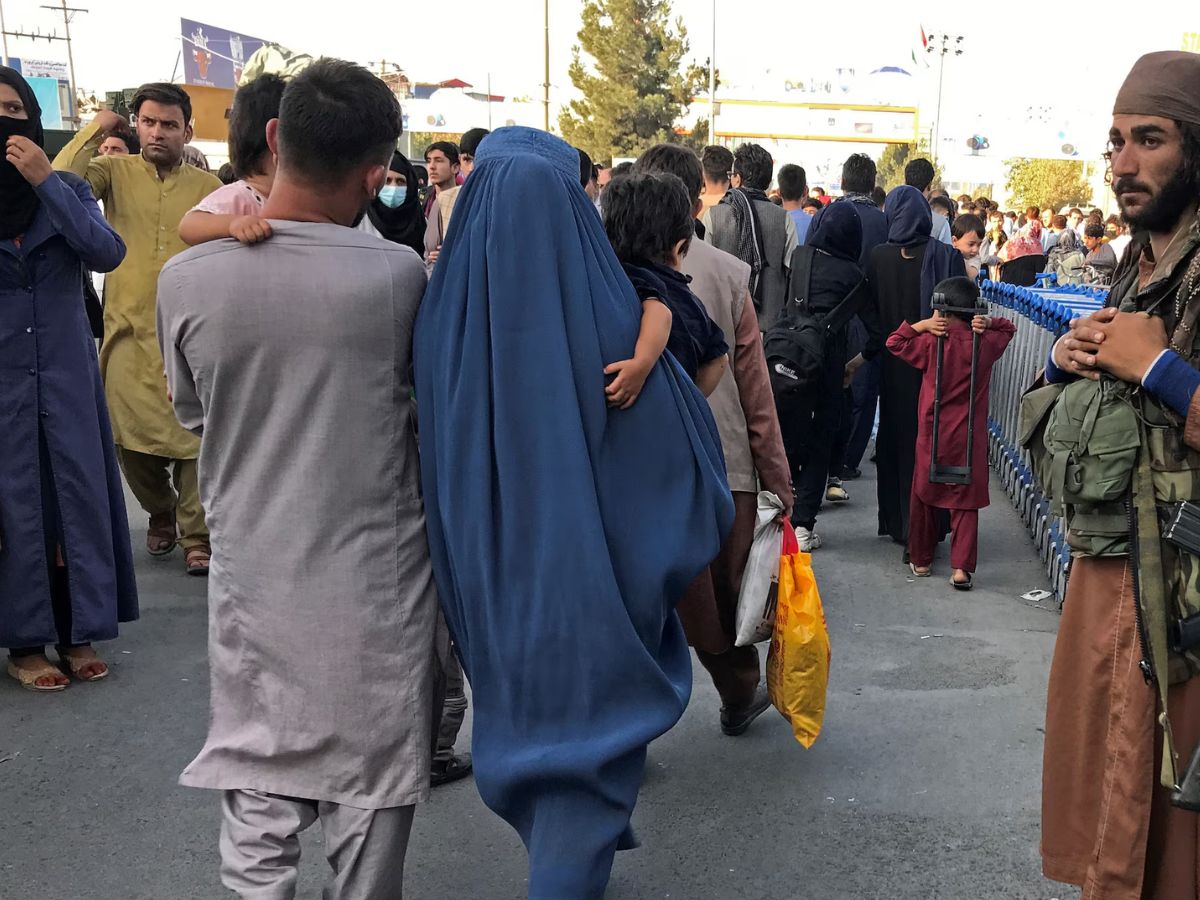
Taliban’s New Criminal Code: Severe Impact on Women’s Rights in Afghanistan (Source: Reuters)
Taliban New Criminal Code: The Taliban in Afghanistan have officially adopted a new criminal code, outlining strict legal measures that prioritize social control, patriarchy, and ideological enforcement over individual rights. The code disproportionately affects women, severely regulating their movement, relationships, family choices, and personal beliefs, while offering limited protection from violence.
Among the most interesting provisions, Article 34 is the one that limits women’s freedom of movement. This article provides that “a married woman can be imprisoned for three months if she stays at her birth family’s home without her husband’s permission or a ‘Sharia-justified reason.’ Even her family members can be criminally punished for failure to return her after a judicial order.” This provision makes women who are married minors under the law, as they are not allowed to decide where to live, especially when there are conflicts.
Article 32 deals with the issue of spouse abuse, where the husband who beats up his wife with “obscene force” – which is described as “visible fractures, wounds, or bruises” – can get only 15 days in prison, provided the wife can prove it in court. This is in contrast to other Taliban rules, where a simple act of physical contact between unrelated individuals can result in a one-year prison term. This is an obvious disparity in the treatment of violence against women.
The code also criminalizes routine social behavior. Under Article 37, un-Islamic relationships between unrelated men and women are punishable by one year in prison, which includes touching hands, embracing, or kissing. Gazing at female neighbors inappropriately, commenting on their appearance, or asking about their personal lives can also lead to one month in prison.
According to Article 58, apostates, or women who abandon Islam, can be sentenced to life imprisonment and receive 10 lashes every three days until they repent and return to Islam. However, male apostates are treated differently. They have up to three days to repent before they can be executed, as per Hanafi law. This is a clear case of gender discrimination in the enforcement of the law.
Article 9: The system of punishment is stratified according to social class, inspired by religious judgments handed down during the reign of Mughal Emperor Aurangzeb. Warning notices are issued to intellectuals and members of the upper class, while reprimands are issued to merchants, with detention for members of the middle class, and imprisonment and a maximum of 39 lashes for the lower class, which includes dependent women.
Article 14 allows authorities to impose the death penalty in the name of “public interest” for offenses such as spreading corruption, practising sorcery, defending “un-Islamic” beliefs, or committing repeated moral crimes like theft or sodomy. Women are particularly affected in cases involving moral offenses.
Article 60 further permits execution for habitual same-sex acts, with approval from senior religious authorities. The vague definitions of “corruption” and “false beliefs” grant Taliban officials broad discretionary power to label dissent, religious deviation, or nonconformity as capital crimes.
Article 55: Financial dependence is enforced through imprisonment for men who fail to pay legally required maintenance. Women, who are presumed to be dependents under Islamic law, are directly impacted by this article, which enforces their financial dependence on male relatives.
The code reflects a legal system that has strict controlling social behavior rules and that provides little protection against domestic violence.
