A number of internal and external factors appear to be driving Pakistan's actions, which it has used as a pretext to justify its military operations against Afghanistan.
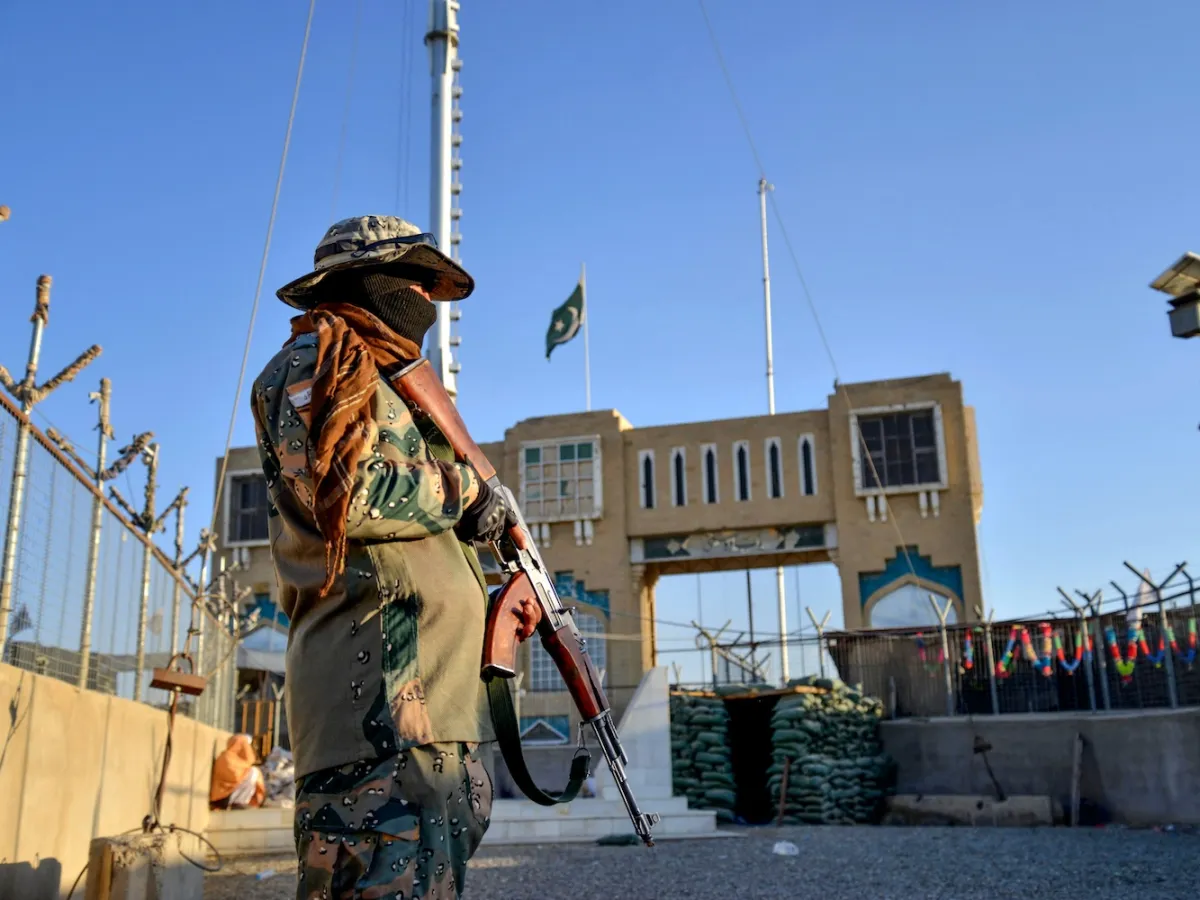
Cross-border attacks between Pakistan and Afghanistan
The recent escalation of tensions and cross-border attacks between Pakistan and Afghanistan has once again exposed the entire region to the risk of instability. Pakistan claims that these operations are aimed at targeting militant groups and ensuring its national security. However, the reality appears quite different. A closer examination of the situation raises several serious questions that challenge Pakistan’s official narrative. Reports from international media, along with the broader context of regional politics and Pakistan's internal circumstances, suggest that the issue is far more complex than it is portrayed. This has led to an important debate: what are the real objectives behind Pakistan’s increasingly aggressive policy toward Afghanistan?
If we examine Pakistan’s official claims, it repeatedly states that these operations are being carried out against the Tehrik-e-Taliban Pakistan (TTP) and other Pakistani militant groups which, according to Islamabad, are based in Afghanistan. However, when one looks at the historical background, a different picture emerges. The TTP issue is nearly two decades old. The group has existed for about 19 years. During this period, a prolonged conflict has taken place in which Pakistan has repeatedly declared success and even announced the elimination of terrorism on several occasions. Yet the problem has resurfaced repeatedly. This raises an important question: the current Taliban government in Afghanistan has not even completed five years in power, so why is Pakistan attributing responsibility for a 19-year-old problem to them?
If the situation is examined closely, it becomes evident that the real reason behind Pakistan’s attacks on Afghanistan is not the Tehrik-e-Taliban Pakistan (TTP). Rather, a number of internal and external factors appear to be driving these actions, which Pakistan has used as a pretext to justify its military operations against Afghanistan.
Pakistan is currently facing severe economic pressure, rising inflation, political instability, and widespread public dissatisfaction. In such circumstances, the government and military leadership appear to be emphasizing external conflicts in order to divert public attention from domestic issues, using the situation as a pretext to mask internal problems behind the guise of external threats. This becomes evident when Pakistan’s internal political situation is considered. The country’s most popular leader, Imran Khan, has been imprisoned, his party leaders face numerous legal cases, and voices calling for their release are being forcibly suppressed. Against this backdrop, both the deteriorating relations with India and the current tensions with Afghanistan are being leveraged by the military and General Asim Munir to justify their authoritarian governance.
By invoking the conflict with Afghanistan, General Asim Munir is attempting to secure global support as well as financial and military assistance. Pakistan’s economy has long relied on what is often described as a “war economy,” which it has used over the past four decades to sustain itself. Without regional conflicts, maintaining this economic model becomes extremely difficult. Consequently, Pakistan appears to be engaging in excessive flattery of Donald Trump, to an extent that many observers would find embarrassing.
Behind this excessive flattery of Donald Trump lies Pakistan’s attempt to assert a role with the United States and signal its willingness to comply with Washington’s demands. The message appears to be: “We are loyal allies and are prepared to act when required.” Trump’s reported interest in regaining strategic access to Bagram, combined with Pakistan’s willingness to serve as a key partner, has brought the two sides closer together.
Therefore, it would be more accurate to argue that Pakistan’s attacks on Afghanistan are not primarily operations against the TTP, but rather demonstrations of capability intended to signal strategic usefulness to the United States.
Another important aspect is that Afghanistan has historically held strategic significance for major regional powers. Pakistan’s military policy has often operated under the assumption that Afghanistan should have a political system that does not oppose Pakistan’s interests. However, the current Afghan government has attempted to pursue a more independent foreign policy, particularly by strengthening diplomatic relations with India and Russia. This development has created concern in Pakistan, which feels increasingly marginalized in the regional equation. Consequently, the current military pressure is not aimed primarily at the TTP or other militants, but rather seeks to influence Afghanistan's policies to align more closely with Pakistan’s strategic interests.
One of the key motivations behind Pakistan’s actions is the longstanding border dispute between the two countries, particularly regarding the Durand Line. Following the establishment of the Islamic Emirate of Afghanistan, Pakistan hoped that the border would eventually be formally recognized. However, the Afghan government has maintained a firm stance against such recognition. As a result, Pakistan appears to be attempting, through border tensions and military pressure, to reinforce and effectively formalize the border in practice.
These factors form the underlying motivations behind Pakistan’s attacks on Afghanistan. However, when Pakistan’s official narrative is examined, a more disturbing reality also emerges. Following the recent bombings in Afghanistan, Pakistani authorities claimed in official statements that only “militant hideouts” were targeted and that dozens of fighters had been killed. Yet reports from international media and independent sources soon began to reveal a different picture. Numerous reports and videos showed ordinary civilians, including women and children, falling victim to these attacks. Among them were 22 members of a single family in the Bihsud district of Nangarhar, of whom 18 were killed and four injured.
Subsequent bombings have also resulted in civilian casualties, affecting children, the elderly, and women, and this pattern continues to this day. This discrepancy raises an important question: if the operations were truly aimed solely at specific militant targets, how did such a large number of ordinary civilians end up being affected?
Another question concerns Pakistan’s repeated claims that it knows the precise locations of Pakistani Taliban hideouts inside Afghanistan. If these locations are known with such certainty, why have these targets not been successfully struck? None of the recent airstrikes reportedly killed Noor Wali Mehsud, Umar Khorasani, Hafiz Gul Bahadur, or Usama Mahmood. How, then, can authorities continue to claim that they know the exact locations of these militants?
I challenge the Pakistani military and its institutions to provide the name of a single high-profile commander, along with verifiable evidence, who was killed in their airstrikes in Afghanistan. If we are unable to disprove such a claim, we will acknowledge and accept that the operation was justified.
After the initial retaliatory actions by Afghan forces, Pakistan released lists of the so-called “killed terrorists and destroyed bases.” These lists appeared fabricated. None of the named commanders actually existed, nor did the supposed bases. Only one name on the list was real: Commander Akhtar Muhammad Khalil. When I contacted him, he laughed at these claims and said, “Brother, this fake army has ‘killed’ me many times before, but I am alive and present in my homeland, Waziristan.”
In short, Pakistan’s current policy neither addresses terrorism nor serves its national interest. Instead, it appears to be a dangerous attempt to ensure political survival, appease global powers, and conceal strategic failures. The cost of this policy is ultimately paid in human lives by innocent civilians on both sides.
* Ehsanullah Ehsan is former spokesperson of the Tehrik-e-Taliban Pakistan (TTP).
