Trump says he stopped a potential India-Pakistan nuclear conflict and brokered a ceasefire, but India denies any US mediation in the 2025 truce.
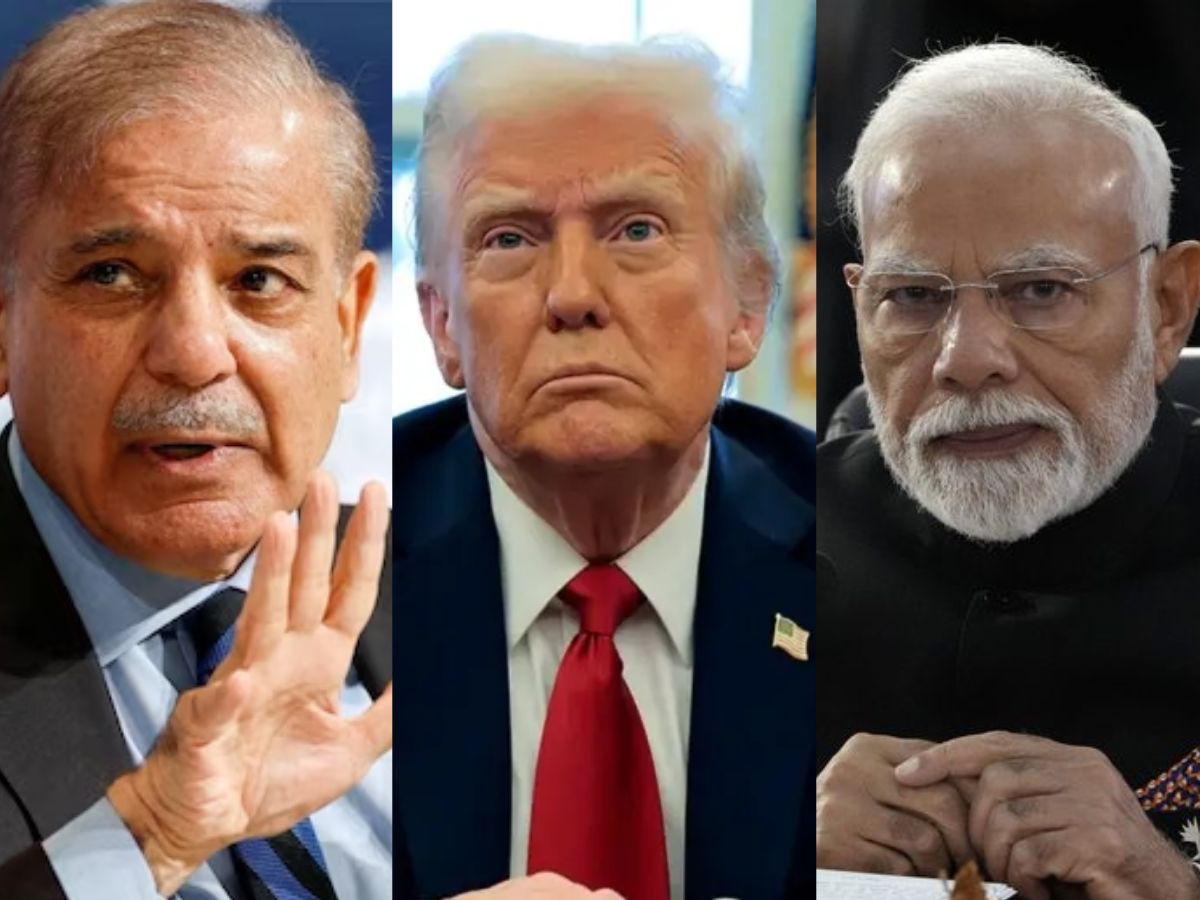
Trump says he stopped a potential India-Pakistan nuclear conflict [Photo: X]
US President Donald Trump has once again claimed that his administration prevented a potential nuclear conflict between India and Pakistan during the 2025 military standoff, calling the resulting ceasefire one of his key achievements in office.
Trump made the comments during a White House event marking the first anniversary of his second presidential term, stressing that India and Pakistan were 'going at it' and that his pressure helped bring them to a halt.
The assertion comes amid persistent denials from India, which maintains that the ceasefire was reached directly between the two nuclear-armed neighbours without external mediation.
US President Donald Trump once again claimed that the 2025 India-Pakistan military standoff had reached a perilous stage, suggesting the two nuclear-armed neighbours were close to a catastrophic escalation.
Speaking at the White House while marking one year of his second term, Trump said both sides were “really going at it,” claimed that eight aircraft were shot down, and added, “They were going to go nuclear, in my opinion.”
He credited his administration’s intervention for helping defuse the crisis, describing it as one of his major foreign policy achievements, even as India has consistently rejected any third-party role and maintained that the ceasefire was achieved through direct engagement between India and Islamabad following Operation Sindoor.
Trump framed the 2025 India-Pakistan escalation as one of his major foreign policy successes. He told reporters that the two countries were in a heated fight, with multiple aircraft losses, and that he believed the situation could have led to nuclear war.
“They were really going at it. Eight planes were shot down. They were going to go nuclear, in my opinion,” Trump said, adding that Pakistan’s prime minister told him he saved millions of lives. The White House also highlighted this claim in a document titled “365 Wins in 365 Days”, listing the India-Pakistan ceasefire among several diplomatic accomplishments.
Trump has linked this narrative to his broader push highlighting his conflict-resolution record. He has repeated similar claims multiple times over the past year and has even tied them to his arguments for deserving recognition for his international peace efforts.
Indian officials have consistently rejected the idea that the United States played a mediating role in the 2025 ceasefire. According to New Delhi, the truce followed direct channels between the Director Generals of Military Operations (DGMO) of India and Pakistan, without any external broker.
India’s position is that the ceasefire was a result of bilateral military communication, not US intervention. In June 2025, the Indian foreign secretary emphasized that trade or US mediation did not factor into discussions related to ending hostilities.
PM Narendra Modi also reportedly conveyed this stance directly to Trump during high-level diplomatic exchanges. Mumbai-based officials reiterated that India would not accept third-party mediation on matters involving its security or bilateral disputes.
The conflict in question erupted in May 2025, after India launched Operation Sindoor, a cross-border military action in response to a terror attack in Pahalgam, Jammu and Kashmir, which killed 26 civilians.
The strikes and subsequent artillery and air exchanges heightened tensions rapidly between the two nations. Pakistan and India exchanged hostile military actions over several days before an understanding to halt fighting emerged on May 10, 2025.
Pakistan’s government has offered a different narrative, crediting Trump’s influence for helping persuade Islamabad to agree to a ceasefire, and in some cases even nominating him for international recognition. This contrast underscores the divided regional perspectives on the events and their resolution.
Trump has used the India-Pakistan conflict claim as part of a broader narrative asserting that his administration has ended multiple global conflicts. He has remarked publicly that his foreign policy achievements should merit a Nobel Peace Prize, although he did not receive one.
Trump has also criticized the Nobel Committee’s decision-making process and questioned its approach to awarding the prize.
Some analysts and peace observers have expressed skepticism about such sweeping claims, noting the complexities of diplomatic processes and the difficulty of attributing bilateral ceasefires solely to external influence.
The clash between Trump’s claims and India’s official position highlights a broader trend in international diplomacy narratives. Leaders often frame conflict resolutions in ways that bolster their own global image.
Meanwhile, primary stakeholders, especially nations directly involved in a dispute, may dispute external credit if their own bilateral mechanisms and interests were the real drivers of peace. This tension between global and regional narratives shapes how history, diplomacy and credit are publicly recorded and debated.
Trump’s assertion that he prevented a nuclear escalation between India and Pakistan and brokered peace in 2025 remains deeply disputed. While the White House frames it as a major diplomatic win, India maintains that the ceasefire resulted from direct talks between Delhi and Islamabad.
The differing accounts illustrate how geopolitical events can be interpreted and communicated very differently by leaders and governments.
