Transatlantic alliance is no longer a monolith of shared policy and seamless coordination. It has become a forum of competing strategic impulses.
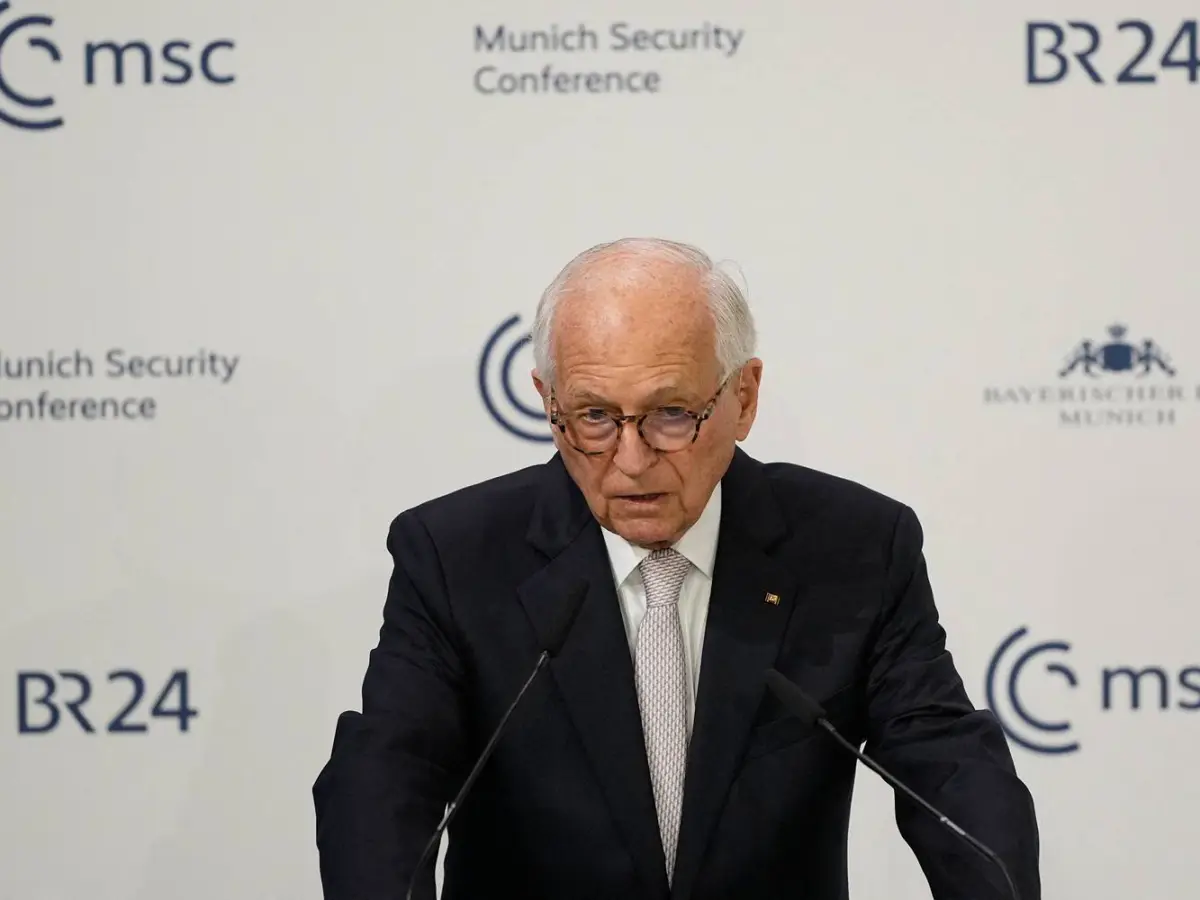
Munich Security Conference 2026
Munich: The 2026 Munich Security Conference underscored a truth that Western policymakers must now acknowledge: the transatlantic alliance is no longer a monolith of shared policy and seamless coordination. It has become a forum of competing strategic impulses, with the United States urging adaptation to its evolving priorities and European capitals asserting a growing strategic autonomy born of necessity rather than ideology.
In last week's article I explained how the Munich Security Conference's wrecking ball analogy probably over-dramatized the situation and while it might be strategic, the MSC like other institutions or think tanks needs to take much bolder action in taking on our adversaries who while showing polite niceties in salons are ruthlessly planning for Europe and North America's demise. India has its own issues—a foot in various camps—and has also rejected much of Washington's posture towards them by purchasing Russian sanctioned oil.
When U.S. Secretary of State Marco Rubio sought to project continuity with the West's shared heritage, describing the United States as the "child of Europe" in his keynote address, he reaffirmed rhetorical commitments to democratic values and collective defence, while acknowledging the need to modernize the partnership for a harsher geopolitical era. Yet the very need for reassurance reflects a deeper fragility. Trust has been strained not only by rhetoric but by policy divergence: disputes over trade, disagreements on energy transition timelines, differing approaches to China, and uneven expectations around defence spending.
Military leaders I spoke with acknowledge that the medicine Vice President Vance proposed last year was like having to consume Buckley's cough syrup, whose tag line is, "it tastes awful because it works". It was unwelcome but its salient message was heard, and Rubio just delivered it in a way Europeans could accept. European leaders responded with conditional alignment rather than reflexive deference. Senior EU officials rejected narratives suggesting Europe is in decline, pushing back against what some described as fashionable pessimism about the continent's relevance.
British and continental policymakers emphasized that strengthening European defence capacity is not a rejection of the United States but an overdue correction to decades of underinvestment. Berlin, Warsaw, and the Nordic capitals now speak openly about industrial mobilisation, munitions production, and force readiness in ways that would have been politically difficult only a few years ago.
Still, there remains a cohort within Europe's political and policy elite that resists the sharper tone coming from Washington. For them, the tough messaging on burden sharing and reciprocity feels transactional, even destabilizing. They argue that public pressure risks empowering populist forces and weakening the very cohesion the alliance seeks to preserve. Yet this view may underestimate the strategic reality: the American electorate has changed. Domestic legitimacy now frames foreign policy decisions in Washington in ways that European leaders cannot ignore.
The message from both Vice President Vance last year and Rubio this year is not theatrical; it is structural. It reflects fiscal constraints, geopolitical prioritization in the Indo-Pacific, and a recalibration of national interest. The divergence is not confined to defence; the economic dimension of the transatlantic relationship is also evolving. Mark Carney, speaking earlier this year at the World Economic Forum, described the current global environment as a rupture rather than a transition. He warned that middle powers who fail to organize around shared economic security priorities risk marginalization. His formulation—that if nations are not at the table, they are on the menu—captures the stakes.
Economic coercion, supply chain concentration, and technology competition have transformed trade policy into national security policy. Europe appears to be internalizing this lesson. Its engagement with India at the recent EU-India AI Summit in New Delhi signals a conscious diversification strategy. Cooperation on digital governance, advanced manufacturing, and trusted supply chains reflects a recognition that economic resilience cannot depend exclusively on transatlantic flows. Engagement with ASEAN economies follows the same logic. These are not symbolic diplomatic gestures; they are structural hedges designed to mitigate overexposure to geopolitical shocks, whether from Washington's policy swings or Beijing's coercive leverage.
Crucially, this pivot does not undermine NATO; it complements it. A Europe that invests in its own industrial base and broadens its economic partnerships strengthens the alliance by reducing asymmetry. The transatlantic relationship stands at a crossroads. Sentimentality is insufficient, but estrangement would be reckless. The alliance must evolve from assumption to accountability. That requires Europe to continue building credible defence capacity and Washington to recognize that partnership cannot mean unpredictability. Strategic autonomy and transatlantic cohesion are not mutually exclusive; properly understood, they are mutually reinforcing.
The wrecking ball metaphor that circulated in Munich may prove overstated. What we are witnessing is less destruction than renovation. The old architecture of dependency is being replaced by one of reciprocity. In a multi-polar world defined by power competition and economic statecraft, resilience, not nostalgia, will determine whether the West endures as a strategic community rather than a historical one.
With this week's US Supreme Court ruling against Trump on the use of the International Emergency Economic Powers Act (IEEPA), Europeans, India and Canada should breathe a sigh of relief as the system does work and the most important institutions can be a check to power. After all, all nations must plan for a future where our enemies are clearly identified, and the likeminded democracies check totalitarian power wherever it might emerge from. But Europe and the rest of the world must recognize that a makeover is not what we need but the wholesale renovation that many leaders believe we must undergo.
* Dean Baxendale is president of Optimum Publishing International and CEO of China Democracy Fund.
