President Trump lifts Greenland tariffs, rules out force after Davos meeting. Learn about the new U.S.-NATO Arctic deal on security and minerals that sparked a market rally.
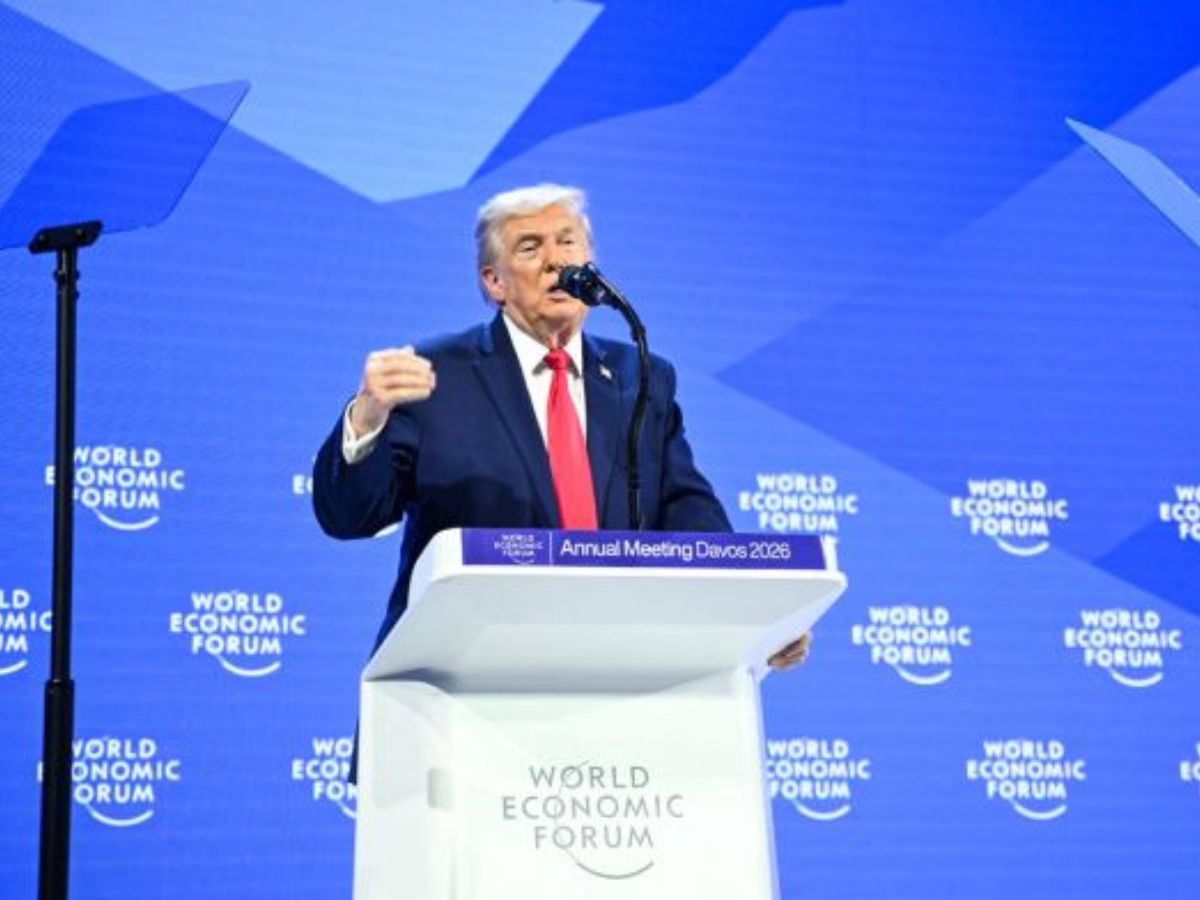
Trump backs down on Greenland: Tariffs threat lifted, long-term Arctic deal announced (Image: X)
U.S. President Donald Trump reversed course on Wednesday, ruling out the use of force or imminent tariffs over Greenland and announcing a new framework for Arctic cooperation with NATO allies. U.S. financial markets saw a relief surge in response to the abrupt de-escalation that followed a meeting with NATO commander Mark Rutte in Davos.
Speaking at the World Economic Forum in Davos, President Trump announced he would not impose tariffs scheduled for February 1st related to Greenland. He ruled out using military force, stating, "I don't have to use force." This marked a sharp reversal from weeks of aggressive rhetoric that had threatened a trade war and strained relations with Denmark, which governs Greenland. Trump said the U.S. and NATO allies had instead formed the "framework of a future deal" for the Arctic region.
President Trump described the framework as a long-term security and economic agreement. The key objectives are to secure U.S. access to Greenland's critical minerals and establish an advanced missile-defense system, referred to as a "Golden Dome." The overarching goal is to permanently block strategic and economic influence from Russia and China in the Arctic. A NATO spokesperson confirmed that seven Arctic allies would work together on collective security, with trilateral negotiations between the U.S., Denmark, and Greenland moving forward.
The immediate financial reaction was positive. The S&P 500 index rose 1.2%, extending a market recovery. The shift eased investor fears that had contributed to a sharp sell-off earlier in the week. The Danish government welcomed the de-escalation but emphasized private diplomacy. Foreign Minister Lars Lokke Rasmussen stated the outcome must respect Danish sovereignty and Greenland's right to self-determination. The government of Greenland did not immediately comment.
President Trump stated that Vice President JD Vance, Secretary of State Marco Rubio, and special envoy Steve Witkoff will oversee continued discussions. This suggests that although tensions have cooled for now, the matter will stay a top, cross-administration priority.
The crisis highlighted the geopolitical and economic stakes in the Arctic, which is rich in resources and gaining strategic importance due to climate change. Trump's rapid escalation and de-escalation followed a pattern of using severe threats as a negotiating tactic, which continues to create volatility for allies and global markets.The suggested framework aims to convert those strategies into a practical accord that upholds NATO unity while addressing U.S. interests in vital minerals and Arctic security.
