Donald Trump shares a private text from Emmanuel Macron questioning his Greenland stance and threatens 200% tariffs on French wine after Macron snubs US peace board invite.
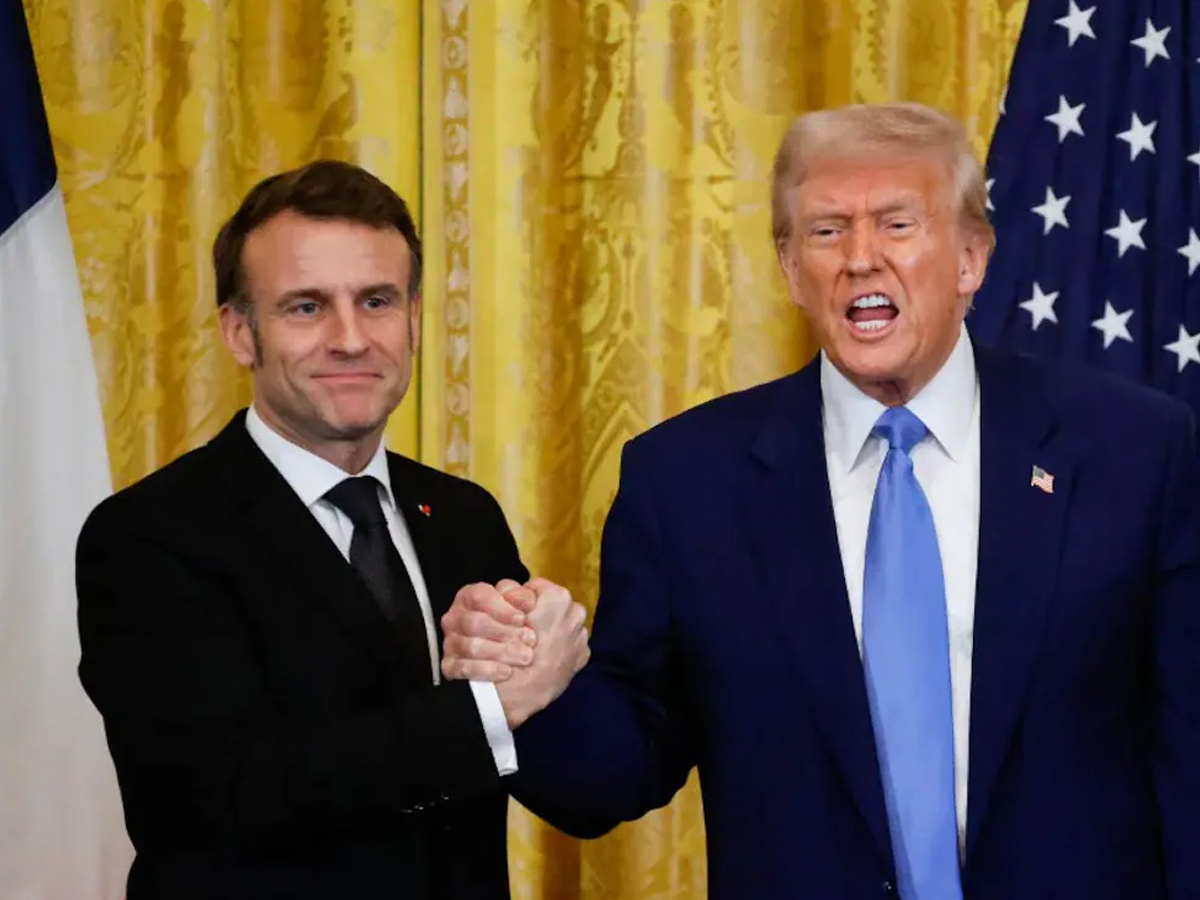
In the text attributed to Macron and shared by Trump, the French president appears to offer diplomatic cooperation on Middle East issues but questions US intentions toward Greenland. (Photo: AFP)
The diplomatic stand-off between the United States and France escalated sharply this week when US President Donald Trump publicly shared a private text message from French President Emmanuel Macron questioning Washington’s approach to Greenland and global diplomacy.
Trump posted the message on his Truth Social account, intensifying tensions over his controversial foreign policy moves, including a proposal for France to join a US-led “Board of Peace” aimed at supporting the Gaza ceasefire.
The decision to make the message public marked a rare breach of private diplomacy and underlined the growing rift between Washington and Paris over strategic priorities, trade relations, and alliance frameworks.
In the text attributed to Macron and shared by Trump, the French president appears to offer diplomatic cooperation on Middle East issues but questions US intentions toward Greenland. The message reads, “My friend, we are totally in line on Syria. We can do great things in Iran. I do not understand what you are doing in Greenland.”
Macron’s message also proposed a Group of Seven (G7) meeting in Paris after the Davos summit, with possible invitations to leaders from Ukraine, Denmark, Syria, and Russia, and extended a dinner invitation to Trump.
While Macron’s office has not yet publicly confirmed the message, a source close to the French president told news outlets that the texts were authentic.
The “Board of Peace” is a US-initiated global body first proposed by Trump, designed to oversee ceasefire and conflict resolution efforts related to the Gaza conflict. France’s reported refusal to join the board triggered much of the current diplomatic friction.
France, along with other European nations, has expressed reservations about the board’s structure and its potential to undermine or duplicate the United Nations’ established roles. French officials reportedly view the initiative as going beyond Gaza and raising questions about UN principles and authority, a key reason for declining the invitation.
In response to Macron’s perceived rebuff, Trump told reporters he might use economic pressure to push France toward cooperation. Speaking ahead of the World Economic Forum in Davos, Trump said:
“Well, nobody wants him because he’s going to be out of office very soon. So you know, that’s all right. What I’ll do is ... I’ll put a 200% tariff on his wines and champagnes, and he’ll join. But he doesn’t have to join.”
The threat targets two of France’s most iconic exports: wine and champagne, signalling how trade policy is now entangled with diplomatic disputes.
Trump has also linked these tensions to his long-standing push for strategic control over Greenland, asserting that European nations “can’t protect it” and that the island is necessary for world security.
French leaders have strongly criticised the idea of tariffs being used as diplomatic leverage. Earlier this week, President Macron said such threats were “unacceptable” and promised that Europe would respond in a “united and coordinated manner” if tariffs were imposed.
French Foreign Ministry officials also responded with sarcastic commentary on social media regarding US claims about Greenland. One message read, “If there were a fire someday, firefighters would intervene — so better burn the house now,” making light of US arguments about pre-emptive actions in Greenland.
French officials have stressed that decisions on foreign policy and peace initiatives should respect multilateral norms and not be subject to coercive economic pressure.
The text exchange and tariff threats come amid rising diplomatic strain between the United States and its European partners. The United States has also threatened tariffs of up to 25% on goods from several European countries over disagreements related to Greenland strategy and NATO Arctic cooperation.
European leaders have called for calm dialogue and unity in handling strategic issues such as Arctic security, Middle East peace processes, and trade stability. Many are preparing for emergency meetings to discuss possible retaliatory actions against US tariff threats.
