Justice Kavanaugh warns of 'substantial' multi-billion-dollar refund chaos in dissent as Supreme Court strikes down Trump's IEEPA tariffs 6-3, while listing five other laws giving Trump tariff power.
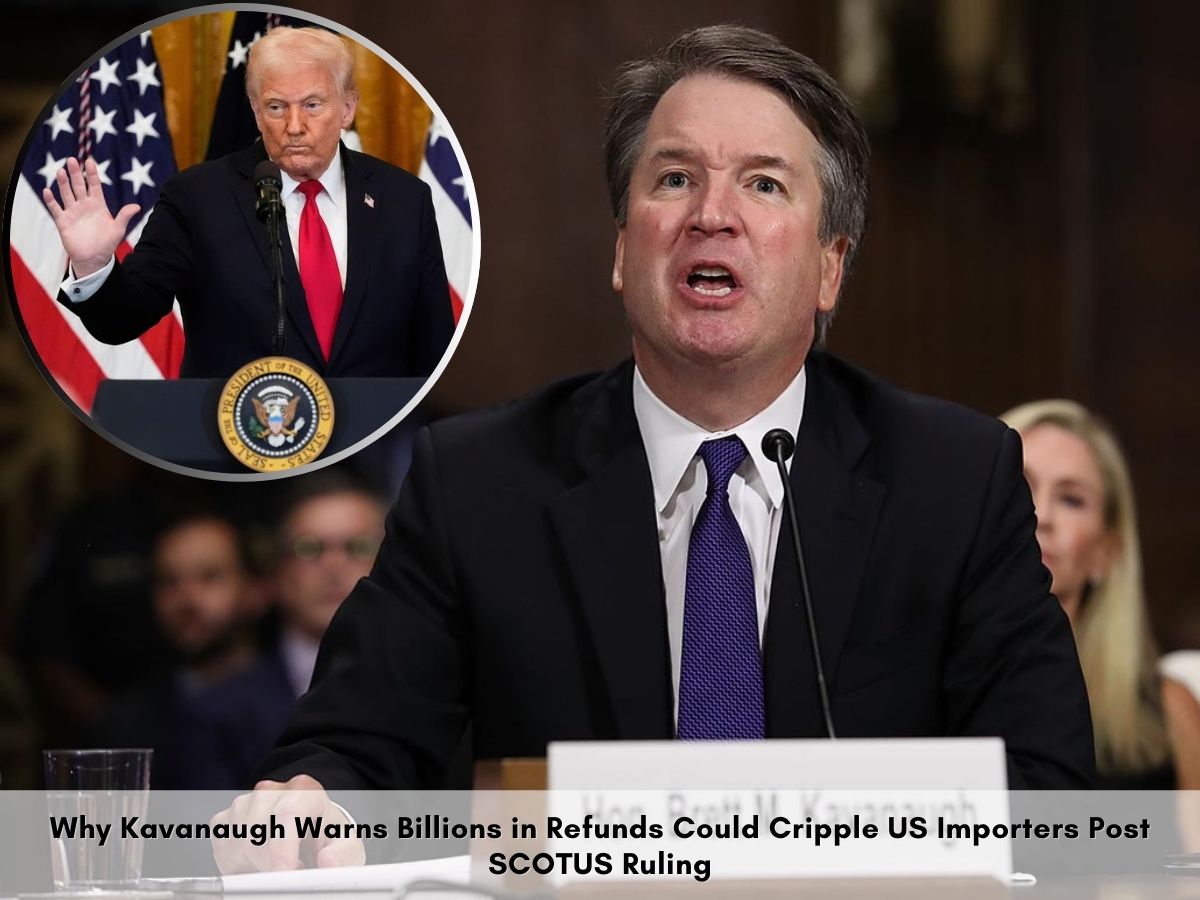
Kavanaugh Dissent Supreme Court Trump Tariffs Billions Refunds Chaos Warning (Image: File)
Justice Brett Kavanaugh warned in a dissenting opinion that the Supreme Court's 6-3 ruling striking down President Donald Trump's tariffs could trigger billions in refunds to importers. The decision, authored by Chief Justice John Roberts, held that the 1977 International Emergency Economic Powers Act does not authorize sweeping import duties on nearly all US trading partners.
Brett Kavanaugh is an Associate Justice of the Supreme Court of the United States, appointed in 2018 by Donald Trump after a highly contentious confirmation marked by sexual misconduct allegations. A Yale Law School graduate and former clerk to Anthony Kennedy, he previously served on the D.C. Circuit and held senior roles in the George W. Bush administration.
Generally regarded as a conservative jurist aligned with originalism, Kavanaugh has at times acted as a key swing vote on the Court’s 6–3 conservative bench. Today, he was among three dissenters in a 6–3 ruling that struck down President Trump’s global tariffs, arguing that the International Emergency Economic Powers Act authorizes the president to impose such levies. He warned the decision could lead to a messy, costly refund of billions already collected and create uncertainty in trade relationships with countries such as India and China.
Kavanaugh, joined by Justices Clarence Thomas and Samuel Alito, noted immediate fallout: "The United States may be required to refund billions of dollars to importers who paid the IEEPA tariffs, even though some importers may have already passed on costs to consumers or others." He called the refund process likely a "mess."
The 63-page dissent argued the tariffs remain lawful under text, history, and precedent. Kavanaugh stressed policy debates belong to voters and Congress, not judges: "The tariffs at issue here may or may not be wise policy. But as a matter of text, history, and precedent, they are clearly lawful."
Roberts wrote for the majority: "IEEPA's grant of authority to 'regulate . . . importation' falls short. IEEPA contains no reference to tariffs or duties." He added no prior president read it that way, and Congress holds taxation power under the Constitution.
The court stuck to its Article III role: "We claim no special competence in matters of economics or foreign affairs... Fulfilling that role, we hold that IEEPA does not authorize the President to impose tariffs." This rebuked Trump's novel emergency use for global duties.
Kavanaugh highlighted surviving presidential powers: Trade Expansion Act of 1962 (Section 232), Trade Act of 1974 (Sections 122, 201, 301), and Tariff Act of 1930 (Section 338). "Many current federal laws continue to grant the President expansive tariff authority," he wrote, noting plaintiffs and majority never claimed these violate separation of powers.
He suggested the ruling might not limit future tariffs: "The decision might not significantly limit a President's authority to impose tariffs in the future." Administration officials signal readiness to pivot.
Majority: Roberts, Gorsuch, Barrett, plus liberals Jackson, Kagan, Sotomayor. Dissent: Kavanaugh, Thomas, Alito—all conservatives. Thomas added separately: "Neither statutory text nor the Constitution provide a basis for ruling against the President."
The bench rebuked executive overreach on trade emergencies like drug trafficking and deficits.
Economists estimate that IEEPA-based tariffs collected since February 2025 total more than $175 billion. The actual refund amount will depend on how many importers successfully file claims and how the US Court of International Trade structures the refund process .
A: Billions to importers, even if costs passed to consumers; process a "mess."
A: Brett Kavanaugh, Clarence Thomas, Samuel Alito.
A: Trade Expansion Act 1962 Sec 232, Trade Act 1974 Secs 122/201/301, Tariff Act 1930 Sec 338.
A: No reference to tariffs; cannot authorize taxation via "regulate."
