Trump vs California EV battle heads to court Thursday—US automakers face dual rules, $55B writedowns as waiver fight threatens 2035 zero-emission mandate.
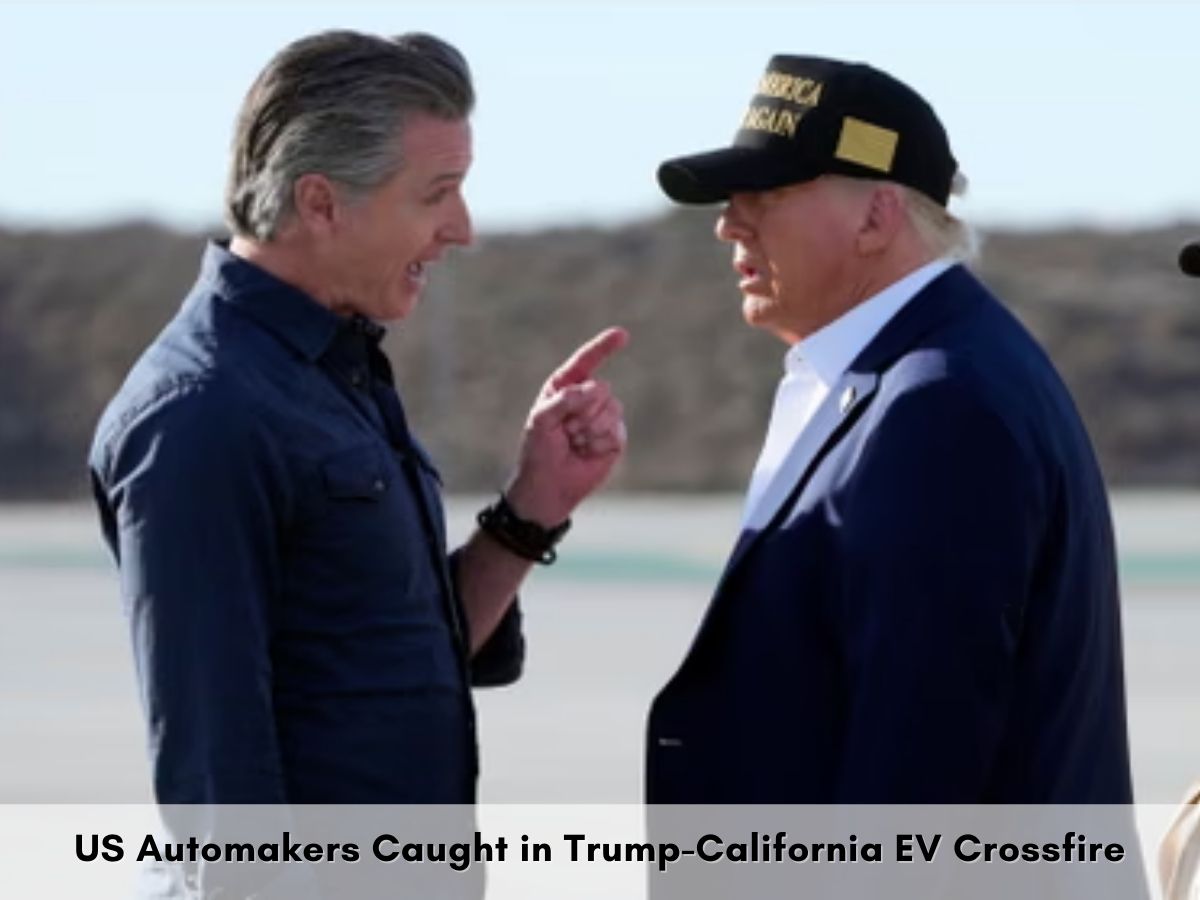
Trump Kills California Waiver: Automakers in Limbo (Image: X)
The Trump administration and California collide in a high-stakes legal battle over EV pollution rules, trapping US automakers in the crossfire. A federal court hearing Thursday in Oakland could decide if California keeps its waiver for tougher emissions standards, forcing EV sales nationwide amid Trump's anti-EV push.
California challenges congressional Republicans' move to revoke its EPA waiver using the Congressional Review Act. The state sued the day Trump signed the legislation in June, alleging illegal reclassification of waivers as "rules." California Attorney General Rob Bonta called it Trump's "contempt for the law" and use of "fringe" legal theories.
The Trump EPA argues Congress writes the laws in this democracy. White House spokeswoman Taylor Rogers labeled the lawsuit "frivolous," saying Trump canceled "unpopular green-energy subsidies that wasted Americans' hard-earned tax dollars." The EPA claims California's rules would "cripple American industry" and raise consumer prices.
The Government Accountability Office ruled last March that waivers are case-specific, not rules subject to the act. Republicans disregarded this, claiming congressional power to define rules.
California set vehicle-emissions standards in the 1950s to fight smog in Los Angeles from cars and industry. Congress granted waiver authority in the 1967 Air Quality Act; EPA has approved over 100 since, from both parties. Trump's first-term EPA rescinded parts via rulemaking in 2019; Biden reinstated in 2022.
Now Republicans used a shortcut under Trump’s second term. California requires 100% EVs or zero-emission vehicles by 2035, with targets starting this year; 11 states adopted these, covering 29% of US new-vehicle sales per S&P Global Mobility. Trump's EPA last week overturned an Obama-era finding that greenhouse gases endanger health, basis for 2010 rules.
Congress killed $7,500 EV subsidies and fuel-efficiency penalties last year.
Traditional automakers like those reliant on fossil fuels gain relief if Trump wins, facing less pressure to sell money-losing EVs in key states. Tesla and EV makers risk losing revenue from compliance credits. If California prevails, automakers must build dual lineups for opposing rules, splitting the US market.
The Alliance for Automotive Innovation calls California rules an "unaccountable, unachievable regulatory wormhole" that limits consumer choice. Mike Murphy, former Republican strategist with EVs for All America, said automakers are "whipsawed" by shifts, taking $55 billion in EV writedowns since Trump's election. "This short-termism is killing us," he quoted industry voices.
CARB lets automakers opt into standards now but warns of later penalties if California wins; many comply per records. EVs hit 21% of California new-car sales last year, down slightly. CARB skips this year's target enforcement amid uncertainty.
Legal observers note unprecedented instability with untested questions. Paul Libus of Van Ness Feldman LLP said confusion levels are unmatched in vehicle-emissions policy. Trump's scorched-earth cuts crashed national EV sales by ending incentives.
Murphy predicts compromise with California, as global markets like China and Europe demand EVs. Automakers can't bet federal rollbacks last beyond Trump. "The drunken holiday with the federal regs is probably not going to last," he said.
A: Thursday in Oakland, California, on the Trump administration's motion to dismiss.
A: 29%, per S&P Global Mobility.
A: Yes, last March it ruled waivers are not "rules" under the Congressional Review Act.
A: 100% zero-emission vehicles by 2035, with interim goals starting this year.
Disclaimer: This information is based on inputs from news agency reports. TSG does not independently confirm the information provided by the relevant sources.
