Canada facing US pressure, is pivoting toward India to diversify trade, reset ties & build partnerships across energy, minerals and technology.
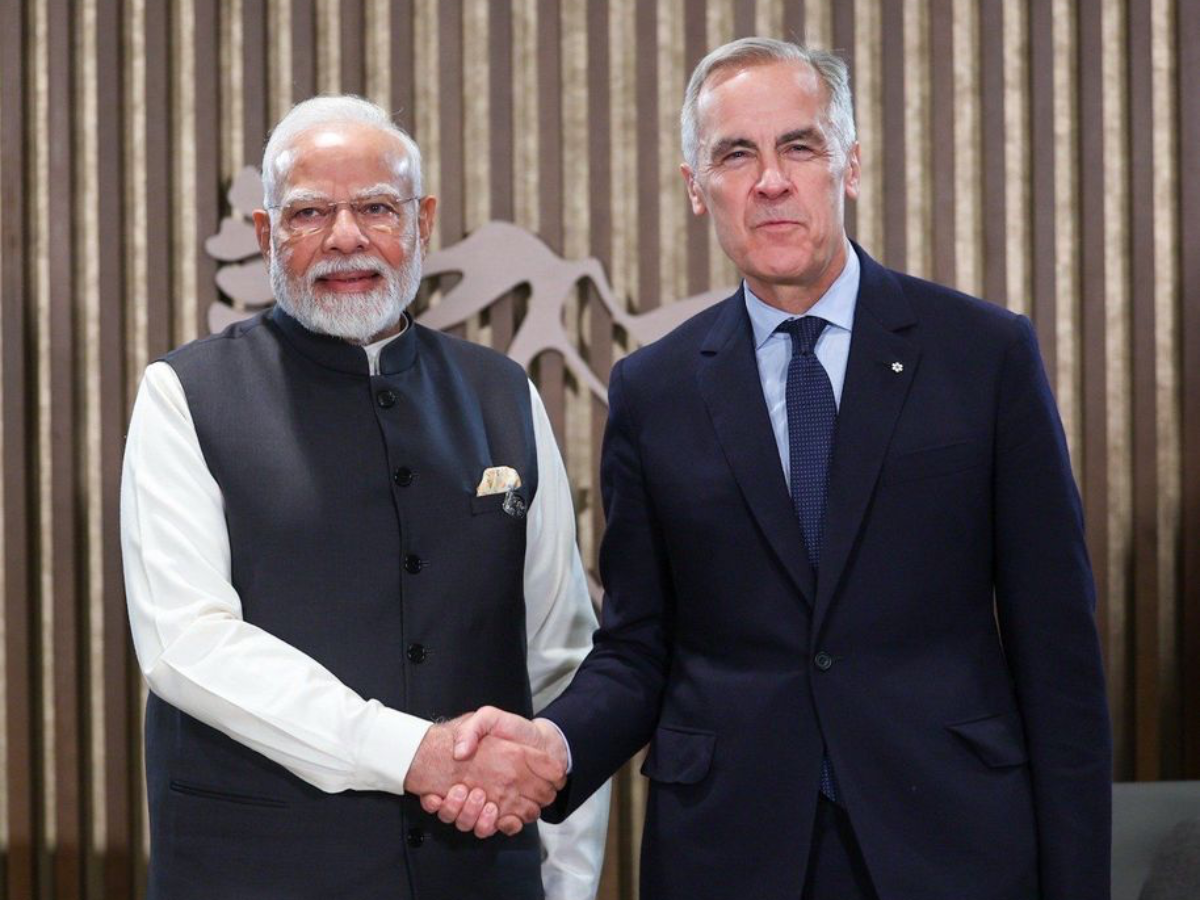
Canadian and Indian PM ahead of renewed talks signaling a reset in bilateral trade and strategic cooperation (Photo: X)
Canada-India Talks: The current state of foreign policy in Canada is in a state of readjustment driven more by necessity than routine. This is given the developing conflict with the US, driven in large part by President Trump’s almost confrontational economic tactics and rhetoric. However, against the current background, India emerges as the linchpin to re-expanding Canadian foreign policy beyond North America and there is clearly a new sense of moving away from the more confrontational position in the past.
The threat of retaliatory tariffs by President Trump, including the threat of a blanket 100 percent tariff on imports from Canada, has made the Canadian government feel vulnerable. The Canadian government feels that the economic pressure exerted by the moves is intended to restrict its freedom of economic action. So, the issue is not just diversifying trade partners, but it is actually put in the context of economic security. Restricting dependence on the U.S. market has become crucial to Canadian sovereignty.
Under Prime Minister Mark Carney, the trend in Canada's relations with India appears to be evolving while the previous government was guided by political squabbles, the current leadership appears to be embracing pragmatism in the relations with India. Considering its market, energy and tech sectors, India remains a key player versus the Canada-US centric approach.
Recent talks between Indian External Affairs Minister S Jaishankar and Canadian Foreign Minister Anita Anand indicate a thaw in the relationship where both governments have termed the discussions constructive, with a focus on sustained political engagement and deeper cooperation. When Carney travels to New Delhi seen coming after India's Union Budget the visit is being characterized as an opportunity of a lifetime to convert goodwill into hard agreements.
These talks will also include different areas like critical minerals, uranium, artificial intelligence and energy exchanges, which cover crude oil and LNG. Canada’s energy minister has already suggested warming up nuclear ties while adhering to existing constraints. India, which faces threats from America, might find significant scope in building closer economic ties with Canada and the EU.
The most obvious indicator of progress is the scheduled start of discussions regarding the Comprehensive Economic Partnership Agreement slated for March. After a two-year standstill, fueled in part by diplomatic tensions under Justin Trudeau, the ball is rolling again on CEPA talks and if a CEPA is successfully negotiated, potentially within a year, this would represent a clean start and create a strong, economically focused partnership.
