The risk of escalation in Turkey-Israel relations is likely to grow as areas of friction increasingly overlap across multiple theatres. That said, important constraints remain.
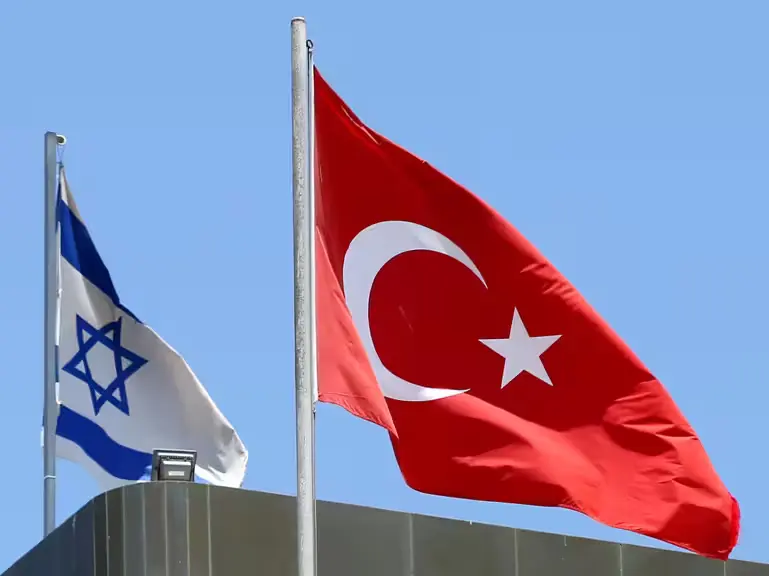
Regional fault lines deepen as Turkey and Israel compete for influence across West Asia, the Red Sea and the Horn of Africa (Photo: File)
New Delhi: Amid the Middle East’s deepening turmoil, the growing rivalry between Israel and Türkiye is fueling tension in an already fragmented region. Despite a past legacy of cooperation, relations are now at an all-time low and have entered one of their most tense periods in years, triggered by a series of regional developments that are transforming the relationship into a full-blown geopolitical confrontation.
The present flashpoint is Somaliland, which sits at a critical geostrategic crossroads opposite Yemen, overlooking the junction of the Gulf of Aden, the Bab el-Mandeb Strait and the Red Sea.Somaliland declared independence from Somalia in 1991, but functioned as a self-governing republic until December 2025 when Israel became the first state to extend formal recognition. The decision has generated controversy not least because of the legal precedent it sets under international law and its potential to exacerbate geopolitical competition in an already fragile space. More specifically, it risks accelerating competition between Israel and Turkey as their interests continue to diverge across the Horn of Africa, the Red Sea and in West Asia. What began as a diplomatic rupture has hardened into a regional power contest with direct consequences for US strategy from Gaza to the Eastern Mediterranean and to the Horn of Africa.
Syria may soon become the most dangerous flash point between Israel and Turkey. The fall of the Assad regime in December 2024 created a power vacuum rather than stability. In Syria, Turkish and Israeli interests diverge sharply. Turkey’s priorities remain centered on border security, countering Kurdish armed groups and shaping post-conflict political outcomes in Northern Syria. Israel has focused on constraining the interim government led by President Ahmed Al-Sharaa and preventing advanced weapons transfers to Hezbollah or other non-state armed actors. While both seek to limit Iranian influence, their operational objectives differ, generating security postures that contribute to Syria’s fragmentation rather than convergence.
A central fault line in Syria is the potential instrumentalisation of Kurdish armed actors in Northern Syria, particularly the Syrian Democratic Forces (SDF). Turkey views the SDF as inseparable from the Kurdistan Workers’ Party (PKK), which it designates as a terrorist organisation and considers an existential national security threat. From the Turkish perspective, even limited or indirect Israeli support is interpreted as exploiting Kurdish groups against Turkey. This has deepened mutual suspicion, reinforcing Turkish concerns that Kurdish factions could be weaponised as proxy instruments within a broader pattern of competitive regional positioning rather than as partners in a coherent stabilisation strategy.
Both Ankara and Damascus also view Israeli-linked signalling around Druze autonomy or secessionist claims in Southern Syria as encouraging or enabling wider autonomy claims, including among Kurdish actors in the North. Following the collapse of the Assad regime in Syria in December 2024, Turkey has moved to expand its influence not only in Northern Syria but also in the country’s Centre and South. While Israel seeks to protect the Druze communities in Southern Syria, Turkey, which seeks to weaken the Kurds in the North, favors a strong, centralized Syrian state under its influence. This creates a direct clash of interests.
In Gaza, the divergence is more overt and politically charged. Turkey has positioned itself as a vocal advocate for Palestinian political rights and humanitarian access, maintaining engagement with Gaza as part of its broader regional diplomacy. While taking an initially circumspect position, Erdoğan gradually shifted to condemning Israel’s military actions, which he framed as disproportionate and accusing Israel of committing war crimes. This rhetoric was consistent with Turkey’s historical position, but was amplified by Erdoğan’s aspirations to position Turkey as a defender of Palestinian rights on the international stage. Erdoğan has turned the Israeli–Palestinian conflict into a central component of his policy, employing harsh and inflammatory anti-Israel rhetoric to increase support among Muslims in general and within Turkey in particular.
Turkey has also expressed its readiness to deploy military, civilian and logistical assets to Gazabut the main stumbling block remains Israel’s categorical opposition to any Turkish military presence. Israel has made clear that it will not allow Turkish Armed Forces to operate inside Gaza, viewing Ankara as a destabilizing actor despite its public efforts to present itself as a reconstruction partner.
At the forefront of post-war scenarios, Ankara is promoting a governance formula led by Palestinians, including the political wing of Hamas. The red line imposed by Israel is absolute against any form of Turkish involvement, civilian or security. The split vision couldn’t be starker; where Israel sees the enforcement of security, Turkey perceives a defiance of international law.
Turkey has played a sustained and influential role in Somalia since at least 2011, positioning itself as a key external partner in Somalia’s stabilisation, economic development and state-building efforts. Under the Military Training Agreement signed in 2012, Turkey deployed military personnel to support the rebuilding of the Somali National Army, embedding long-term security assistance alongside political engagement. Turkey has invested heavily in roads, hospitals and public buildings across Somalia, as well as a space launch facility and hydrocarbon exploration in around 15,000 sq km of Somali offshore blocks.
The opening of the TÜRKSOM Military Training Base in Mogadishu in 2017 marked a significant expansion of Turkey’s security footprint in Somalia. The base has played a central role in training thousands of Somali security personnel engaged in the fight against Al-Shabaab. TÜRKSOM has also become an important node in Turkey’s broader approach to stabilisation and security in the Horn of Africa.
This bilateral relation entered a more consequential phase in 2024 when both sides signed two major agreements; a comprehensive 10-year maritime and defence agreement known as the ‘Defence and Economic Cooperation Framework Agreement’ signed in February, and an oil and gas cooperation deal reached in March.
As Turkey prepares to begin offshore energy drilling in Somali waters in 2026, the Red Sea has become a predominant arena for this rivalry. Israel seeks a foothold in the Gulf of Aden to monitor Houthi activity, while Turkey aims to protect its maritime interests and the territorial integrity of the Somali state. The Israeli recognition of Somaliland transforms a local secessionist issue into a high-stakes geopolitical confrontation between Ankara and Tel Aviv. Within Israeli strategic thinking, Somaliland is seen as offering an operational and intelligence value in relation to Houthi activity, given its proximity to key Red Sea and Gulf of Aden maritime routes. Houthi leader Abdul Malik al-Houthi condemned recognition of Somaliland, stating ’We consider any Israeli presence in Somaliland a legitimate military target for our forces, as it constitutes aggression against Somalia and Yemen and threatens the security of the region.’
For Somalia, the recognition challenges efforts to consolidate federal authority and could complicate Ankara’s growing diplomatic and security engagement in the country. More broadly, the move underscores how peripheral theatres in the Horn are becoming increasingly entangled with Middle Eastern security calculations, particularly as states seek strategic depth, maritime leverage and alternative footholds along critical sea lines of communication.
EASTERN MEDITERRANEAN AND THE GULF
The Eastern Mediterranean continues to be a particularly salient arena of competition. Israel’s deepening strategic alignment with Greece and Cyprus, spanning energy cooperation, defence ties and maritime delimitation, stands in contrast to Turkey’s priorities.
Competition for energy resources has further intensified the rivalry by including a “maritime”element. Israel, Greece, and Cyprus remain committed to constructing the “EastMed Pipeline,”which will transport energy from East to West bypassing Turkey altogether. Ankara views the project as another move “to encircle” Turkey economically.
The Israeli arms sales to Cyprus, including the Barak MX defense system, have added to the rising regional tension. Further, it reinforces the impression that Israel is aligning itself with Turkey’s regional adversaries, Greece and Cyprus, to constrain Ankara’s power.
In the Gulf, Israel’s deepening ties with the UAE can be interpreted as serving a dual purpose: strengthening bilateral security and technological cooperation while also reshaping intra-Gulf power dynamics in ways that dilute Saudi Arabia’s traditional primacy. From this perspective, Israel-UAE cooperation is less an isolated normalisation track and more a broader strategy to entrench alternative regional partnerships that expand Israel’s strategic depth across the Red Sea and the Horn of Africa.
Turkey, by contrast, claims a more flexible, multifaceted approach to the Gulf, maintaining working relationships with several states while remaining most closely aligned with Qatar. Ankara frames this posture as pragmatic and interest-based, spanning trade, defence cooperation and diplomatic engagement.
CONCLUSION
The risk of escalation in Turkey-Israel relations is likely to grow as areas of friction increasingly overlap across multiple theatres. That said, important constraints remain. The US is unlikely to favour an intensification of rivalry between two close regional partners, while Turkey’s position within NATO imposes limits on how far confrontation can be pushed without broader alliance consequences. These factors mitigate against direct military confrontation. However, Turkish and Israeli analysts increasingly assess their areas of competition as interconnected, narrowing the margin for miscalculation and raising the risk that indirect or peripheral disputes; whether in the Horn of Africa, the Red Sea, or the Levant, spill over into more consequential forms of confrontation.
As Turkey and Israel risk becoming entangled in Somalia’s internal fault lines, this dynamic only adds to the growing bilateral tensions in the Levant, Gulf and the Eastern Mediterranean.Developments in Somalia/Somaliland need to be understood as part of an increasingly concerning pattern of competition between Turkey and Israel, which now extends across multiple, strategically connected theatres. Tensions increasingly resemble a low intensity ‘cold war’ dynamic.
Israel’s recognition of Somaliland is one part of its security doctrine that it has been quietly cultivating, shaped largely by opportunities created by the Abraham Accords. Within this framework, recognition politics can be understood as a tool to mitigate Israel’s encirclement by hostile actors, while incrementally extending the political and geographic reach of the Abraham Accords beyond their original Middle Eastern scope.
Instability along the Horn–Red Sea axis has linking threats to maritime trade and terrorism in one of the most important trade arteries. The confrontation between two of the US’s allies is structural, shaped by competing ideologies, and sustained by military power. Israel’s goal is protection against threats and the free rein to act unilaterally. Turkey aims to have its growing regional influence acknowledged. Both visions and policies seem irreconcilable across critical areas of security interests.
The threat is not war between Israel and Turkey but a string of escalations that involve American allies. Their rivalry to cloud the area from Gaza to the Red Sea. Turkey’s approach toward Israel reflects a combination of geopolitical ambitions, security considerations, economic interests, and domestic political calculations. It seeks to position itself as a leading regional power, drawing on the legacy of the historical Ottoman Empire as part of a policy commonly described as “neo-Ottomanism”.
As a ceasefire takes hold in Gaza, Israel and Turkey find themselves facing a familiar yet profoundly altered landscape; both countries must navigate a new regional reality. Israel and Turkey stand at a crossroads: not outright enemies, they are still far from partners. The trajectory their relationship takes will determine both regional and global security.
* Maj Gen Jagatbir Singh, VSM (Retd) was an Indian Army officer.
