
Declassified files and eyewitness accounts suggest a long-standing US presence in Nepal.
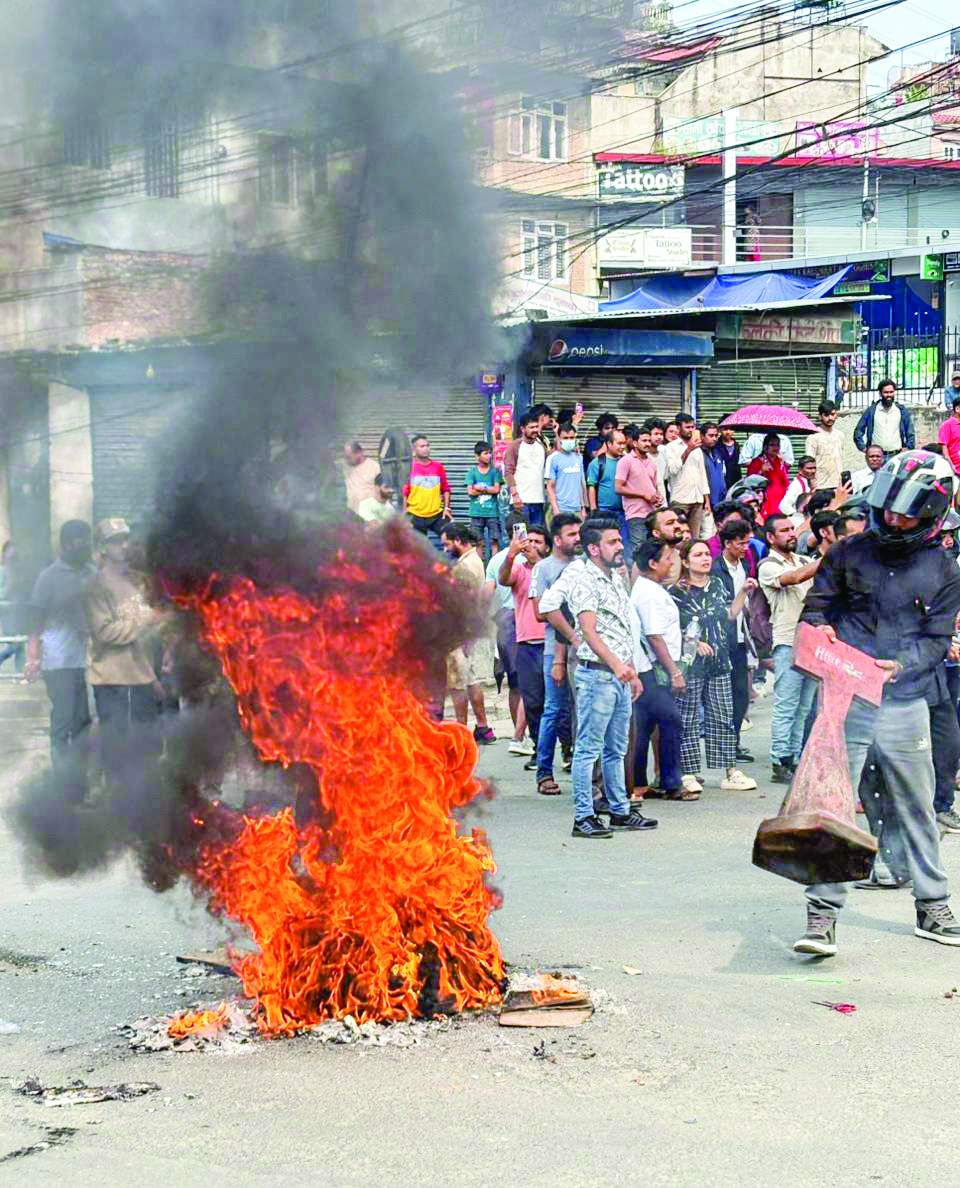
New Delhi: Nepal’s fragile democracy has again been jolted by the overthrow of an elected government, a rupture that many here suspect carried Washington’s quiet approval.
The charge may be politically useful, but it isn’t baseless. Declassified U.S. records and historical testimony that the Sunday Guardian went through make clear that the United States has repeatedly used Nepal as a stage for its covert battles — first against China during the Cold War, later under the “war on terror.”
The paper trail is undeniable. A once-secret memorandum prepared for President Nixon’s covert action committee in January 1971 detailed CIA “Tibetan operations,” including propaganda, intelligence, and paramilitary activity run out of India and Nepal. The memo acknowledged CIA-trained Tibetan radio teams operating along Nepal’s northern border, in direct radio contact with a paramilitary force based in Mustang Valley. This force, armed and guided by the CIA since the early 1960s, launched cross-border raids into Chinese-controlled Tibet. The program was formally endorsed by Henry Kissinger and top State Department officials on 31 March 1971.
That covert history is echoed by those who lived through it. Survivors of the Mustang guerrilla force later described it in Shadow Circus: The CIA in Tibet, a film that documents how hundreds of Tibetans were armed and trained with American support on Nepali soil. When Washington shifted course in the early 1970s to court Beijing, the guerrillas were abandoned, leaving Nepal to face the diplomatic fallout.
Fast forward three decades, and the U.S. footprint in Nepal was once again unmistakable. After 9/11, Washington labeled Nepal’s Maoist insurgents “terrorists” and in 2003 placed them under Executive Order 13224. U.S. military aid surged: thousands of M-16 rifles were shipped to Kathmandu, an Office of Defense Cooperation was established inside the embassy, and Nepali officers cycled through American war colleges. By 2005, the Royal Nepal Army had more than doubled in size with U.S. backing.
The visitors from Washington underscored that commitment. In January 2002, U.S. Secretary of State Colin Powell landed in Kathmandu with Assistant Secretary Christina Rocca and Vice Admiral Walter Doran, meeting King Gyanendra, Prime Minister Sher Bahadur Deuba, and Army Chief Prajwolla Shumshere Rana. Rocca, a former CIA officer, returned repeatedly over the next two years, publicly dismissing peace talks and likening the Maoists to Pol Pot. By 2004, Washington dispatched James F. Moriarty, then senior director at the National Security Council, as ambassador to Nepal — a sign the White House was handling Nepal policy at the highest level.
Washington’s line, people who were active during that time recalled, was uncompromising. While India and China gradually adjusted their policies to accept the Maoists as political actors, the U.S. clung to the “terrorist” label years after they had joined the government. Critics argue that such rhetoric emboldened the hardliners in the army and prolonged the war, which ultimately hurt everyone except Washington’s interest.
Today, with another government gone, suspicions of U.S. involvement swirl again. Several journalists, police officers, and men in uniform, with whom this newspaper spoke to, did not deny the possibility. They noted that a movement of such scale and discipline does not sustain itself without handlers, and with no Nepali face being visible, it is natural to suspect foreign ones. “The Americans have always preferred to act here without showing their hand,” one veteran reporter remarked.
According to an official source, the names of Nepalese political entities that are being floated as new faces is more of a pre-decided pattern. “With time, if the new incoming system permits, we will be able to gather evidence to show if this entire disturbance was silently prodded by outside entities or not. My personal belief is that it cannot have happened without some help,” he said.
Taken together, the historical record and present whispers trace a clear line. From CIA guerrilla bases in Mustang in the 1960s and 70s to Powell, Rocca, and Moriarty walking the corridors of power in Kathmandu, Nepal has been used by Washington as a pawn in larger contests — first to hem in China, later to enforce its counter-terror orthodoxy in South Asia.
That is why today’s rumors in Kathmandu resonate so strongly. For ordinary Nepalis, the idea that the United States might have backed the present overthrow to send a signal to Beijing and Delhi is not paranoia. According to them, it fits a pattern, documented in U.S. archives and remembered in Nepali villages once caught between CIA camps and Maoist fronts: when upheaval shakes Kathmandu, the Americans are never far away.




