
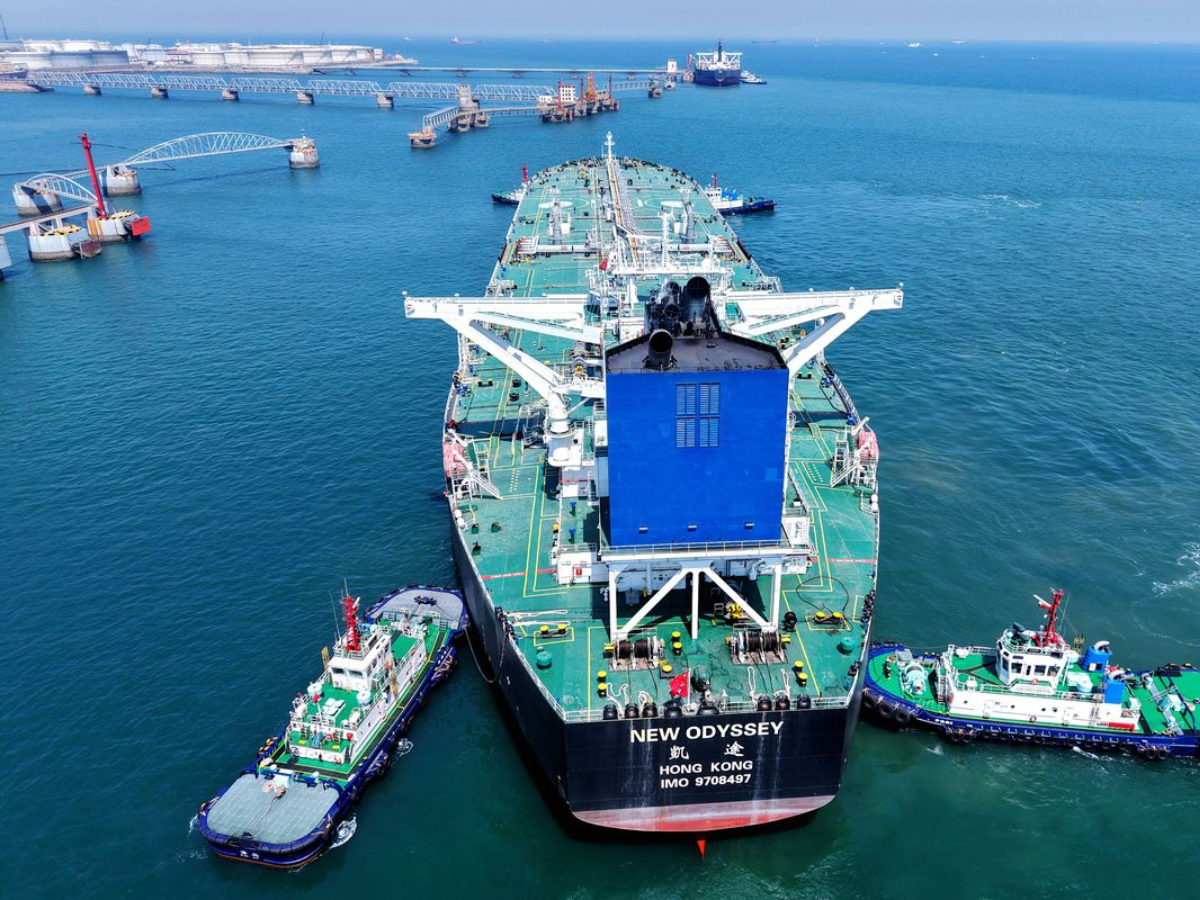
Two supertankers sailing to Venezuela with a Chinese flag to conduct crude oil cargo delivery according to debt for oil contracts have suddenly altered course and set off towards Asia, according to recent shipping reports. Recently, there has been increased enforcement of sanctions by the USA and evolving geopolitical conflicts within the global oil industry.
The supertankers, Xing Ye and Thousand Sunny, had spent months docked and waiting in the Atlantic to enter Venezuela. The sudden turn shows how Venezuela’s crude oil exports are coming under increased pressure amidst the conflict between Washington, Beijing and Venezuela.
Supertankers Head Back to Asia
Both of the very large oil tankers were headed to collect the oil that Venezuela had agreed to deliver to China as repayment for loans. Venezuela has been using its oil deliveries as a means to pay back its debt to Beijing. Estimates show Venezuela owes more than $50 billion to China in repayments of oil, even though it has paid back over $50 billion in this way.
The Xing Ye and Thousand Sunny had remained stationary in wait of an instruction in the confusion arising from the retaliation efforts of the United States. From maritime tracking, it can be gathered that both ships altered their course after an extended period of inaction, affecting their uncertainty of safety and legality in venturing into Venezuelan ports.
U.S. Sanctions & Tanker Seizures
The U.S. has increased its efforts in implementing its sanctions on Venezuelan oil exports, with the culmination being the seizure of at least one Russian zflagged tanker. Early in January 2026, U.S. forces were able to intercept the ship that was formerly known as Bella 1, currently named Marinera, in the North Atlantic aboard a federal warrant linked to violations of sanctions.
Washington claims that the stronger actions are designed as part of a crackdown against oil smuggling ring networks. This politelling has increased tensions between the global superpower, Russia, and China, which drew heavily on the interception, claiming it violated laws governing both the interception and maritime laws. “The critical question, however, concerns its arbitrariness, as it violates freedom of navigation under public international law,” claims the Chinese.
Impact on Venezuela’s Oil Sector
Venezuela’s economy still relies extensively on oil, which currently chucks up about 95 percent of all Venezuelan export earnings. The unexpected departure of oil carriers readied to tote crude clarifies the mounting problems Venezuela faces regarding the maintenance of export activity in spite of U.S. Venezuela sanctions. Venezuelan waters are under potential blockade, which poses a significant threat, making it hard for Venezuela to repay debt.
Meanwhile, the withdrawal of these China-flagged ships also reflects market uncertainty. If major players in the market do not feel confident in holding dealings with Venezuelan oil, it can lead to Venezuelan isolation and cost it dearly in terms of its overall output and influence in the international arena.
Diplomatic & Market Repercussions
In tandem with these oil tanker reversals, Washington’s sanctions strategy has featured the blacklisting of firms and vessels linked to the South American country’s energy export networks. Moves such as these are generally seen as warnings to foreign partners notably Chinese companies-not to help Caracas circumvent U.S. trade restrictions. As events continue to develop, one thing is certain: how these developments will impact oil prices, alliance dynamics and the future of Venezuela’s crude exports will be followed closely by policymakers and industry watchers alike.




