
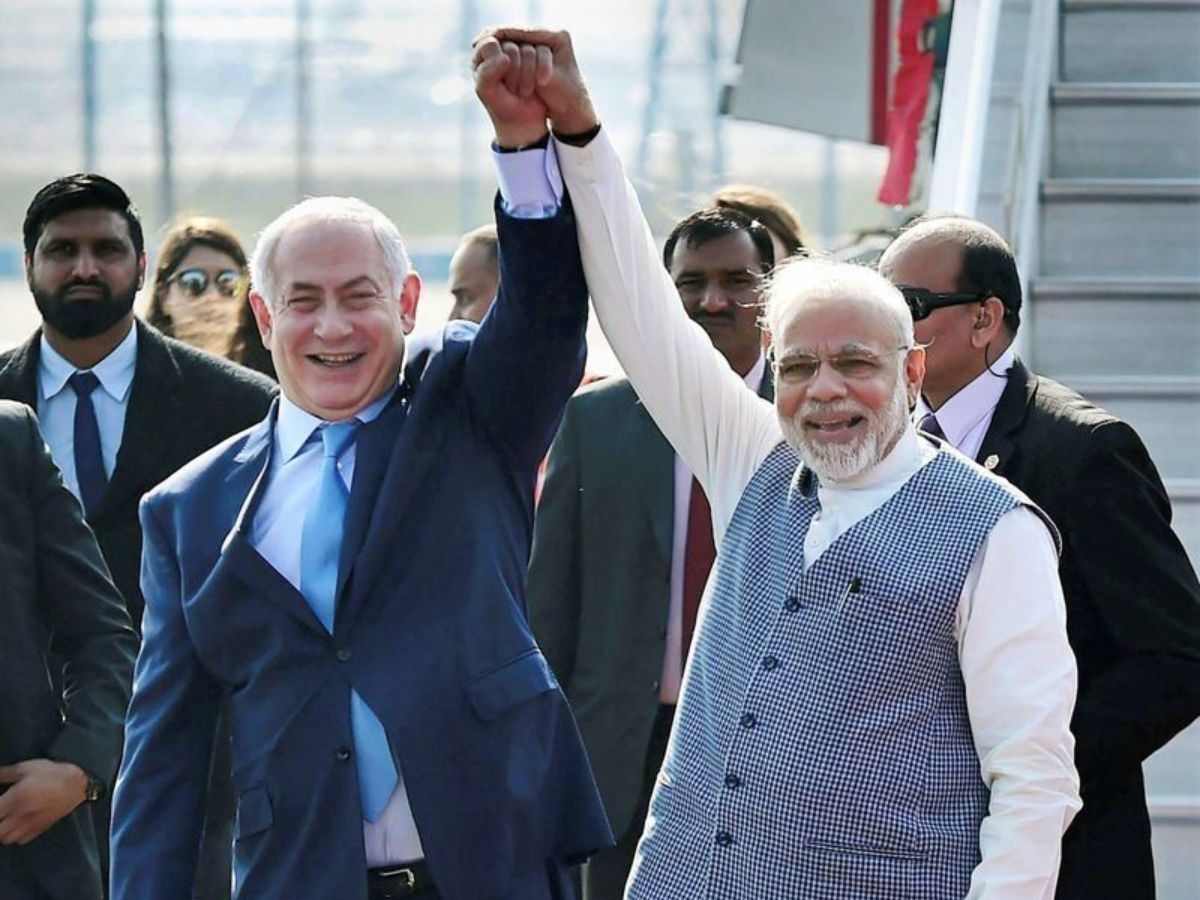
As the United States and Israel launched coordinated military strikes on Iran’s territory, questions erupted in Indian political and media circles over whether India knew about the attack in advance, and whether PM Narendra Modi’s state visit to Israel from February 25 – 26 played a role in the timing of the escalation.
Prominent voices on social media and in Parliament suggested the India visit may have coincided with sensitive diplomatic calculations, sparking debate over India’s awareness and response as war briefly flared in the Middle East.
Iran-Israel Tension: PM Modi Israel Visit Under Scrutiny
PM Modi’s two‑day state visit to Israel, his first in months and intended to deepen economic, defence and strategic cooperation, became fodder for political criticism once the US and Israel initiated strikes on Iran shortly after his return to India. Opposition leaders described the visit as “shameful,” “ill‑timed,” and even an endorsement of military escalation, given that it occurred just days before the bombs fell.
Senior Congress leader Jairam Ramesh said the visit was “particularly ill‑timed” and created a perception that India aligned with military action — a charge that BJP supporters reject but which highlights how the visit is being interpreted in Indian public debate.
Iran-Israel Tension: Did India Know About the Strikes?
Just after the 48‑hour visit of PM Modi to Israel, the US and Israel launched their strikes on Iran. During Modi’s stay in Israel, the US reportedly remained silent, taking no visible action. Meanwhile, the Indian Ministry of External Affairs issued advisories urging Indian citizens to leave Iran and avoid conflict zones. The moment PM Modi returned to India, the strikes were carried out.
Though there is no official evidence that India was informed in advance about the US‑Israel operation, speculation has grown over whether New Delhi already knew about the strike, or if the timing was purely coincidental — or perhaps influenced by the so-called 48‑hour rule. Unlike countries traditionally included in military briefings, India did not release any statement confirming foreknowledge of the operation.
Iran-Israel Tension: Timeline of PM Modi’s Israel Visit
- 25 February: PM Modi arrives in Israel, meets Prime Minister Benjamin Netanyahu and other senior officials.
- 25–26 February: Modi engages in bilateral talks on defence, technology, and trade; attends public events in Jerusalem and Tel Aviv.
- 26 February: Modi departs Israel and returns to India.
- 28 February: US and Israel carry out coordinated strikes on Iranian targets, including sites near Supreme Leader Ayatollah Ali Khamenei’s office.
Iran-Israel Tension: Did PM Modi Visit Create a 48 Hour Pause?
Some observers online pointed to an informal “pause” in hostilities while PM Modi was in Israel — a two‑day window where a major military escalation didn’t occur, even though tensions in the region had been building. This idea became more prominent after commentators noted that the first opportunity for an attack from the US‑Israel coalition emerged only after Modi left Tel Aviv.
But defence insiders stressed that military operations like these are planned weeks or months ahead, based on logistics and intelligence timing, not short diplomatic itineraries. So while Modi’s presence may have influenced perceptions of caution, it is unlikely to have been a formal pause imposed by allied forces.
Iran-Israel Tension: What is the 48‑Hour Rule Going Viral?
The so‑called “48‑hour rule” going viral online refers to the idea that no airstrikes would be launched while India’s prime minister was physically in Israel, especially given India’s stature on the world stage. One analyst wrote,
“You do not launch a strike on Iran, triggering retaliatory ballistic missiles aimed at Israeli territory, while the leader of 1.4 billion people is standing inside the Knesset.”
This narrative circulated widely on platforms like X and was echoed by some journalists covering the visit, although military planners and officials have not publicly confirmed any correlation between the visit and operational timing.
Iran-Israel Tension: What is a Countdown Narrative Which is Being Set?
Beyond the 48‑hour idea, some commentators developed a broader countdown narrative linking Modi’s departure from Israel to an anticipated strike window. This narrative gained traction as military action ultimately began four days after the visit ended, leading many social media users to claim the visit symbolically marked the start of an escalation timeline.
Whether intentional or coincidental, this framing has shaped public conversation in India, raising questions about diplomatic signalling, alliance dynamics, and India’s real‑time awareness of unfolding military decisions.
Iran-Israel Tension: Operation Had Been Planned for Months
Israeli defence officials have stated that the attack on Iran was a long‑planned operation, coordinated with the United States well before Modi’s visit. The launch date was reportedly set weeks earlier, part of ongoing strategic coordination in response to Iran’s nuclear and missile programs.
This explanation suggests that the timing of Modi’s visit was coincidental rather than causative, even if it overlapped in a way that fuels speculation.
Iran-Israel Tension: Political Fallout in India
In India, the timing has sparked sharp criticism from opposition leaders. Congress figures called the visit “shameful” and accused Modi of aligning too closely with Israel and the US at a sensitive moment, risking India’s traditional non‑aligned diplomatic posture. Others, including Asaduddin Owaisi, demanded transparency on whether Modi was informed about the strikes.
Meanwhile, the Indian government has stuck to a public stance of calling for restraint and de‑escalation, focusing on protecting Indian citizens abroad and maintaining balanced relations across the Middle East.




