The US has deployed massive air power near Iran, raising fears of a prolonged conflict as President Trump weighs strike options amid stalled nuclear talks.
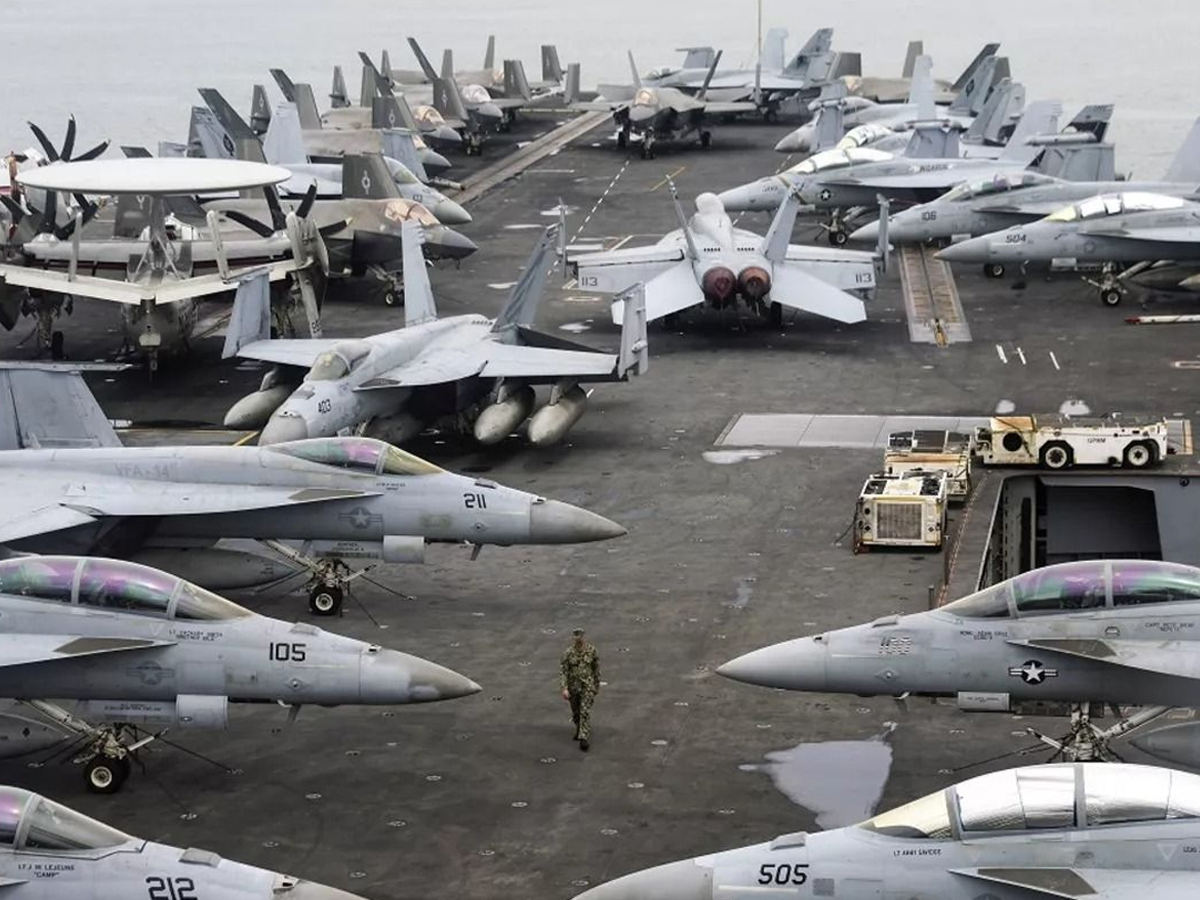
The current standoff traces back to widespread protests inside Iran, initially driven by inflation and economic hardship. (Photo: File Photo)
The United States has dramatically expanded its military presence in the Middle East, assembling a powerful fleet of fighter jets, aircraft carriers, and support planes as tensions with Iran continue to rise. The scale of the deployment has triggered global attention, with officials warning that if Washington decides to act militarily, the operation could unfold over several weeks rather than as a limited strike.
This show of force comes at a time when the White House remains publicly undecided, even as behind-the-scenes preparations suggest the US wants to keep all military options open against Tehran.
The current standoff traces back to widespread protests inside Iran, initially driven by inflation and economic hardship. Over time, the demonstrations turned openly against the government, prompting a harsh crackdown by the regime led by Ayatollah Ali Khamenei. The response drew sharp criticism from Washington, where Donald Trump warned that Iran could face serious consequences.
Attention has now shifted to Iran’s nuclear ambitions. US officials argue that Tehran’s growing stockpile of enriched uranium and its missile program pose a direct threat to regional and global security.
The Pentagon has moved some of its most advanced aircraft closer to Iran, including F-35 and F-22 jet fighters. Military planners have also reinforced the region with command-and-control aircraft that play a crucial role in coordinating large-scale air campaigns.
At sea, the US Navy has deployed two aircraft carriers. USS Abraham Lincoln already operates within range of Iran’s coastline, while USS Gerald R. Ford has arrived carrying attack aircraft and electronic-warfare systems. Missile-defence assets have also been positioned to protect US forces and allies.
Military analysts describe this as the largest concentration of American air power in the region since the 2003 invasion of Iraq.
Despite the military buildup, the White House insists that no final decision has been made. US officials say President Trump has received multiple briefings outlining different military scenarios.
One option includes a wide-ranging campaign aimed at crippling Iran’s leadership and its regional allies. Another involves targeted air strikes against nuclear facilities and ballistic-missile sites. Both plans would likely last weeks and require sustained air operations rather than a single, limited attack.
The current force posture gives the US president the ability to carry out a prolonged air war if he chooses, marking a significant shift from earlier, short-duration strikes carried out in past years.
Even as military assets move into position, diplomacy has not completely stalled. US and Iranian representatives met in Geneva this week to explore a potential agreement on uranium enrichment.
White House press secretary Karoline Leavitt acknowledged that negotiations had made “a little bit of progress” but stressed that the two sides remain “very far apart on some issues.”
For now, uncertainty dominates the situation. The expanding US military presence signals readiness for conflict, while ongoing talks suggest Washington still hopes to curb Iran’s nuclear program without firing a shot.
