US-Iran Tensions: Reports claim Trump reviewed options targeting Iran’s Supreme Leader Ayatollah Khamenei, but no evidence shows an assassination order was issued.
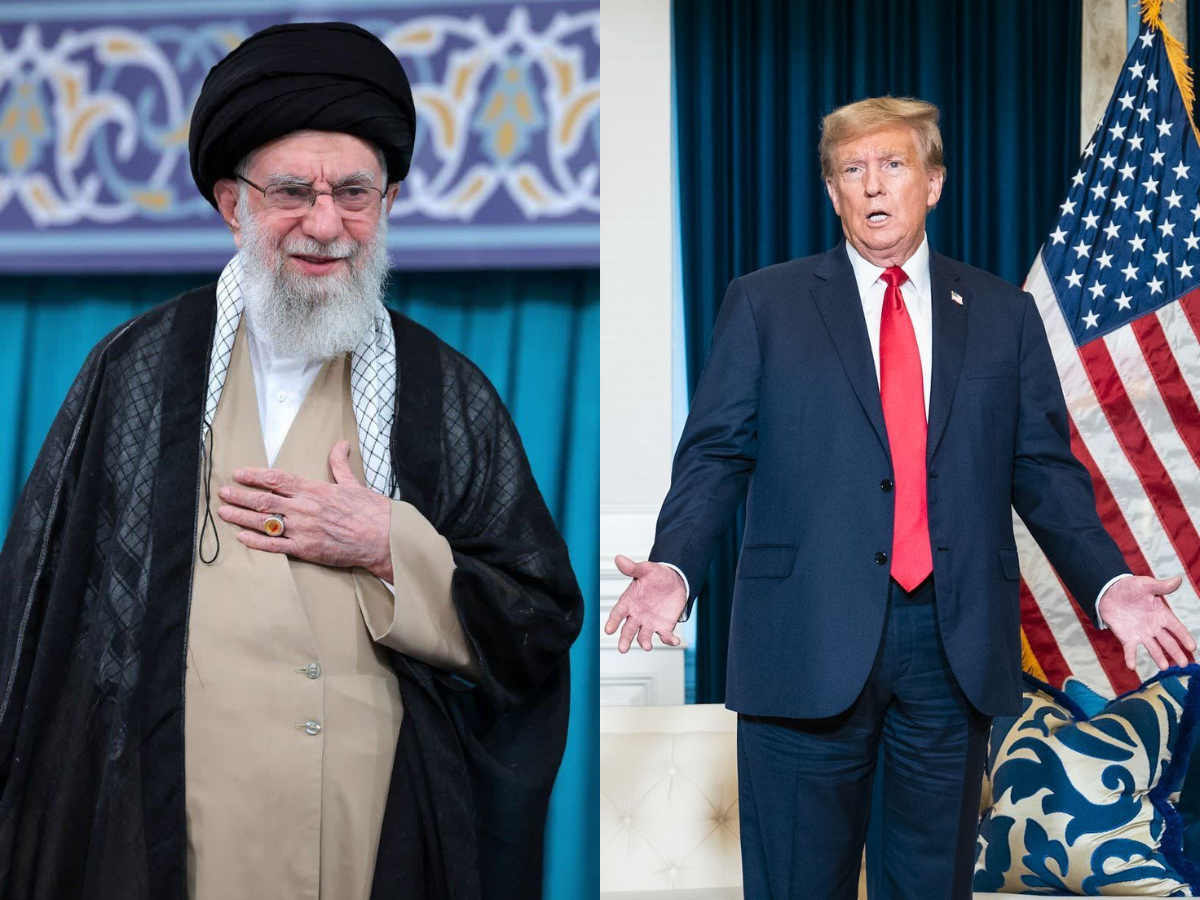
Rising tensions between Washington and Tehran fuel speculation amid military deployments and nuclear talks (Photo: X)
US-Iran Tensions Rise: New developments have caught the world’s attention with claims that former US President Donald Trump was offered options that included striking Iran’s Supreme Leader, Ali Khamenei. This development comes at a time when tensions between the US and Iran are on the rise once again. Although there has been no official confirmation of an order being placed, the mere possibility highlights the fragile nature of US-Iran relations.
According to the report, several options were presented to Trump by his senior advisers among these, one option reportedly called for the removal of Khamenei, his son Mojtaba and other senior clerics. According to officials quoted in the article, no final decision had been reached yet with an adviser drew attention to the fact that even the president had not yet decided on a course of action.
Trump has been briefed on the potential military actions that include a targeted attack on Iran’s Supreme Leader, Ali Khamenei and his son. However, there is no credible evidence that he ordered their assassination and the officials, who were cited in the reports, said that discussing scenarios is not the same as implementing them.
There is no public evidence that Trump authorized the operation or even attempted to carry out such a mission. The discussions that have been mentioned appear to be more a part of a larger strategic briefing than an actual call to action. In the realm of national security issues, administrations often discuss extreme scenarios without taking action on them.
The speculation started as a visible buildup of U.S. military power in the Middle East became more apparent. The presence of the USS Abraham Lincoln carrier strike group, followed by the USS Gerald Ford, indicated that the military was on a higher alert. In the broader Middle East, there are currently 30,000 to 40,000 U.S. troops stationed in the region, which is related to security commitments and a deterrence strategy. These troop levels are considered leverage and a signal rather than an indication of war.
Diplomatic efforts are still underway, Iranian Foreign Minister Abbas Araghchi announced that negotiations in Geneva are progressing towards a draft agreement. Washington has allegedly set a 10-15 day deadline to make progress, failing which there would be consequences. Iran maintains that its nuclear activities are for peaceful purposes and does not accept any call to completely stop uranium enrichment.
Attacking a sitting head of state would be a drastic move with unpredictable consequences and the assassination of national leaders is a rare occurrence in modern geopolitics and has high legal and political costs. Experts have warned that such an event may destabilize the region, shock the world oil markets and lead to retaliatory attacks that may affect US interests globally.
Whether this was a genuine pause for further thought or simply a line in contingency planning, this incident has highlighted the fragility of US-Iran relations with negotiations ongoing and troops in the vicinity, inflammatory rhetoric can shake markets and challenge alliances without necessarily doing anything. Currently, there is not a shred of evidence to suggest that any assassination order had been issued. Nevertheless, the overriding message is that deterrence is only next to escalation in one of the most volatile hotspots on the international agenda.
