
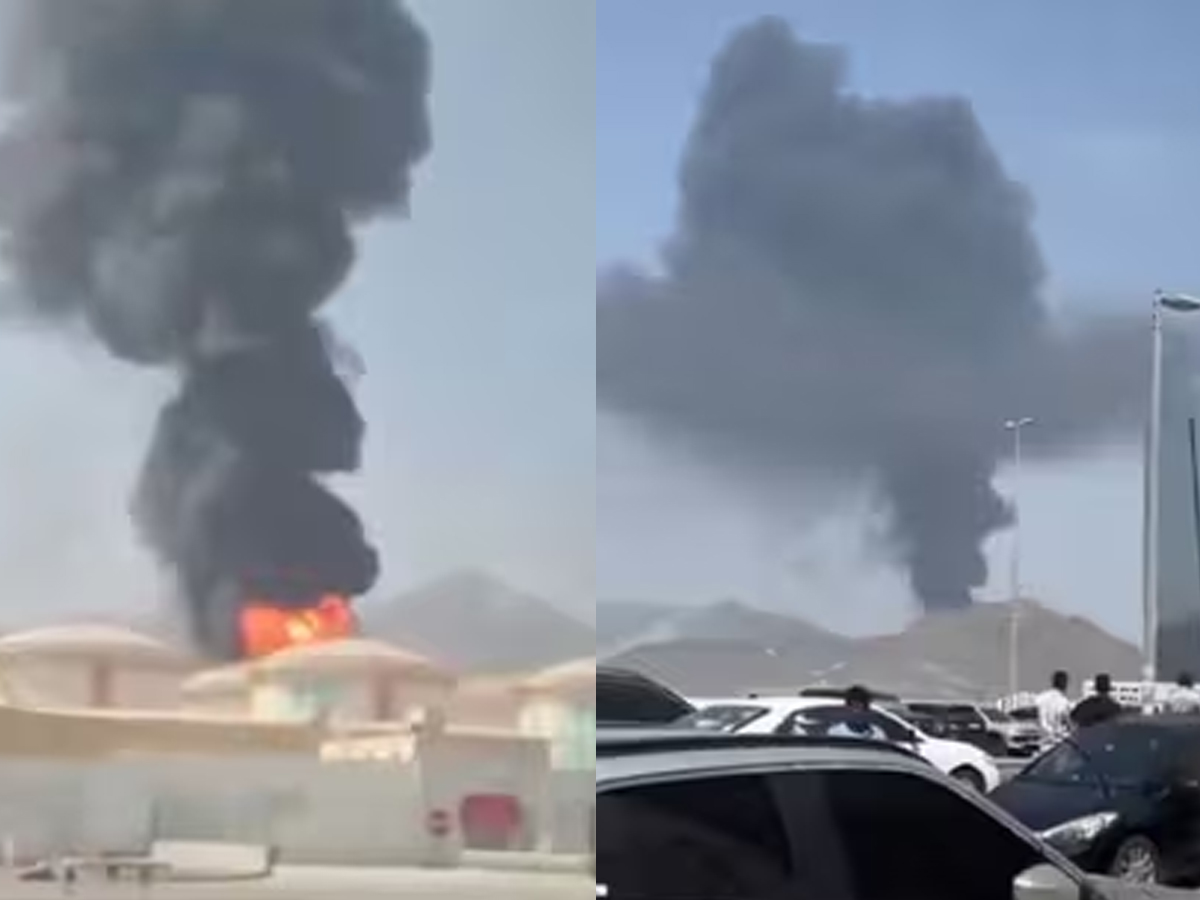
A major fire broke out at an oil storage site in the United Arab Emirates on Tuesday after debris from a drone interception fell inside an energy zone in Fujairah. The incident came as fighting between the United States and Iran entered its fourth day, raising fears about the safety of critical oil infrastructure across the Gulf region.
Authorities in the emirate confirmed that air defense systems intercepted a drone, and falling debris triggered the blaze inside the Fujairah Oil Industry Zone. Thick smoke rose above the refinery area, which serves as one of the UAE’s key oil storage and export hubs.
Officials said emergency teams responded quickly and brought the situation under control. They confirmed that no injuries were reported and that operations resumed shortly after the fire was extinguished.
US-Iran War Day 4: What Happened at the Fujairah Oil Industry Zone?
According to a statement from the Fujairah media office, the fire began after debris from a drone interception landed inside the facility.
“Relevant authorities in the Emirate of Fujairah responded to a fire that broke out this morning in the Fujairah Oil Industry Zone (FOIZ), resulting from falling debris following the successful interception of a drone by air defense systems. No injuries were reported, the fire was brought under control, and normal operations in the area have resumed,” a statement of the Fujairah media office read.
🔥 A massive fire broke out at the Al-Fujairah oil depot following a drone strike
▶️ UAE authorities in Fujairah Port say fragments from successfully intercepted drone, no injuries reported
💥 Explosion comes amid US-Israeli attacks on Iran and Tehran’s retaliatory strikes pic.twitter.com/66cxT0veUa
— Anadolu English (@anadoluagency) March 3, 2026
The government also urged residents and media outlets to rely only on official updates and avoid spreading unverified information.
The Fujairah Oil Industry Zone is located in the emirate of Fujairah on the UAE’s eastern coast. It plays a vital role in oil storage, bunkering, and global exports, especially because it provides access to the Arabian Sea without requiring tankers to pass directly through the Strait of Hormuz.
US-Iran War Day 4: Are Gulf Oil Facilities Under Attack?
The fire in Fujairah came amid a broader wave of drone and missile attacks across Gulf states. Regional reports indicate that energy facilities in Oman, Saudi Arabia, Qatar, and the UAE have faced increased targeting as tensions escalated.
In Oman, a fuel tank was hit during a drone strike targeting the port of Duqm on the country’s eastern coast. Meanwhile, QatarEnergy, one of the world’s largest liquefied natural gas exporters, suspended production at two sites following drone strikes earlier this week.
The widening conflict has pushed energy markets into volatility. European energy prices surged sharply as traders reacted to the growing risk to Middle East supply chains.
US-Iran War Day 4: How Is the Strait of Hormuz Affected?
The ongoing hostilities have also raised concerns about disruptions in the Strait of Hormuz. This narrow passage connects the Persian Gulf to global shipping lanes and carries a large share of the world’s oil and gas exports.
If attacks continue near key maritime routes, shipping costs and insurance premiums could rise significantly. Any prolonged disruption would directly impact global oil supply and energy prices.
US-Iran War Day 4: Is Oil Production in the UAE Disrupted?
UAE authorities have stated that normal operations resumed quickly at the Fujairah facility after the fire was contained. They reported no casualties and no long-term damage to export functions.
However, analysts warn that repeated strikes on energy infrastructure could strain regional supply chains if the conflict continues.
As the US-Iran war intensifies, Gulf oil facilities remain on high alert. Governments across the region continue to strengthen air defense systems to protect critical energy hubs that support global markets.




