US-Iran War Update: Day 5 of the Israel-Iran conflict sees rising military escalation, evacuation warnings in Beirut and safety advisories for Indians in the UAE.
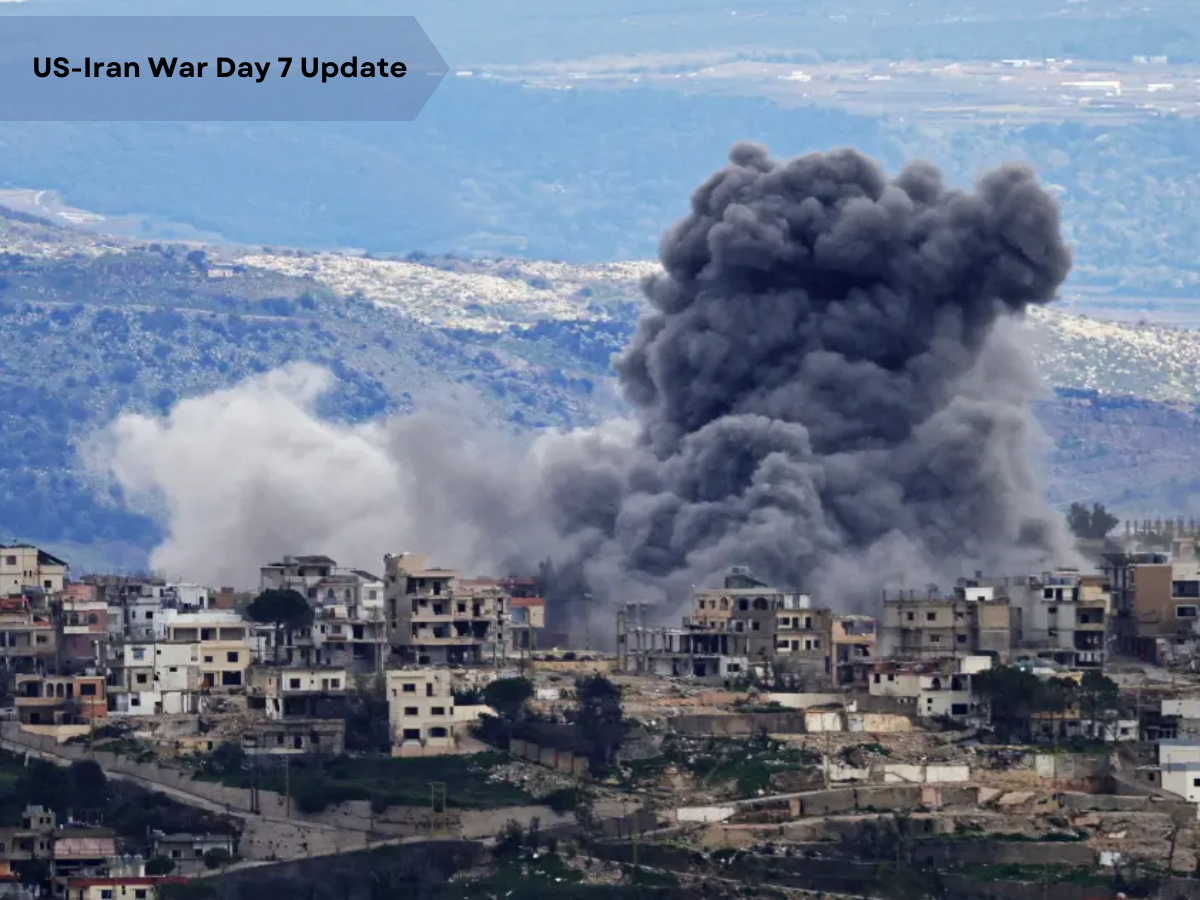
Residents flee Beirut’s southern suburbs after evacuation warnings amid escalating Israel-Iran conflict (Photo: X)
US-Iran War Day 7 Update: This escalation of the conflict between the United States, Israel and Iran has heightened insecurity in the Middle East on the fifth day of the conflict. Fear has been rampant with military attacks, evacuation threats and diplomatic warnings have been issued in the region with the increasing involvement by the world powers, the crisis is currently not only impacting battlefield areas, but also international travel, shipping paths and energy markets. Analysts allege that further escalation may shake up a number of nations and interfere with global trade nexuses that transact close to 30 percent of global oil volumes into the globe via the Gulf area.
In the escalating conflict, Donald Trump has opined that America should be involved in determining the future of the leadership of Iran. His comments were made following the death of Ali Khamenei that has left the Iranian political setup in doubt. Trump also disregarded the speculations that the son of Khamenei would succeed the leadership, saying that it was an impractical view. Diplomatic quarters have sharp reactions to the comment and tension escalates in the region.
According to the military command of Israel, the current campaign has brought a lot of weakness in the defensive capacities of Iran. Eyal Zamir says Israel has destroyed approximately 80% of Iranian air-defence systems and over 60% of its ballistic missile launchers. Such developments, should they be true, would be a radical change in the balance of the military situation in the region and put Israel in the position of almost having the airspace of Iran under its complete control.
The Iranian state television has alleged that the drones hit the American carrier USS Abraham Lincoln. There was no evidence and operational detail in the report. In past workers, the Pentagon explained that Iranian missiles did not even approach the U.S. naval resources. Nevertheless, the statement is representative of the presence of an information war that goes hand in hand with the military conflict.
Beirut was riddled with fear as Israel gave an unprecedented evacuation warning on the southern suburbs, which is thought to be a stronghold of the Hezbollah and there were traffic jams on major roads with people scrambling to get out of the congested neighbourhood. The evacuation warning is one of the largest in the recent times due to the hundreds of thousands of people living in the suburbs.
The United States has temporarily closed its operations in its embassy in Kuwait City out of security reasons. The U.S. State Department approved the move under the precautions taken to ensure the American and Israeli forces go on with their operation against Iranian military installations.
The Embassy of India in the United Arab Emirates has recommended the Indian citizens to relax and adhere to the local safety regulations while it was emphasized that authorities should keep track of confirmed announcements because the situation in the region keeps changing.
Toll-free emergency number: 800-46342
WhatsApp assistance: +971 543090571
Email support (Dubai): pbsk.dubai@mea.gov.in
Email support (Abu Dhabi): ca.abudhabi@mea.gov.in
1. Why has the conflict intensified recently?
The escalation follows coordinated strikes by U.S. and Israeli forces on Iranian military infrastructure.
2. Why are residents evacuating parts of Beirut?
Israel issued evacuation orders in anticipation of possible strikes targeting Hezbollah positions.
3. Are U.S. diplomatic missions affected?
The US has temporarily suspended operations at its embassy in Kuwait for security reasons.
4. What advice has India given its citizens in the UAE?
The Indian embassy has asked nationals to remain calm, follow local safety guidelines and monitor official updates.
5. Could the conflict affect global markets?
Yes. The Gulf region handles a large share of global oil shipments and making energy prices sensitive to disruptions.
