
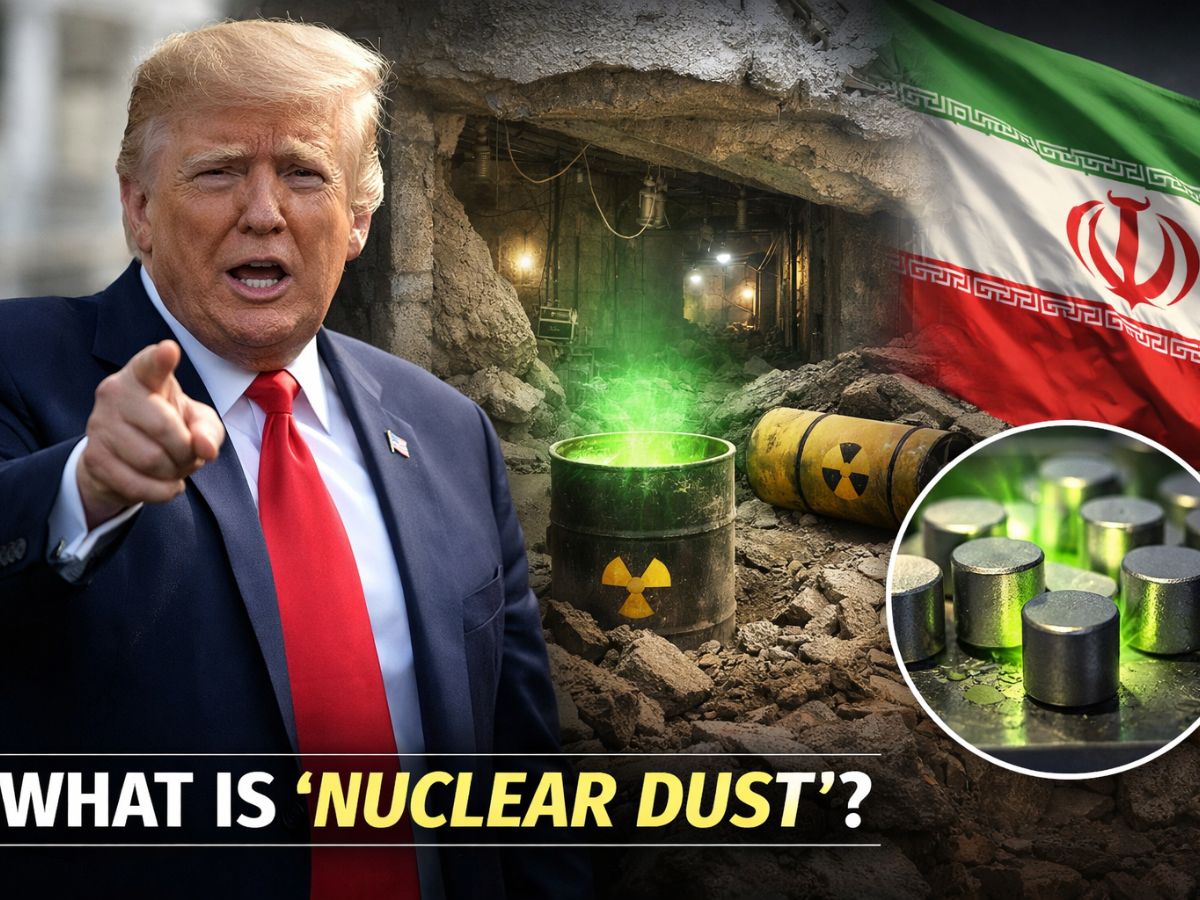
US-Iran War Latest Update: The term “nuclear dust” has sparked global attention after Donald Trump claimed that Iran had agreed to return material buried deep underground following earlier US airstrikes. The statement came during ongoing diplomatic efforts between the United States and Iran to reduce tensions and prevent nuclear weapons development.
Trump said the understanding formed part of broader assurances from Tehran aimed at preventing nuclear weapon production. However, officials in Iran have not publicly confirmed the claim, keeping uncertainty around the announcement.
US-Iran War Latest Update: What Did Donald Trump Say About ‘Nuclear Dust’?
Speaking to reporters outside the White House, Trump stressed that stopping Iran from developing nuclear weapons remains a major priority for his administration. “It is very important that Iran does not have a nuclear weapon. And they’ve agreed to that. Iran’s agreed to that and they’ve agreed to it very powerfully,” he said.
“They’ve agreed to give us back the nuclear dust that’s way underground because of the attack we made with the B2 bombers. We have a lot of agreement with Iran, and I think something’s going to happen very positively,” the US President added.
Trump also indicated that negotiations between Washington and Tehran were progressing and suggested that a peace deal could be close if talks continue successfully.
What is ‘Nuclear Dust’?
The phrase “nuclear dust” is not an official scientific term. Trump uses it informally to describe highly enriched uranium, which experts believe remains buried under debris following US strikes on Iran’s nuclear facilities.
According to reports, the material likely lies deep underground beneath damaged infrastructure and mountain rubble caused by earlier bombing missions. This uranium is considered highly sensitive because it can potentially be used to produce nuclear weapons if enriched further.
Experts say the uranium was stored at key nuclear locations, including underground tunnels and storage areas, which made recovery extremely complex and risky.
Where is The ‘Nuclear Dust’ Believed To Be Located?
International nuclear inspectors believe Iran’s enriched uranium stockpile remains stored at major nuclear facilities such as the Natanz Nuclear Facility and the Isfahan Nuclear Technology Centre.
These locations contain underground tunnels and storage zones that protect nuclear material from attacks. After US airstrikes targeted multiple facilities, parts of these sites collapsed, burying enriched uranium under layers of rubble.
The International Atomic Energy Agency has monitored Iran’s nuclear activity and warned that such material remains highly sensitive due to its potential military use.
Before the attacks, Iran reportedly possessed hundreds of kilograms of enriched uranium at different levels, some of which could be refined into weapons-grade material if further processed.
Why Does The United States Want The ‘Nuclear Dust’?
The United States aims to remove or neutralise the buried uranium to prevent Iran from developing nuclear weapons in the future.
Officials believe that recovering this material could significantly weaken Iran’s ability to rebuild its nuclear programme. Removing enriched uranium from underground storage would also reduce the chances of covert nuclear development.
Trump indicated that the United States could work jointly with Iran to retrieve the buried material, suggesting that cooperation may form part of any future peace agreement.
“There will be no enrichment of Uranium,” Trump said, adding that the United States would work with Iran to “dig up and remove all of the deeply buried (B-2 Bombers) nuclear ‘dust.'”
US-Iran War Latest Update: Has Iran Confirmed The Claim?
So far, Iranian officials have not publicly confirmed Trump’s statement about returning the uranium.
Reports indicate that negotiations between Washington and Tehran continue, but both sides still disagree on key issues, including uranium enrichment limits and nuclear inspections. Analysts say the absence of official confirmation from Iran makes it difficult to verify whether a final agreement exists.
Why The ‘Nuclear Dust’ Issue Matters Globally
The debate over “nuclear dust” reflects a larger global concern about nuclear security. Enriched uranium remains one of the most sensitive materials in modern geopolitics because it can be used to produce nuclear weapons.
If Iran agrees to hand over the buried uranium, it could mark a major shift in nuclear negotiations and reduce the risk of conflict in the region. However, if talks fail, tensions between the two countries could rise again, potentially affecting global energy markets and regional stability.
Experts believe that the next rounds of diplomatic talks will determine whether the “nuclear dust” issue becomes a breakthrough moment or remains a major obstacle in peace negotiations.




