U.S.-Iran Tensions: President Trump told Iran's IRGC to surrender or die. They didn't. Here's why the elite force, rooted in ideology and economic power, ignored the ultimatum.
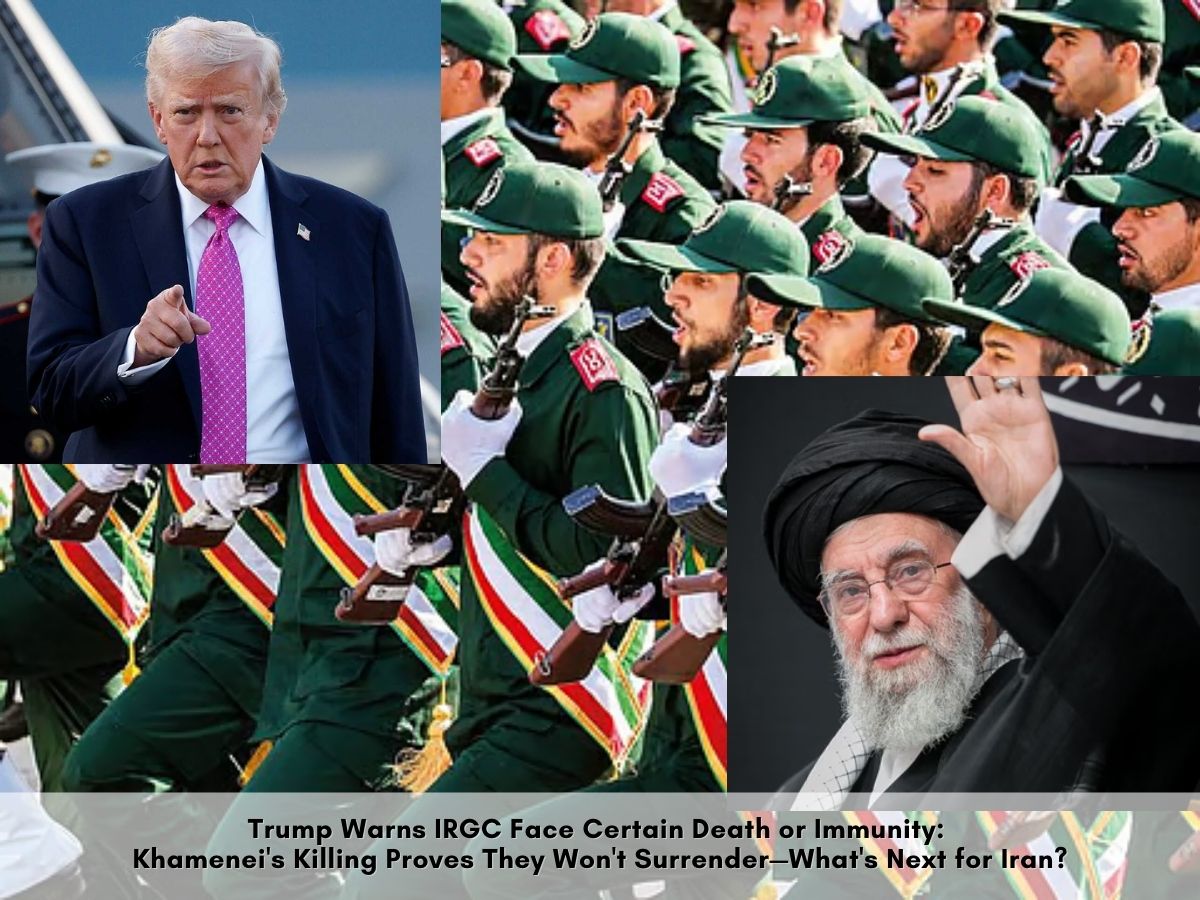
Trump's IRGC Surrender Plea Falls Flat After Khamenei Death in US-Israel Attack (Image: File)
US President Donald Trump urged Iran's Islamic Revolutionary Guard Corps to drop their weapons or face death during Saturday's US-Israel strikes on Iran. Instead, IRGC forces hit back with drones and missiles on Israel and US-hosting Arab states, as news broke of Supreme Leader Ayatollah Ali Khamenei's death in a Tehran strike.
Trump offered full immunity if IRGC, armed forces, and police laid down arms. He said they'd face "certain death" otherwise. But they didn't listen. Iranian TV reported Khamenei's death early Sunday. Trump's words aimed to spark defections. They sparked retaliation instead.
The IRGC formed in 1979 after Iran's revolution. It's an elite force loyal only to the supreme leader. It follows velayat-e faqih—guarding the Islamic revolution. Ground, navy, air troops plus Basij militia and Quds Force for outside ops. About 190,000 active, 600,000 with reserves. Runs missiles, nuclear security, and "axis of resistance" allies.
Basij is IRGC's volunteer paramilitary. Started by Khomeini in 1979. Draws devoted civilians, often young working-class men chasing perks. Around 450,000 strong, per Institute for the Study of War. Crushed protests like 2009 Green Revolution and 2022-23 Woman, Life, Freedom. In Iran-Iraq war, they ran "human wave" martyr missions to clear mines.
Sanctions hit hard—US labeled it terrorist group in 2019, EU in 2026. Iran fired back, naming EU forces terrorists. But IRGC runs Iran's economy. Controls resources, transport, telecom, mining via "resistance economy." Grew during 1980-88 war handling logistics. Now key to dodging sanctions.
Experts say no mass surrender. Michael Mulroy, ex-US defense official, noted multiple power centers in Iran. IRGC ideology ties to revolution and leader. Economic perks lock in loyalty. Jonathan Panikoff of Atlantic Council predicts military rule, not democracy—IRGC holding real power, maybe propping a new figurehead.
Iran faced 2025 Israel war, 2026 protests over economy and mismanagement. IRGC replaced killed leaders fast. Khamenei named successors before. Social tweaks tried to calm youth. But strikes and death may boost IRGC control. Analysts see escalation, pain for US, Gulf states. Larijani signals all-out war push.
A: Yes. Trump called for surrender or death. IRGC doctrine demands loyalty to supreme leader and revolution. Basij volunteers live for martyrdom, not immunity.
A: Elite force since 1979, answers to supreme leader. Handles defense, missiles, nukes, foreign ops via Quds. 190,000 active personnel.
A: IRGC volunteer militia, 450,000 strong. Crushes protests, ran suicide waves in old wars. Motivated by faith and perks.
A: No. Ideology, economy, power make defection unlikely. Khamenei's death may strengthen them.
A: Unlikely. IRGC replaced leaders before, eyes more control amid chaos.
Disclaimer: This information is based on inputs from news agency reports. TSG does not independently confirm the information provided by the relevant sources.
