
US-Israel-Iran War Latest Update: The ongoing conflict between the US, Israel, and Iran has now entered the second week with no sign of calming down. The attacks on the Iranian capital city of Tehran continue unabated, while Iran has been retaliating with attacks across the region.
In the midst of the ongoing conflict between Iran and the US/Israel, Iran’s Islamic Revolutionary Guard Corps has launched the 27th wave of attacks as part of their military operation ‘Operation True Promise 4.’
According to the IRGC, the latest wave of attacks was carried out against American and Israeli forces as a response to the new phase of “unprovoked US-Israeli aggression towards the Islamic Republic.”
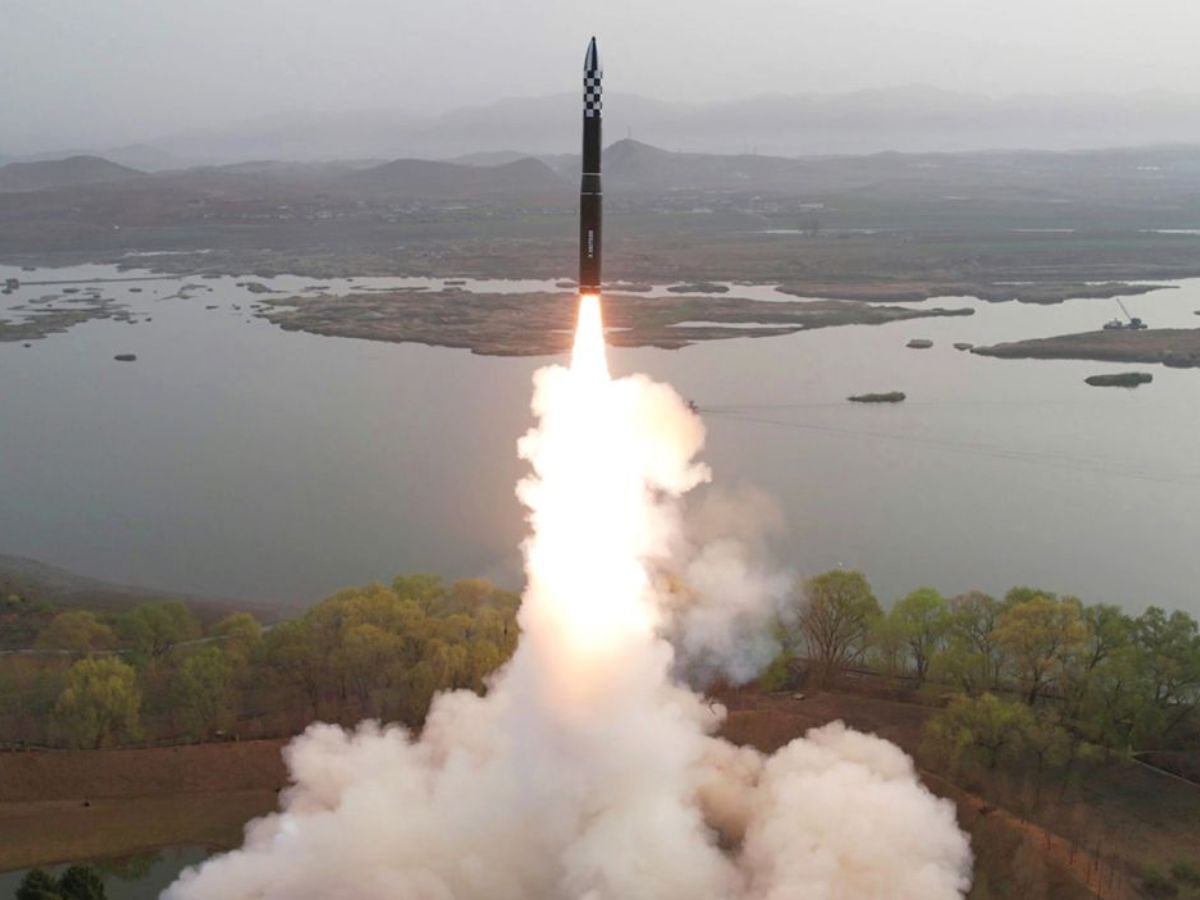
According to the IRGC, the latest wave of attacks included the use of newly developed technology involving the use of solid-fused missile technology by the Aerospace Division of the IRGC.
"In this strategic and multidimensional operation, Zionist military targets in the occupied city of Haifa were struck by the IRGC's Aerospace Division's new solid-fuel Kheibar-Shekan missiles that possess terminal guidance capability up to the point of impact."
US-Israel-Iran War: What Are Solid-Fuel Missiles?
This contrasts with the older liquid-fuel missiles. These missiles need to be filled with fuel before they can be launched. This takes a considerable amount of time.
In the solid-fuel missiles, the fuel is carried inside the rocket. This allows the missiles to be launched quickly with a minimal amount of preparation.
The fuel used in the missiles consists of metallic powders like aluminium mixed with an oxidiser like ammonium perchlorate. These are mixed with a rubber-like substance to bind them together. They are then encased in a metal casing inside the rocket.
Since the missiles already have the fuel inside them, they can be kept ready for a long time. This allows the military to react quickly to situations.
US-Israel-Iran War: Why Solid-Fuel Missiles Are Different
There are a number of advantages that make solid-fuel missiles effective and difficult to counter. One of the most important advantages of solid-fuel missiles is the fact that they can be launched quickly. Since they do not need to be fueled before they are launched, they can be launched with very little notice. This means that the enemy will be given very little time to react to the launch or to the launch sites.
Another important characteristic of solid-fuel missiles is the fact that they can be launched from a variety of locations. Some of the missiles can be launched from a mobile platform. This means that the enemy will not be able to track them since they can be moved from one place to another. These missiles also need little support since they are easy to operate.
Since they can be launched quickly, the enemy will be given very little time to react to the launch of the solid-fuel missiles.
US-Israel-Iran War: Inside the Kheibar Shekan Missile
The missile reportedly used in the latest attacks is the Kheibar Shekan missile. This missile is a medium-range ballistic missile used by the IRGC Aerospace Force. The name “Kheibar Shekan” translates to “Castle Buster” or “Fortress Buster” as the missile targets fortresses. According to Iranian reports, the missile has a range of approximately 1,450 kilometers. This enables the missile to target Israel from western Iran. The missile also has satellite guidance. This increases the accuracy of the missile. The missile measures approximately four meters in length. The missile weighs approximately 1,500 kilograms. The missile reportedly achieves speeds of up to 19,500 km/h within the atmosphere. The missile achieves speeds of up to 9,800 km/h outside the atmosphere. This makes the missile difficult to intercept. The missile propulsion system uses a one-stage solid fuel “Arond” engine. This engine is combined with the fuel tank. This makes the missile difficult to detect. The missile can be launched from a moving platform. This missile can be prepared for firing within less than 15 minutes. The missile has a high-explosive warhead weighing between 550 to 600 kilograms.
US-Israel-Iran War: Part of Iran’s Expanding Missile Programme
Kheibar Shekan is a ballistic missile belonging to Iran’s family of ballistic missiles known as Khorramshahr, which have undergone various upgrades since their first appearance in 2017.
The earlier variants were propelled by liquid fuel, but later variants signal a move towards more lightweight and mobile missiles propelled by solid fuel. Iran is believed to have one of the largest missile programs in the Middle East, ranging from short-range to medium-range ballistic missiles.
Short-range ballistic missiles range from 150 to 800 km and are intended for quick strikes against military targets in close proximity. Medium-range ballistic missiles, ranging from 1,500 to 2,000 km in distance, include the Shahab-3 missile, Emad missile, Ghadr-1 missile, Sejjil missile, and Kheibar Shekan, enabling Iran to target various places in the region, including Israeli cities and US bases in the Gulf.
US-Israel-Iran War: Drones Also Used in Latest Offensive
Iranian state media also reported that unmanned aerial systems were used during the latest offensive.
According to the IRGC statement, drone units "successfully targeted the location where American forces are stationed in 'Marina,' in the vicinity of the buildings of the 'Warner Brothers' company," during the 27th wave of Operation True Promise 4.
Authorities in Dubai confirmed that debris from an interceptor missile killed one person during the exchange. Meanwhile, the IRGC Navy reportedly targeted facilities linked to the United States Fifth Fleet in Bahrain, indicating that the conflict is spreading across multiple fronts.
The IRGC said Operation True Promise 4 has already involved hundreds of ballistic missiles and drones targeting strategic locations including Tel Aviv, Jerusalem and the technology hub of Be’er Sheva, highlighting the widening scale of the confrontation across the region.