
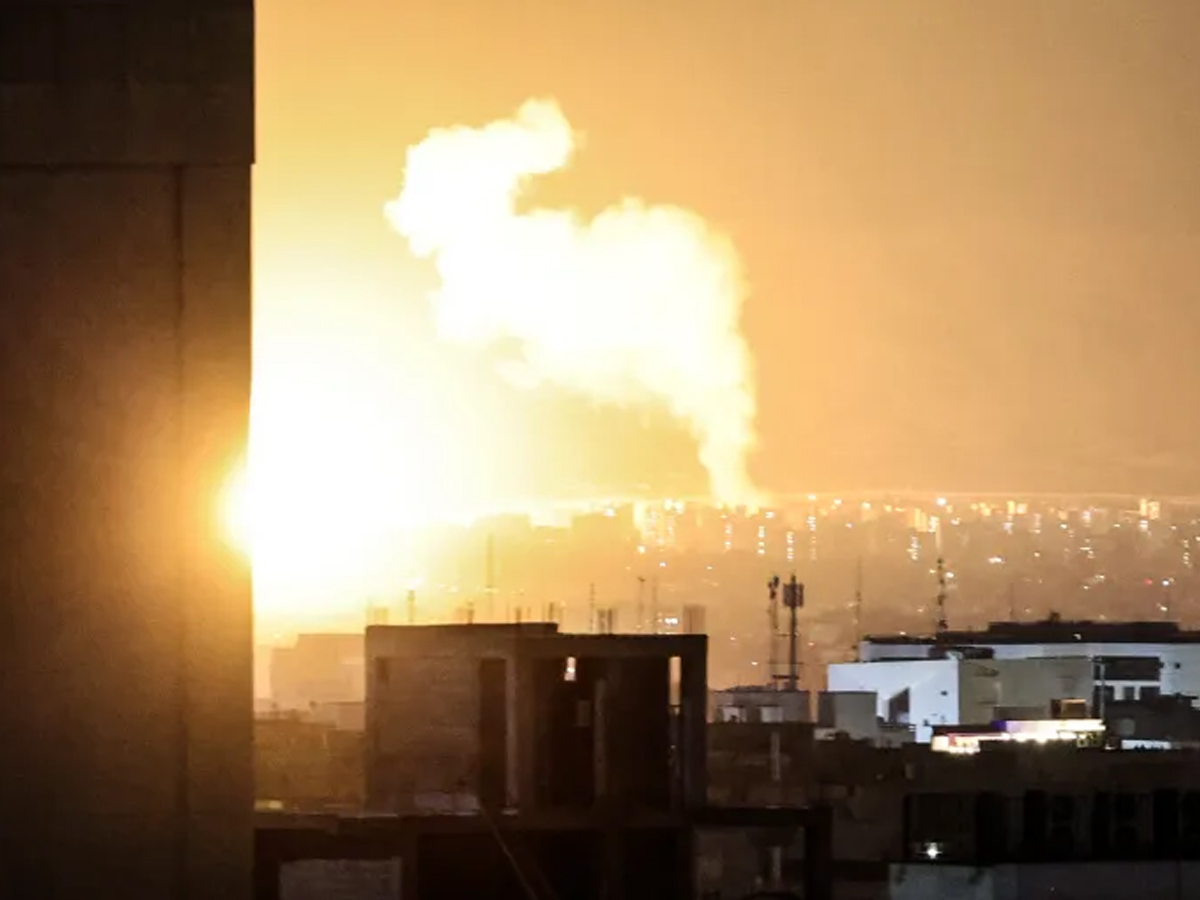
US-Israel-Iran War Latest Update: The conflict between Iran and the United States, along with Israel, has entered a more dangerous phase after airstrikes hit several key oil storage sites in and around Tehran. The attacks, which occurred late Saturday, marked the first time Iran’s oil infrastructure became a direct target during the ongoing military confrontation.
Massive explosions were reported across parts of the Iranian capital, with videos circulating online showing huge fireballs and thick black smoke rising into the night sky. Several residents reported hearing powerful blasts that shook buildings miles away from the impact sites.
Iran’s oil ministry later confirmed that multiple oil storage facilities in Tehran province and nearby Alborz province were struck during the attack.
US-Israel-Iran War Latest Update: Israeli Strikes Hit Tehran Oil Depots and Fuel Storage Sites
According to Iranian officials, the strikes targeted fuel depots that play a crucial role in the country’s energy distribution network. Among the locations affected was a major storage facility in Tehran as well as another depot in the city of Karaj, located west of the capital.
The Israeli military confirmed the strikes and said its forces targeted fuel and energy complexes connected to Iran’s military operations.
Tehran’s largest oil depot up in flames 👇
A reminder that China imports 15% of its oil from Iran. No longer.pic.twitter.com/bGdxWSECNk
— Dr. Eli David (@DrEliDavid) March 7, 2026
Israel’s military described the operation as a “significant strike” aimed at dismantling the military infrastructure of the government.
Explosions were also reported near Shahr Rey in southern Tehran, where one of the country’s main oil refineries operates close to a major fuel storage site. Smoke spread across surrounding neighborhoods as emergency crews responded to the fires.
US-Israel-Iran War Latest Update: Mehrabad Airport Explosion Adds to Tehran Tensions
Earlier in the day, another major blast was reported near Mehrabad Airport, one of Iran’s busiest domestic airports. The airport serves as a central hub for flights within the country and lies close to several military and logistical facilities.
Residents living near the airport reported hearing loud explosions followed by heavy smoke rising from the area. The blasts were strong enough to rattle homes several kilometers away.
In northwestern Tehran, the Shahran oil depot also came under attack. The same facility had previously been targeted in an earlier round of strikes, making it one of the most sensitive energy locations in the capital.
Videos shared online showed thick columns of smoke rising high above the city skyline.
US-Israel-Iran War Latest Update: Iran War Casualties Continue to Rise
The widening conflict has already caused heavy casualties on multiple sides. Iran’s ambassador to the United Nations, Amir Saeid Iravani, said that the ongoing attacks have resulted in significant civilian deaths across the country.
According to him, the strikes have killed at least 1,332 Iranian civilians while injuring thousands more.
At the same time, Iranian missile and drone attacks have caused casualties in Israel as well. Officials there confirmed that at least ten people have died in the strikes.
The United States has also suffered losses during the conflict. At least six American service members were killed earlier in a drone attack on a military command facility in Kuwait. Their remains were returned to the United States and arrived at an Air Force base in Delaware on Saturday.
US-Israel-Iran War Latest Update: Global Oil Markets React as Strait of Hormuz Remains Closed
The military escalation has begun affecting global energy markets. Oil prices have surged to multi-year highs as concerns grow about supply disruptions from the Middle East.
The Strait of Hormuz, one of the world’s most important oil shipping routes, remains effectively closed due to the ongoing conflict and security risks in the region.
Energy analysts say the situation could significantly impact global fuel supplies if the fighting continues to expand.
Meanwhile, several Gulf countries reported additional missile and drone activity on Sunday. Iran has warned that it will continue launching strikes against countries hosting American military forces in the region.
As the war moves into its second week, the attacks on oil facilities signal a major shift in strategy and raise fears that the conflict could trigger wider economic and geopolitical consequences around the world.




