Oil prices plunged after touching four-year highs as a surprise hint from Donald Trump raised hopes the war with Iran might end soon but tensions around the Strait of Hormuz keep markets on edge.
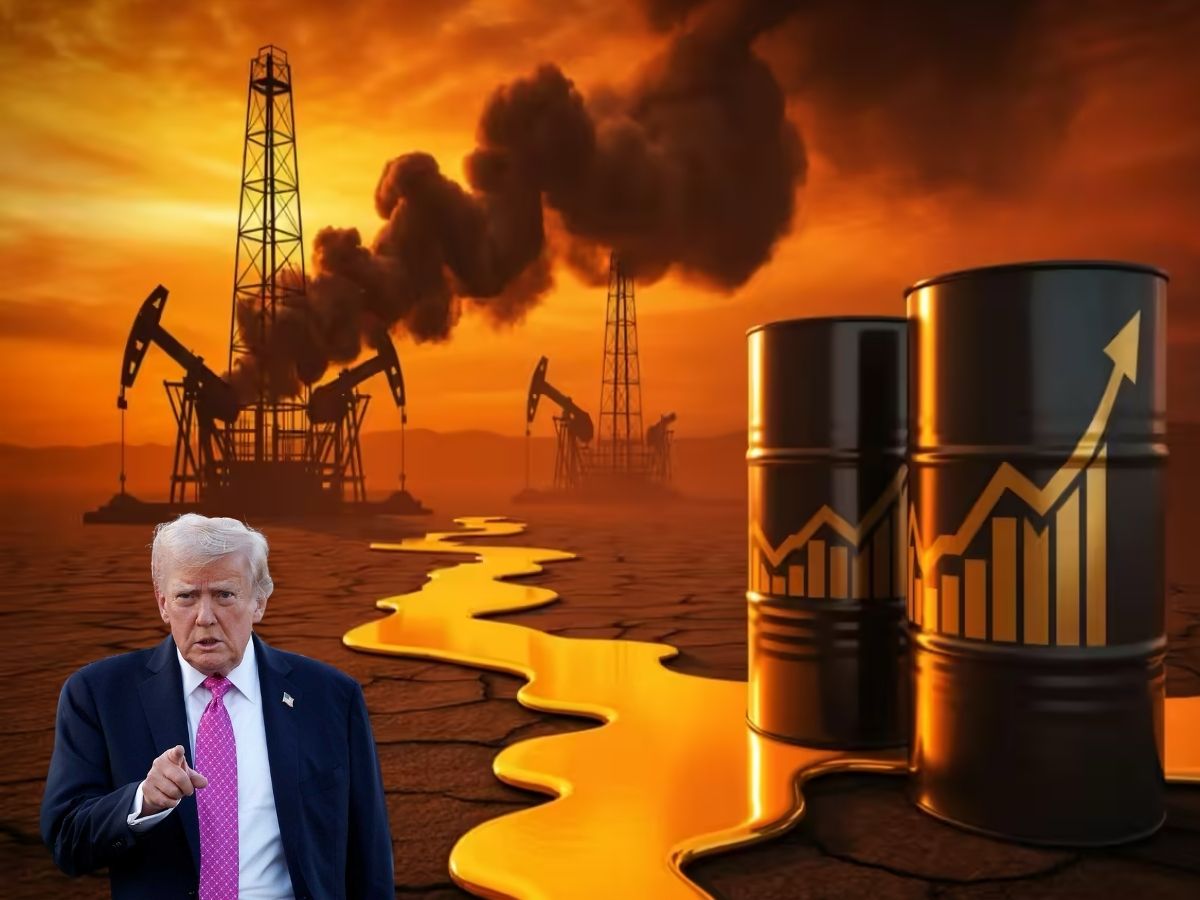
Oil Prices Swing Wildly as Donald Trump Signals Iran War May End Soon (File Photo)
US-Israel-Iran War Latest Update: Global oil markets experienced dramatic swings over a 24-hour period after U.S. President Donald Trump indicated that the ongoing conflict involving the United States, Israel, and Iran might end soon. His remarks triggered a sharp fall in oil prices after they had surged to multi-year highs amid fears of a major supply crisis.
On Monday, global oil benchmark Brent crude climbed as high as $119.50 per barrel. The sharp rise came as tensions in the Middle East raised fears that the war could severely disrupt global energy supplies. Investors worried that the conflict might spread across the region and threaten critical oil production facilities and shipping routes, pushing prices rapidly upward.
Trump attempted to downplay the surge, saying the increase was smaller than he had expected. He told reporters that oil prices had risen “probably less than I thought they’d go up.” At the same time, he tried to reassure financial markets by suggesting that the conflict with Iran could end soon. In an interview with CBS News, Trump said the military campaign was “very complete, pretty much,” which led investors to believe that the war might soon wind down.
Trump’s remarks quickly affected the energy market. Within hours, Brent crude dropped sharply to about $91.58 per barrel as traders began to anticipate a possible easing of geopolitical tensions. The sudden decline followed one of the most volatile trading days in energy markets since the turmoil seen during the COVID-19 pandemic and after Vladimir Putin launched Russia’s invasion of Ukraine.
Despite earlier comments suggesting the war might be nearing its end, Trump later made remarks that appeared to signal the conflict could continue. “We have won in many ways,” he said. “But not enough.” He also issued a strong warning on social media about possible Iranian action in the Strait of Hormuz, a key global energy corridor. "If Iran does anything that stops the flow of Oil within the Strait of Hormuz, they will be hit by the United States of America TWENTY TIMES HARDER than they have been hit thus far."
The Strait of Hormuz is one of the most important energy transit routes in the world. Nearly one-fifth of global oil shipments and large volumes of seaborne natural gas pass through the narrow waterway. Due to the ongoing conflict, the route has effectively been closed for about a week, increasing fears of supply shortages and contributing to the surge in oil prices.
Iran has signaled it could take drastic action if attacks from the United States and Israel continue. According to Iranian state media, a spokesperson for the Islamic Revolutionary Guard Corps said Tehran would not allow “one litre of oil” to leave the region if the strikes persist. Such a move could severely disrupt global energy markets and worsen supply shortages.
French President Emmanuel Macron suggested that several countries may send naval ships to escort cargo vessels and oil tankers traveling through the region. The goal would be to protect the vital trade route once “the most intense phase of the conflict” ends, helping restore stability to global shipping and energy markets.
Trump also revealed that the United States could temporarily lift some oil-related sanctions in order to ease supply shortages. “We have sanctions on some countries,” Trump told reporters. “We’re going to take those sanctions off until the strait is up.”
Although he did not name the countries involved, the statement came shortly after Trump held talks with Vladimir Putin, raising questions about how such a move might affect Western pressure on Moscow over the Ukraine war.
The Trump administration recently allowed India to temporarily purchase Russian crude for 30 days. This decision came just weeks after Trump said India had agreed to stop buying Russian oil, which he argued would “help END THE WAR in Ukraine” by cutting off a major revenue source for Russia.
Even though oil prices have fallen from Monday’s peak, they remain much higher than levels seen only weeks ago. Concerns over expensive fuel and possible shortages have forced several governments to intervene. Countries such as Croatia, Hungary, South Korea, and Thailand have introduced fuel price caps in recent days to control costs and maintain stable supplies.
Some governments have also adopted measures to conserve energy. The Philippines has instructed public officials to limit air-conditioning use and reduce travel to cut fuel consumption.
Meanwhile, Bangladesh temporarily closed universities and moved forward the Eid al-Fitr holidays as part of broader emergency steps aimed at saving electricity and fuel during the ongoing energy uncertainty.
