
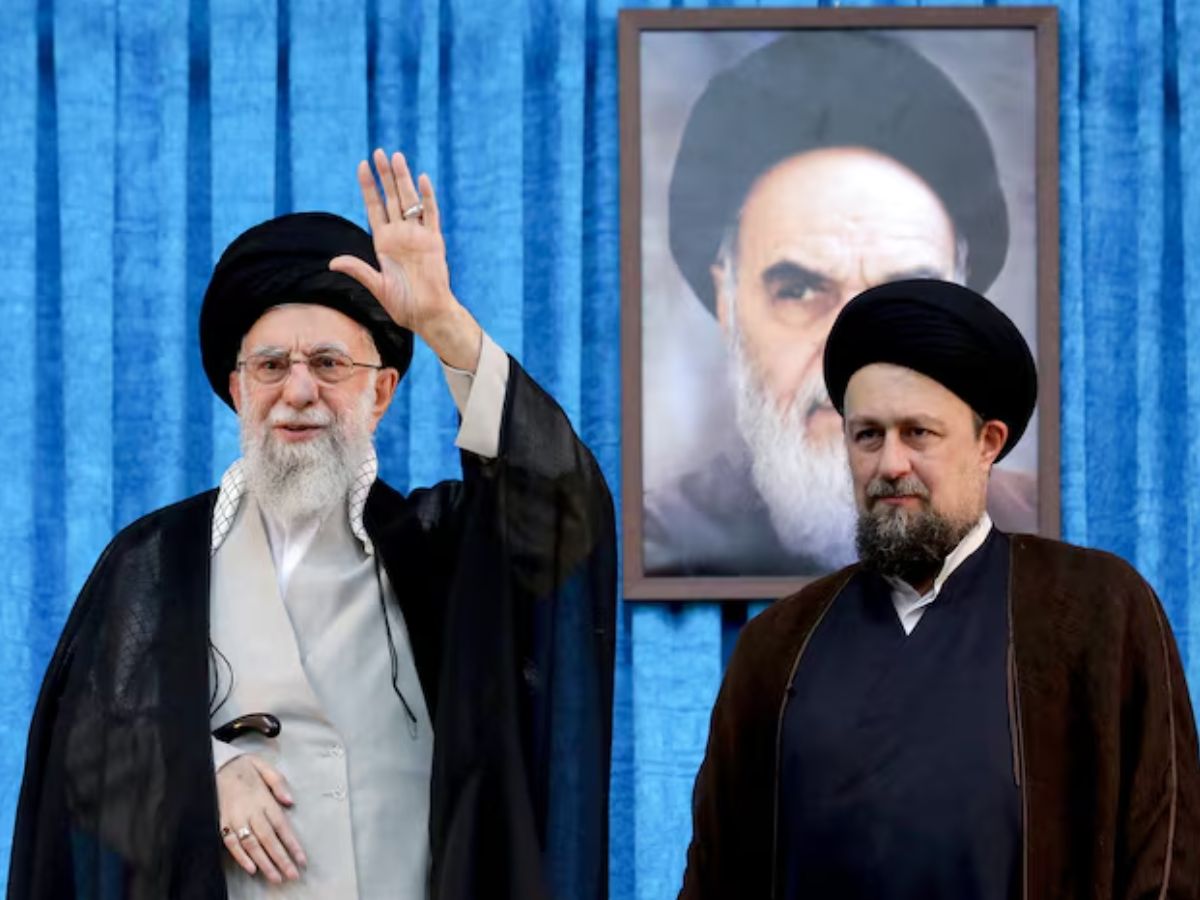
US-Israel-Iran War: Senior Iranian clerics who will choose the country’s new supreme leader appear to be close to making a decision following the death of Ali Khamenei, who was killed a week ago by US-Israel strikes.
According to Iranian officials involved in the process of choosing the new supreme leader of the country, the announcement of Iran’s new supreme leader could be made as early as Sunday. This is a critical moment for Iran because the process is taking place during an intense war situation, making it one of the most critical moments since the establishment of the Islamic Republic.
However, the US and Israel have vowed to continue their campaign against Iran, with a promise to make any new supreme leader a potential target, including those involved in the process of making the decision. This may include clerics who vote to make the decision as well as powerful political figures and commanders of the Revolutionary Guards.
What Is Iran’s Supreme Leader?
Iran’s political system was formed as a result of the Iranian Revolution, which saw the overthrow of the monarchy and the end of the Shah’s rule.
Iran’s new political system was formed by Ruhollah Khomeini, who led the revolution and formed a new system called “vilayat-e faqih” or guardianship of the Islamic jurist. This is a system in which a respected Islamic cleric leads the country until the 12th Imam comes back.
Therefore, the Iranian constitution states that the supreme leader must be a senior cleric.
The supreme leader is the highest authority in Iran. Iran chooses a president and a parliament, but the supreme leader is the only one who decides on important issues in the country.
Ruhollah Khomeini and later Khamenei had tremendous power over the country. However, the new leader will face the challenge of assuming power at a time when the country is at war and is unstable politically.
How Is Iran’s Next Supreme Leader Chosen?
Iran’s constitution says that the new supreme leader should be elected within three months after the death of the previous leader.
In the meantime, the country is being run by a temporary leadership council. This council is comprised of the country’s president, Masoud Pezeshkian, Alireza Arafi, a member of the Guardians Council, and the country’s judiciary head, Gholamhossein Mohseni-Ejei.
The permanent leader will be elected by the Assembly of Experts, which is comprised of 90 clerical leaders. They are elected every eight years.
Because of the conflict, online consultations are reportedly underway. However, the officials say that the decision is almost made, and the announcement is imminent.
Although the decision is technically up to the Assembly of Experts, it is possible that powerful figures in Iran’s political system are behind the scenes, guiding the decision. One such figure is Ali Larijani, a longtime adviser to Khamenei.
US-Israel-Iran War: Top Candidates to Replace Khamenei
There are a few names that are being considered as the future supreme leader of Iran.
Among the top contenders is Mojtaba Khamenei, the son of the deceased supreme leader. It is reported that he survived the attacks recently, although it is also reported that the attack killed his wife. Despite the official policy against hereditary rule in Iran, he is reportedly supported by the Revolutionary Guards and his father’s political camp.
Hassan Khomeini, the grandson of the founder of the revolution in Iran, is another name that is being considered as the future supreme leader. He is reportedly aligned with the reformers who want to change Iran’s policies and improve relations with Western countries.
Other names that are being considered as the future supreme leader are Alireza Arafi and Gholamhossein Mohseni-Ejei, who are reportedly hardline politicians and may continue Khamenei’s policies.
Ahmad Alamolhoda and Mohsen Araki are other clerical figures who may also be considered as the future supreme leader.
Former President Rouhani is another cleric who may be considered as the future supreme leader, although some powerful conservative groups reportedly do not like him.
Role of Iran’s Revolutionary Guards in Leadership Decision
The Islamic Revolutionary Guard Corps is expected to have a major influence on the leadership transition.
Unlike Iran’s regular military, which reports to the elected president, the Revolutionary Guards answer directly to the supreme leader.
However, recent U.S. and Israeli strikes have weakened the organization by killing several senior commanders.
One of the most prominent figures was Qassem Soleimani, the head of the elite Quds Force who led Iran’s regional military strategy. He was killed in a U.S. strike in 2020.
More recently, Israeli attacks reportedly killed Mohammed Pakpour, the latest senior commander of the Guards.
Despite these losses, the organization still holds significant power within Iran, including control over the Basij militia, which is often used to suppress internal protests.
The Guards also have strong economic influence through their engineering company Khatam al-Anbiya, which has secured major projects in Iran’s oil and gas sector.
Will Iranian Citizens Have a Say in the Decision?
Iran holds elections for its president and parliament every four years, and the president manages day-to-day government policies.
However, the supreme leader sets the overall direction for the country.
In the early years after the revolution, elections attracted high voter turnout. But in recent years, public participation has declined as many citizens have lost confidence in the political system.
Although President Masoud Pezeshkian is part of the temporary leadership council, it remains unclear how much influence he has in the leadership selection process.
While the Assembly of Experts is elected by voters, all candidates must first be approved by the powerful Guardians Council. This means only individuals aligned with Iran’s ruling establishment are allowed to run.
As a result, the final decision about Iran’s next supreme leader is expected to come mainly from the country’s religious and political elite rather than the general public.




