Donald Trump defends exiting the Iran nuclear deal and vows continued US military action as tensions escalate following deadly strikes and missile retaliation
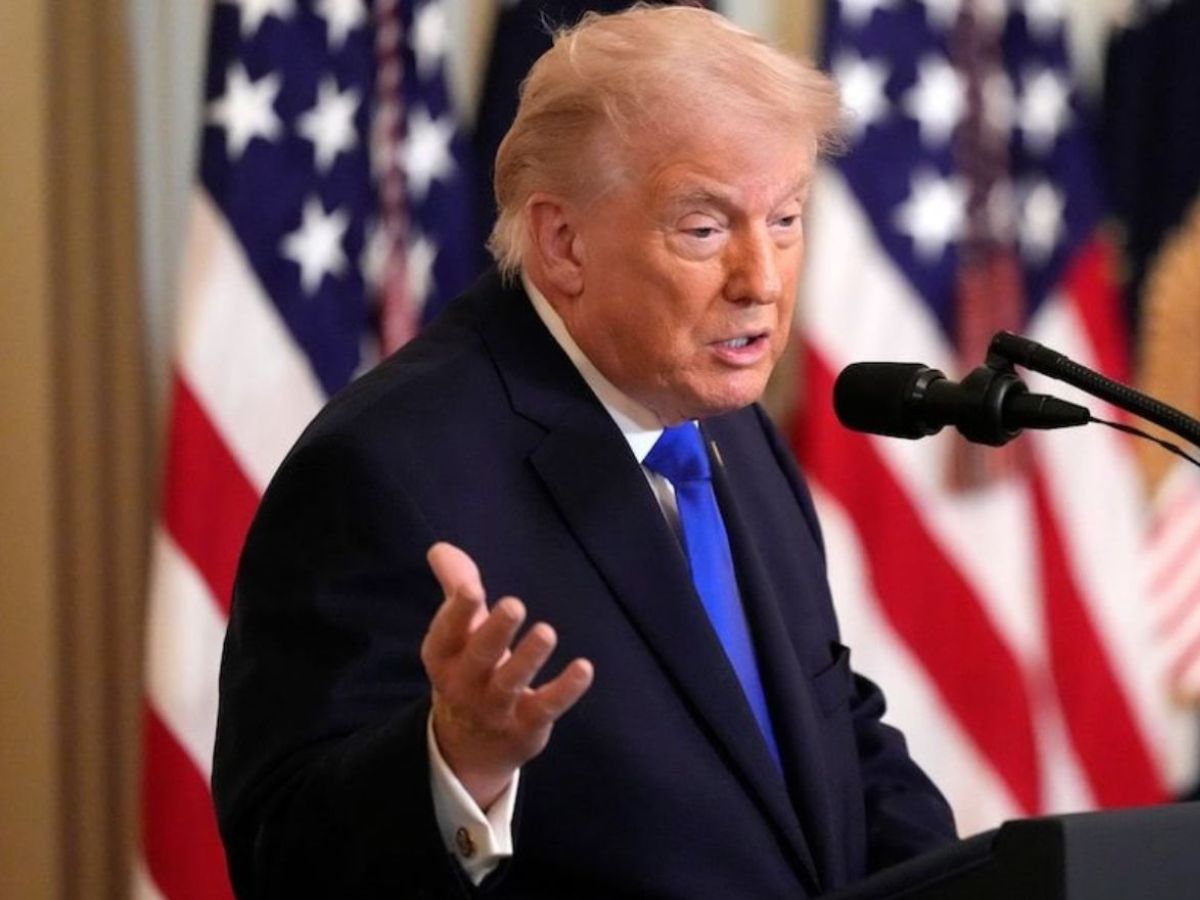
Trump Defends Exit from Iran Nuclear Deal Amid Rising West Asia Tensions (File Photo)
US Isreal War On Iran Day 3: US President Donald Trump has strongly defended his decision to withdraw from the 2015 Iran nuclear deal. He said leaving the agreement stopped Iran from developing a nuclear weapon. At the same time, he signaled that US military operations against Iran will continue as tensions rise sharply across West Asia.
His remarks came after coordinated US and Israeli airstrikes on several Iranian cities on February 28. Soon after, Iran responded with missile and drone attacks targeting US-linked assets and regional allies.
Here are the some key points US President Donald Trump made defending his exit from Iran Nuclear Deal.
Trump argued that pulling out of the nuclear agreement in 2018 blocked Iran from obtaining nuclear weapons years ago. The deal was originally negotiated under former President Barack Obama and aimed to limit Iran’s nuclear activities in exchange for sanctions relief.
US President Donald J Trump posts, "If I didn’t terminate Obama’s horrendous Iran Nuclear Deal (JCPOA), Iran would have had a Nuclear Weapon three years ago. That was the most dangerous transaction we have ever entered into, and had it been allowed to stand, the World would be an… pic.twitter.com/luUL6Xc264
— ANI (@ANI) March 2, 2026
“If I didn’t terminate Obama’s horrendous Iran Nuclear Deal, Iran would have had a Nuclear Weapon three years ago,” Trump wrote on Truth Social.
He also criticized both Obama and former President Joe Biden for supporting the deal. Trump called it the “most dangerous transaction” the United States had ever entered into. He added that he was “very proud” of ending the agreement and insisted he would never allow Iran to become a nuclear power.
Trump warned that Iran’s missile programme has expanded quickly and now poses a serious danger to the United States and its forces overseas.
According to him, Iran already has missiles capable of striking Europe and US military bases. He further claimed that Tehran is moving closer to developing long-range missiles that could reach American territory.
He suggested that Iran’s missile development was meant to shield its nuclear ambitions and make foreign intervention more difficult.
Trump outlined three main military goals for the United States:
Eliminate Iran’s missile capabilities
Weaken its naval forces
Ensure Iran never obtains a nuclear weapon
He claimed that several Iranian naval ships had already been destroyed. He also said the US would prevent Iran from arming and directing militant groups beyond its borders. “We have the strongest and most powerful military in the world, and we will easily prevail,” he said.
The President stated that US operations are progressing faster than initially expected. Earlier projections suggested that some objectives could take weeks, but Trump claimed major targets were neutralised much sooner. “We also projected four weeks to terminate the military leadership, and as you know, that was done in about an hour,” he said.
Trump dismissed suggestions that the US was aiming for a short campaign. “I don’t get bored. There’s nothing boring about this,” he said, emphasizing that the United States has the capacity to continue operations for as long as necessary.
The February 28 strikes targeted Iranian military command centers, air-defense systems, missile sites, and other strategic infrastructure across multiple cities. Reports state that Iran’s Supreme Leader, Ali Khamenei, along with four senior military and security officials, was killed in the attacks.
In retaliation, Iran launched ballistic missiles and drones at US assets and regional partners, including Israel, Bahrain, Kuwait, Qatar, Saudi Arabia, the United Arab Emirates, and Jordan.
The situation has sharply increased tensions in West Asia and raised fears of a wider regional conflict.
