
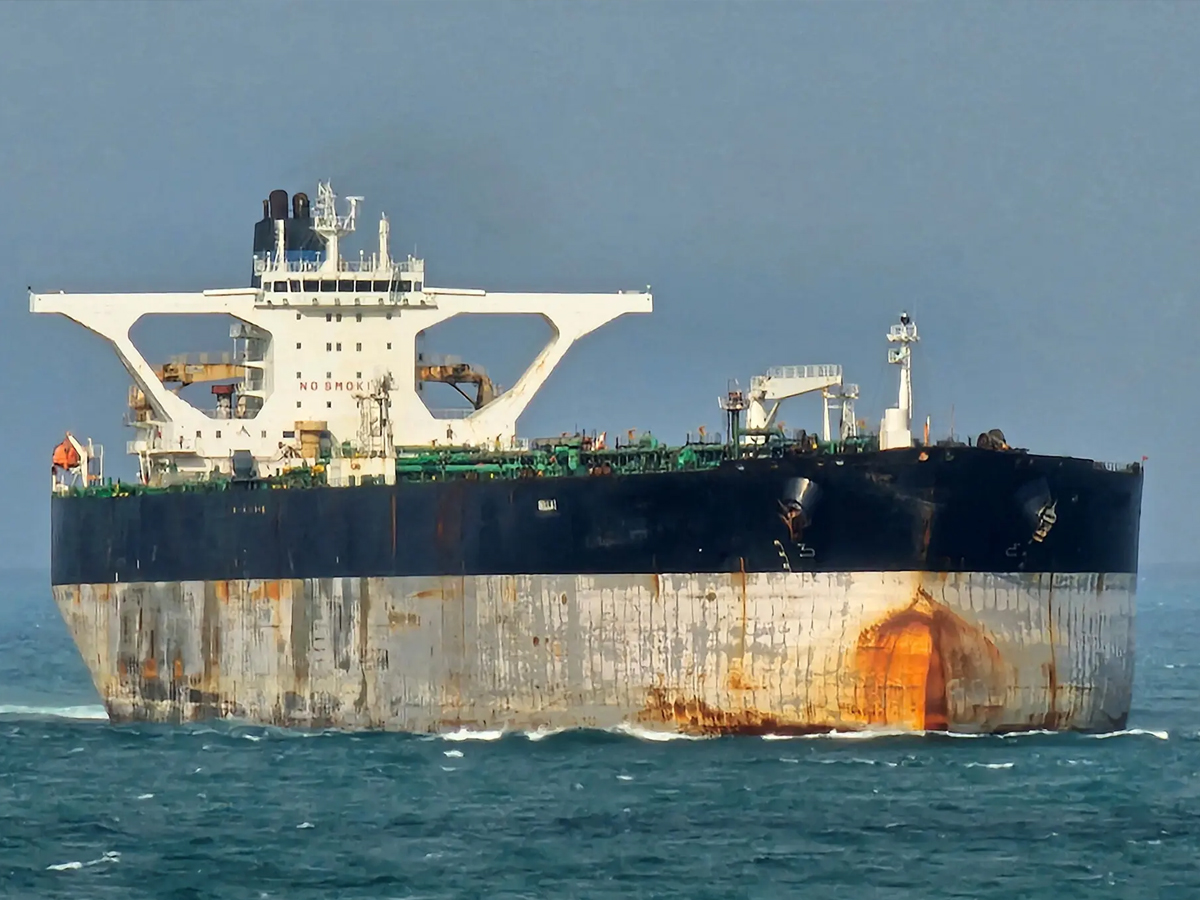
The United States has carried out a dramatic high-seas operation to take control of a Russian-flagged oil tanker in the North Atlantic, marking a sharp escalation in Washington’s campaign against sanctioned oil shipments linked to Venezuela. The seizure followed weeks of surveillance, pursuit, and growing diplomatic friction with Moscow, officials confirmed on Wednesday.
U.S. authorities secured the vessel after an extended chase that began off the coast of Venezuela last month. The Department of Homeland Security led the operation with support from the U.S. military, signaling a coordinated enforcement push against what Washington calls illegal oil trafficking networks.
The tanker, now named Marinera, previously operated under the name Bella 1. U.S. officials say the ship is part of a so-called “dark fleet” used to evade international sanctions imposed on Venezuela’s oil trade.
What Is the Marinera, and Why Was It Targeted?
The tanker has been on the U.S. sanctions list since June 2024. When it sailed as Bella 1, American officials described it as a vessel designed to hide its movements and ownership while moving sanctioned crude.
Then known as the Bella 1, it is a “sanctioned dark fleet vessel that is part of Venezuela’s illegal sanctions evasion,” according to a U.S. official. The same official said it had been “flying a false flag and under a judicial seizure order.”
In recent months, the ship changed its name and flag to Russia, a move U.S. analysts see as an attempt to shield it from enforcement actions.
How the Atlantic Chase Unfolded
As the Marinera crossed the Atlantic, its movements drew intense scrutiny. By January 5, ship-tracking data showed it sailing off the west coast of Scotland. U.S. Coast Guard vessels followed closely, while American surveillance aircraft monitored the tanker’s route.
The operation coincided with increased U.S. military activity in Europe. Flight data shows multiple U.S. Air Force C-17 transport planes and Navy P-8A maritime patrol aircraft operating from the United Kingdom during the same period.
Russia Reacts: ‘Disproportionate’ Attention
Moscow sharply criticized the U.S. operation, accusing Washington and NATO of overreach.
The Russian Foreign Ministry said it was “monitoring with concern the anomalous situation surrounding the Russian oil tanker Marinera.”
It added, “For several days now, Marinera has been followed by a U.S. Coast Guard ship, even though our vessel is located approximately 4,000 kilometers (2,485 miles) from the U.S. coastline.”
Russia insisted the ship was operating legally, stating, “At present, the vessel is navigating international waters of the North Atlantic under the state flag of the Russian Federation and in full compliance with international maritime law.”
Moscow further claimed the scrutiny was excessive, saying the vessel was receiving attention “that is clearly disproportionate to its peaceful status.”
Why Venezuela’s Oil Is at the Center of the Conflict
The tanker seizure comes amid an aggressive U.S. effort to choke off Venezuela’s oil exports following Washington’s capture of President Nicolás Maduro. Former President Donald Trump said Venezuela would hand over 30 million to 50 million barrels of oil to the U.S., making energy control a central pillar of American policy.
U.S. officials believe Russia-backed shipping networks are attempting to bypass sanctions by reflagging vessels and rerouting shipments through international waters.
Are More Tankers at Risk?
The Marinera may be just one case in a broader pattern. At least three other sanctioned tankers operating near Venezuela recently switched their flags to Russia, raising fears of continued sanctions evasion.
The U.S. Southern Command said it “remains ready to support our U.S. government agency partners in standing against sanctioned vessels and actors transiting through this region.” It added that U.S. forces are “vigilant, agile, and postured to track vessels of interest.”




