The US seizure of tanker Veronica signals tougher enforcement against Venezuelan oil, reshaping sanctions, shipping routes and regional power dynamics.
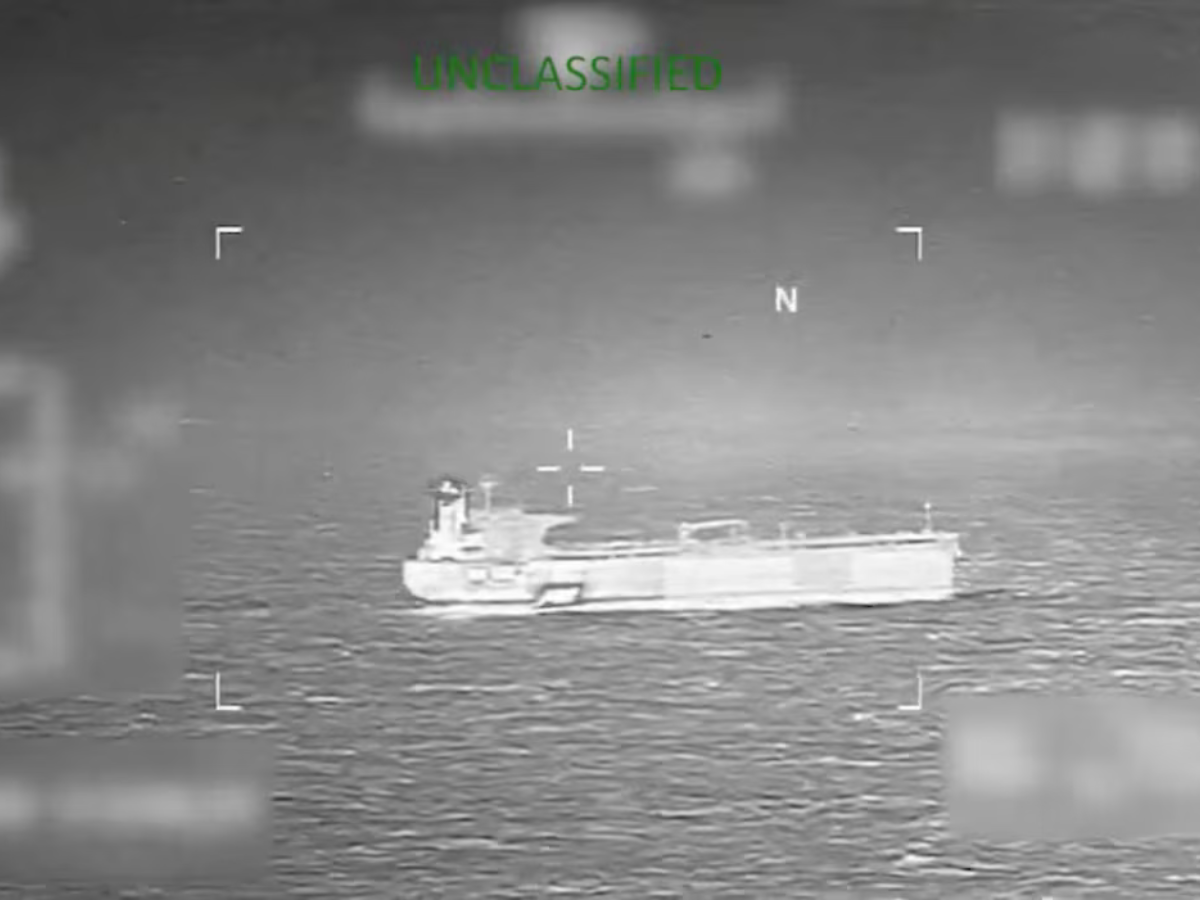
A US military helicopter approaches an oil tanker during a sanctions enforcement operation in the Caribbean Sea (Photo: Reuters)
Venezuela-Linked Oil Tanker: The capture of oil tanker Veronica is another turn of events as Washington strives to pressurize Venezuela’s oil activities. In a matter of weeks, Washington has intercepted a total of six vessels that deal with oil from Venezuela. This marks a significant turn from sanctioning to enforceable actions at sea. The interception of this oil tanker takes place at a time when President Donald Trump is set to meet with opposition leader Maria Corina Machado.
Through #OpSouthernSpear, the Department of War is unwavering in its mission to crush illicit activity in the Western Hemisphere in partnership with @USCG through @DHSgov and @TheJusticeDept.
— U.S. Southern Command (@Southcom) January 15, 2026
In another pre-dawn action, Marines and Sailors from Joint Task Force Southern Spear,… pic.twitter.com/brxO9xXUu3
The Veronica is asserted by US officials, was seized by a coordinated early morning effort by the US Navy, marines, Coast Guard and federal agencies in a region of the Caribbean. The marine tracking indicated that the tanker was known to have been sailing in proximity to Venezuelan shores a few days prior. The boarding took place without incident and with troops disembarking from helicopters that departed from a US aircraft carrier. The tanker is also alleged by US authorities to have been transporting petroleum in contravention of US sanctions against Venezuela's energy industry.
The Veronica is not the only tanker that has been seized. This is the sixth tanker in the recent past that has been seized as Washington broadens the so-called quarantine of the seized tankers. Previous operations were conducted in the Caribbean and the North Atlantic, with one of them inviting a diplomatic protest from Russia. The number of tankers seized in such a short period indicates that the seized ships were not an ad-hoc exercise but an organized effort. Each of the seized tankers has the capacity to carry 700,000 to 1 million barrels of crude oil.
US military and homeland security leaders have been clear: this is not a situation that will soon come to an end. The message is one of deterrence, aimed at shipping lines, insurers and flag-states, making it clear that doing business with Venezuelan oil is a risk-laden enterprise. The deployment of US naval power to the area has steadily increased, making Washington's commitment to enforcing its sanctions by mere paperwork apparent and they are prepared to back their sanctions by very real might.
Oil remains the chief economic lifeline for Venezuela, accounting for approximately 95% of export revenue. Daily production, once above 3 million barrels, has hovered near 800,000 barrels, despite small-scale recovery attempts. China is still the largest buyer and often receives crude as partial payment for debt. Venezuela, according to industry estimates, has repaid over $50 billion in obligations by awarding oil cargoes with billions more still owed. Each seizure further constricts cash flow, complicates logistics and raises costs through higher insurance and rerouting.
Washington’s policy shift is from force to control. In addition to sanctions, Washington seeks to gain control of oil distribution from Venezuela. The US wants to dictate who will benefit from this oil. The US wants future investments to go to US-friendly countries. The US seeks to freeze out other competing countries such as China and Russia. The US also seeks to go back into Venezuela’s oil reserves, which are said to be the largest oil reserves in the world.
The Venezuela seizure is very important because it proves the point that enforcement has teeth. It raises the price of noncompliance, reorients maritime transport patterns, and gives the United States leverage before critical political negotiations. But perhaps most important of all, it proves one thing and the front lines in US policy in Venezuela are now the front lines of the global oil trade. Leverage equals tanker control, which in turn may forge the path of the next Venezuela.
