
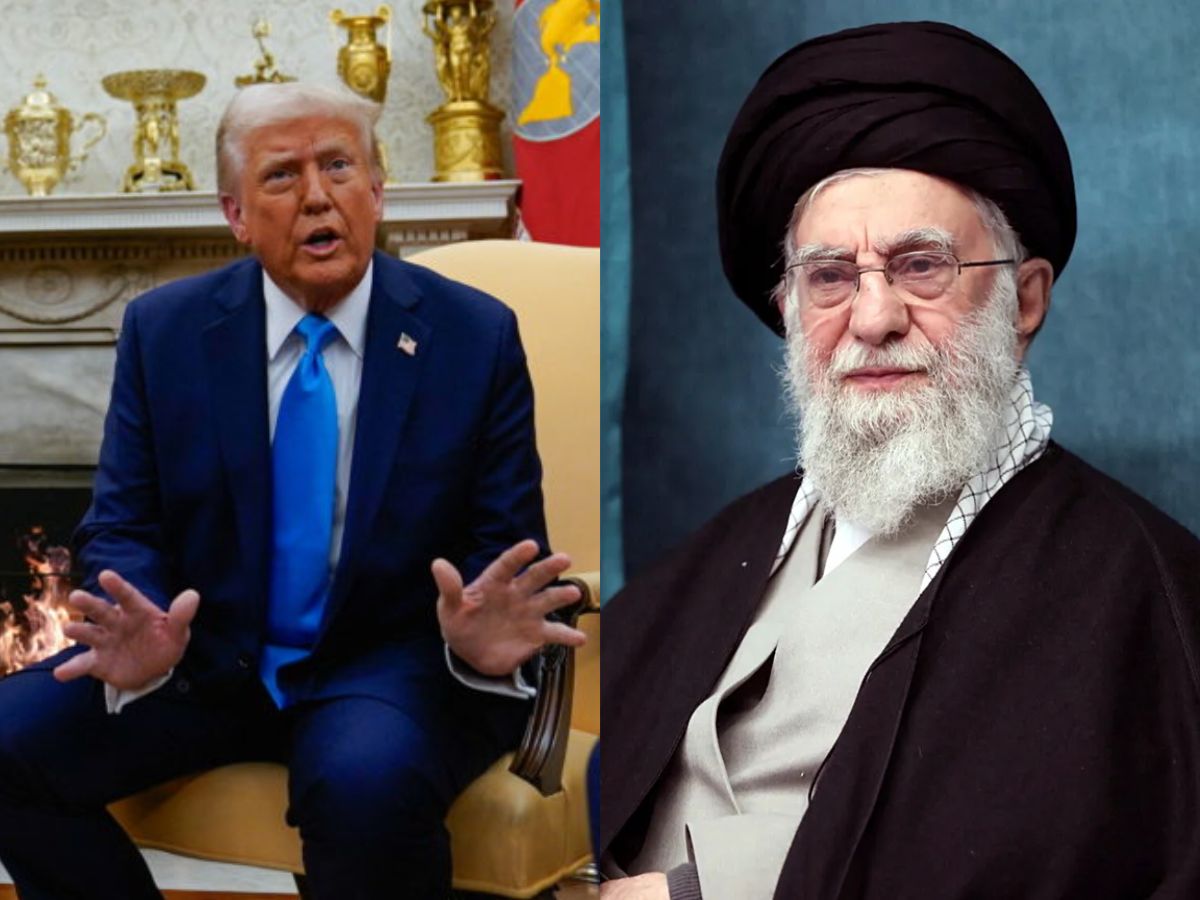
U.S. President Donald Trump warned Iran on Wednesday to quickly negotiate a new nuclear agreement or face a U.S. military strike “far worse” than a previous attack in June. Iran responded immediately, with senior officials threatening to target the United States, Israel, and their supporters if any American military action occurs.
What did President Trump say?
In a social media post, President Trump urged Iran to “Come to the Table” and negotiate a “fair and equitable” deal that ensures “NO NUCLEAR WEAPONS.” He emphasized that “time is running out” and explicitly linked his warning to a prior U.S. military strike in June. “The next attack will be far worse! Don’t make that happen again,” Trump wrote, repeating his claim that a U.S. “armada” led by the aircraft carrier USS Abraham Lincoln was approaching Iran. Two U.S. officials confirmed the carrier group’s arrival in the Middle East this week.
How did Iran respond to the threat?
Top Iranian officials issued direct counter-threats. Ali Shamkhani, an adviser to Supreme Leader Ayatollah Ali Khamenei, stated any U.S. military action would result in Iran targeting the U.S., Israel, and their supporters. Foreign Minister Abbas Araqchi warned that Iran’s armed forces are prepared “with their fingers on the trigger” to respond powerfully to any aggression. Araqchi added that Iran remains open to a “mutually beneficial, fair and equitable” nuclear deal but only on equal footing and “free from coercion, threats, and intimidation.”
What is the background to these escalating tensions?
Tensions have soared recently following a violent crackdown by Iranian authorities on nationwide protests. President Trump had previously threatened intervention if Iran continued killing protesters, though the demonstrations have since abated. The current U.S. naval movement from the Asia-Pacific region began last week amid this climate. Following joint U.S.-Israeli airstrikes on Iranian nuclear facilities in June, Trump added that the United States would take action if Tehran resumed its nuclear program.
What is the status of diplomatic contact?
Despite the public exchange, diplomatic channels appear inactive. Iranian Foreign Minister Araqchi stated he had not been in contact with U.S. Special Envoy Steve Witkoff in recent days and had not requested negotiations, according to Iranian state media. This indicates no immediate, direct talks are underway to de-escalate the situation.
How are U.S. officials assessing Iran’s domestic situation?
U.S. Secretary of State Marco Rubio offered an assessment of Iranian internal stability to a congressional committee on Wednesday. According to him, Iran’s economy is collapsing and the regime is “perhaps weaker than it has ever been.” Driven by political repression and economic hardship, Rubio predicted that the protests would “ignite up again.”
FAQs
Q: What specific action is Trump threatening?
A: President Trump is threatening a U.S. military attack that would be “far worse” than a previous strike conducted in June, which targeted Iranian nuclear installations.
Q: What does Iran say it will do if attacked?
A: Senior Iranian officials say their armed forces are ready to immediately and powerfully respond by targeting the United States, Israel, and those who support them.
Q: Is the U.S. military moving forces?
A: Yes. The USS Abraham Lincoln carrier strike group has arrived in the Middle East, moved there last week as tensions rose following Iran’s crackdown on protests.
Q: Is Iran willing to negotiate a nuclear deal?
A: Iranian officials state they are open to a fair and equitable nuclear deal that recognizes their rights to peaceful nuclear technology, but they reject negotiating under “coercion, threats, and intimidation.”




